

How can we ensure that everyone has access to high-quality healthcare when healthcare professionals are unevenly distributed, some populations face specific barriers, and prevention is still too often treated as a secondary priority?
Across Europe, entrepreneurs and organisations are experimenting with new ways of addressing these challenges.
European healthcare systems are facing several challenges at the same time.
Populations are ageing. Some regions lack healthcare professionals. Chronic diseases and mental health issues are on the rise. At the same time, some people face additional barriers linked to their age, disability, social circumstances or background.
These challenges are closely connected.
It is difficult to guarantee equal access to healthcare when some regions have far fewer healthcare professionals than others. It is difficult to prevent certain health problems when healthy behaviours remain difficult to adopt. And it is difficult to build a truly inclusive healthcare system when tools and services are not designed to meet a diverse range of needs.
Yet solutions already exist.
In France, Spain, Germany, the United Kingdom and Austria, entrepreneurs and organisations are developing new models to improve prevention, bring healthcare professionals closer to patients, use technology to make healthcare more accessible and better address the needs of people with disabilities.
Here are ten approaches showing how Europe can rethink access to healthcare.
1. Make prevention part of everyday life
Health is not only about what happens when a disease appears.
A major part of prevention involves helping people adopt healthier habits before problems arise.
But knowing what we should do is not always enough.
In France, VIF seeks to address this challenge by using approaches inspired by marketing and behavioural science.
The organisation starts from a simple observation: traditional prevention messages do not always work. Telling someone to eat better, exercise more or quit smoking does not necessarily lead to lasting changes in behaviour.
VIF therefore seeks to better understand people's circumstances, needs and motivations before designing its interventions.
The aim is to create "nudges" that make healthier choices easier, rather than relying on guilt.
This approach is particularly relevant for people living in difficult social or economic circumstances. Everyday constraints can make healthy behaviours harder to adopt, creating a cycle in which declining health can, in turn, reduce professional and social opportunities.
Prevention can therefore become a tool for reducing inequalities.
Key idea: Preventing health problems also means creating environments that make healthier choices easier.
2. Bring healthcare closer to underserved territories
Access to healthcare sometimes depends less on a patient's willingness to seek care than on where they live.
Some regions have many healthcare professionals. Others struggle to attract young doctors, dentists and other healthcare workers.
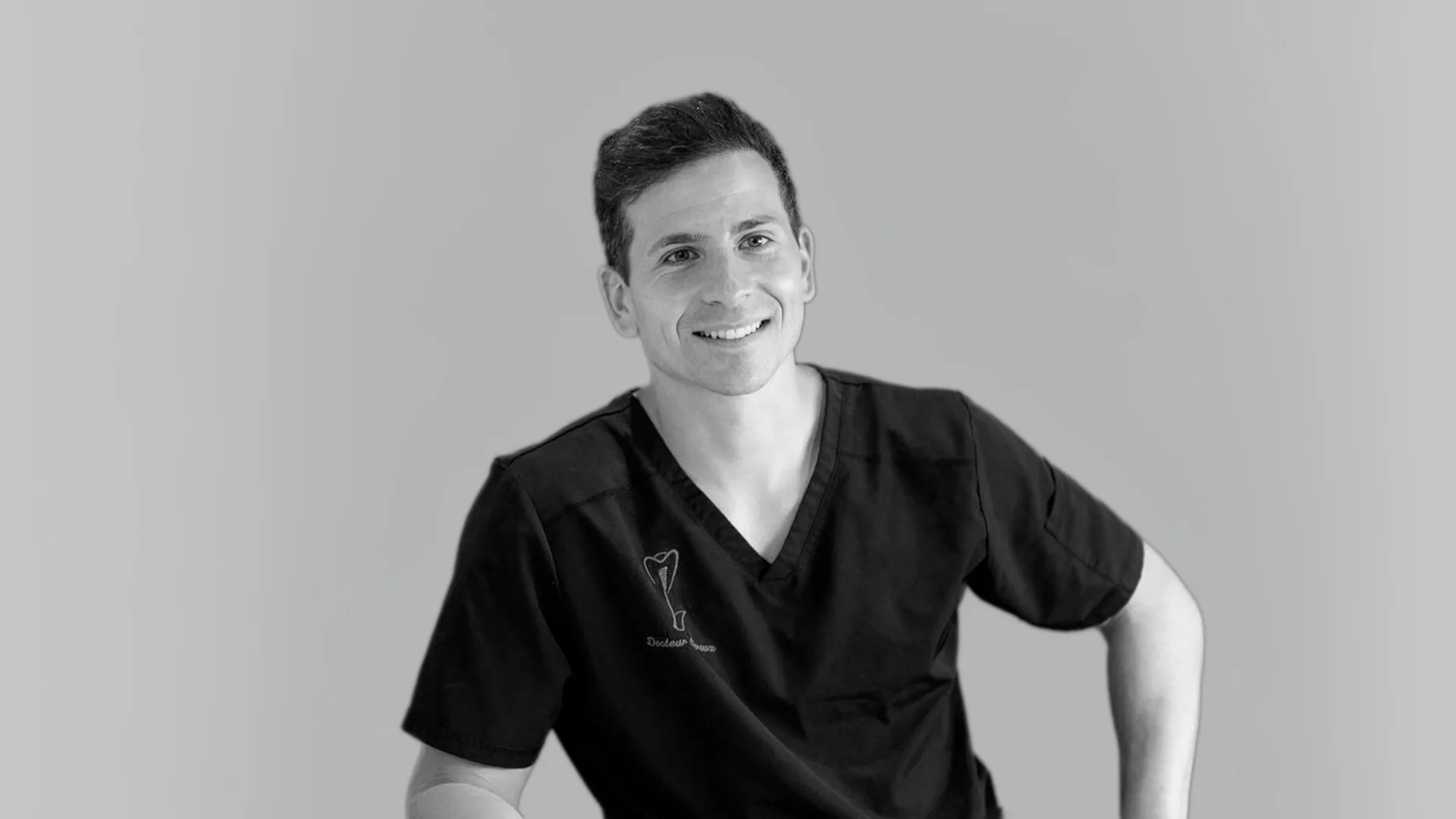
In France, Doc Tripper is working directly on this issue.
Alexandre Chéroux created the platform after seeing the difficulties rural areas face in attracting young healthcare professionals.
The principle is to make these regions more visible and attractive to students and young professionals.
Local authorities can showcase opportunities for temporary placements, accommodation, cultural and sporting activities, as well as other benefits designed to make the area more appealing.
Doc Tripper initially offers short-term experiences: an internship, a few days of temporary work or a first professional experience.
The idea is to allow healthcare professionals to discover a region before asking them to settle there permanently.
Since the beginning of 2025, the platform has also been available to other healthcare professions, including medical, paramedical and veterinary fields. At the time of the interview, 130 local authorities had joined the programme.
The objective therefore goes beyond recruitment.
It is about creating a connection between a professional and a region that might otherwise never have happened.
Key idea: Improving access to healthcare in underserved areas can start by making those areas more visible and attractive to young professionals.

3. Use technology to make paediatric care more accessible
Access to healthcare can also be challenging for patients who require highly specialised care.
Paediatrics is one example.
In France, Manon Sauter created Famille Santé after experiencing difficulties herself in finding the right professional to care for her child.
The platform helps parents identify the appropriate care pathway based on their child's symptoms and geographical location.
A few questions are used to assess the level of urgency. If necessary, users are directed to emergency services or the emergency medical number 15. In other cases, the platform can arrange a remote consultation with a paediatrician.
The aim is to reduce the time between the onset of symptoms and access to the right healthcare professional.
Famille Santé works with 20 doctors and 20 paediatricians who provide coverage seven days a week, from 8 a.m. to 10 p.m. According to Manon Sauter, 70% of requests are resolved through an online consultation.
Technology does not therefore replace healthcare professionals.
It can, however, help patients find the right person more quickly.
Key idea: Digital tools can make it easier to access healthcare when patients are unsure where or when to seek care.
4. Make specialist healthcare easier to reach
Access to healthcare is not simply about being able to see a doctor.
Patients also need to be able to find the professional who is actually suited to their needs.
In Spain, Top Doctors has developed a platform that allows patients to search for specialists and book appointments online.
The company uses doctors' areas of expertise to help direct patients towards the professionals best suited to their situation.
This approach can be particularly useful for people who do not have a family or professional network that can help them find the right specialist.
It can also help reduce geographical inequalities.
Someone living far from a major hospital can use teleconsultation when it is appropriate for their condition.
Top Doctors says it manages more than 7 million appointments and teleconsultations every year and has more than 250 million annual users across its different markets.
The ultimate goal is to remove a frequently overlooked barrier: knowing which specialist to see and successfully getting an appointment.
Key idea: Making it easier to identify and access the right specialist can help reduce geographical and information barriers to healthcare.
5. Treat mental health as a prevention issue
Mental health has long been associated primarily with treating disorders once they have already developed.
New companies are seeking to shift this approach towards prevention.
In France, Teale has developed a platform designed to help employees better understand and protect their mental health.
The approach starts with the individual.
Each employee has access to a private and confidential space where they can assess their mental health. Depending on their needs, they can then access content, exercises and appointments with psychologists or coaches.
But Teale also works at an organisational level.
Individual data is anonymised and aggregated to identify teams or organisations where certain factors may be negatively affecting mental health.
The aim is therefore not to place the entire responsibility on the individual.
Someone may be struggling because their working environment is itself problematic.
Prevention therefore needs to address both individual behaviours and working conditions.
Key idea: Improving mental health requires a combination of individual prevention and changes to the environments that affect people's wellbeing.
6. Use technology to support cognitive health
Prevention can also focus on cognitive abilities.
In Germany, NeuroNation develops digital tools designed to support cognitive health.
The company offers a consumer-facing app as well as a medical solution for certain patients.
Its approach targets several different groups.
Younger people can use the tools to improve their cognitive abilities. Older people can use them as part of a preventive approach. Certain patients can also benefit from the medical solution.
This diversity of users reflects an important shift in the way cognitive health is viewed.
It is not only about disease.
It can also be approached as an area where everyone can take action before significant difficulties emerge.
Digital technology makes it possible to offer exercises at scale and track their use over time.
Key idea: Digital tools can make cognitive health prevention accessible to a much wider audience, beyond people who are already receiving medical care.
7. Make assistive technology accessible to more people
For people with disabilities, technological innovation can help restore greater independence.
But technology can only have an impact if the people who need it can actually access it.
In Spain, Able Human Motion develops robotic exoskeletons designed for people with mobility impairments.
The company seeks to make a technology that was once largely confined to highly specialised environments more widely accessible.
The aim is to enable more people to use these technologies as part of rehabilitation or everyday life.
This approach raises a central question for medical innovation: how can we move from highly advanced technology to solutions that are genuinely accessible?
The answer does not depend solely on technical performance.
It also depends on cost, ease of use and the ability to integrate the technology into existing care pathways.
Key idea: Medical innovation only becomes truly inclusive when the people who need it can actually use it.
8. Remove language barriers from healthcare
Access to healthcare can also be limited by a barrier that is neither medical nor geographical: language.
In Germany and other German-speaking countries, SAVD provides remote interpreting services for people who do not speak the local language well enough to access the services they need.
The service allows hospitals, public administrations and other public services to quickly access a remote interpreter.
The project grew out of research conducted by the Medical University of Vienna into emergency situations in hospitals.
The challenge was very practical: how can patients and healthcare professionals communicate quickly when language is a barrier?
The solution now combines remote audio and video interpretation.
This technology can be particularly important for refugees and people who have recently arrived in a country.
Understanding a medical question, explaining symptoms or correctly following a prescription should not depend on someone's ability to speak the local language fluently.
Key idea: Removing language barriers can be essential to ensuring genuinely equal access to healthcare services.
9. Make disability part of mainstream economic life
Inclusion is not only about access to healthcare.
It is also about being able to work, build a business and participate fully in economic life.
In France, H-Up Entrepreneur supports entrepreneurs with disabilities who want to start or grow their businesses.
The organisation was created in response to the fact that people with disabilities remain more exposed to unemployment, even though thousands of them are already entrepreneurs or want to become one.
Its support aims to make entrepreneurship more accessible despite the constraints associated with disability.
This approach changes the way disability is viewed.
A person is no longer seen only as someone who needs medical or social support.
They can also be an entrepreneur, an employer, a creator of economic value and an active participant in the economy.
Key idea: Inclusion for people with disabilities also means enabling them to participate fully in economic life.
10. Make work healthier for everyone
Health does not stop at the workplace door.
We spend a large part of our lives at work, and working conditions can have a significant impact on both physical and mental health.
In the United Kingdom, Thrivall addresses this issue by developing programmes that support employees' mental health.
The organisation seeks to take a proactive approach rather than waiting for serious problems to emerge.
The aim is to help employees develop healthy mental health practices throughout the year, while also helping organisations create healthier working environments.
This approach shares a key principle with Teale: mental health is not solely an individual responsibility.
Organisations also have a role to play.
A company can provide resources to its employees. But it can also address the organisational factors that contribute to stress, burnout or a lack of purpose.
Prevention then becomes part of the everyday functioning of an organisation.
Key idea: Supporting mental health at work requires action at both the individual and organisational levels.
Ten approaches, one European challenge
These ten initiatives operate at different points in the healthcare system.
VIF focuses on prevention and health behaviours. Doc Tripper seeks to improve access to healthcare professionals in underserved areas. Famille Santé uses digital tools to make paediatric care more accessible. Top Doctors helps patients find the specialists they need more easily. Teale and Thrivall seek to make mental health a workplace prevention issue. NeuroNation develops digital tools focused on cognitive health. Able Human Motion works to make assistive technologies more accessible. SAVD addresses language barriers that can prevent people from properly accessing public and healthcare services. H-Up Entrepreneur focuses on the economic inclusion of people with disabilities.
These approaches do not represent a single model for European healthcare.
Instead, they show that access to healthcare can be improved at many different points.
It can begin with prevention, before a disease even appears.
It can depend on the ability to quickly find the right healthcare professional.
It can be made easier through digital tools.
It can also require specific needs linked to age, disability, language or location to be taken into account.
And it can extend beyond the healthcare system, into the places where we live and work.
This last dimension is essential.
A healthier society depends not only on the number of doctors or the quality of hospitals.
It also depends on our ability to prevent health problems, make services accessible and remove the barriers that prevent some people from enjoying the same opportunities as others.
The initiatives presented here come from several European countries.
They use different technologies and serve different populations.
But they share a common idea: improving health is not only about providing better care. It is also about making prevention, information, healthcare professionals and health technologies more accessible.
Europe does not need to invent every solution from scratch.
Some of those solutions already exist.
The challenge now is to make them better known, connect them and help them scale.