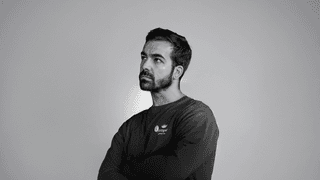

“Polymers are macromolecules, meaning they are very large, composed of monomers, which are small molecules linked together like beads on a string. They can also be woven together to create very complex materials,” explains Mathieu Pucheault. “We can choose the size, shape, and color of the bead, which provides an extremely wide variety in terms of structure for these polymers.”
We have polymers on us, beside us, and within us, as there are natural polymers like DNA, proteins, cellulose, and lignin. Then we have synthetic polymers, such as the fibers in our clothing, plastics, containers, and those used in pharmaceuticals, for example, to transport medications in the bloodstream, as excipients, as packaging, in our glasses, the tables we eat or work at, and the chairs we sit on.
The first polymer discovered was rubber, derived from the sap of the rubber tree. The first synthetic polymer dates back to 1903, notes Mathieu Pucheault.
Synboli uses artificial intelligence to design new polymers. “For the past 120 years, when creating new polymers, we start from known structures and try to slightly change the color or shape of some of these beads to achieve innovative performance.”
Synboli works in the opposite direction. That is, the company first determines what type of performance it desires and asks AI for the recipe to obtain the most suitable polymer.
There are significant direct environmental challenges, such as finding more environmentally friendly, biodegradable polymers or those that require less water in certain manufacturing processes, and indirect ones, like creating new polymers that will enable the production of more efficient batteries, contributing to electric mobility and thus having a certain environmental impact.
There are also technical challenges in certain segments where there currently are no solutions to meet the needs.
“In general, what we bring is mainly speed. We can discover new finalized polymers in 3 to 9 months, instead of the previous 2 to 4 years. So when there are regulatory changes, or when we realize something is toxic and no longer desirable, we can quickly find a substitute solution,” concludes Mathieu Pucheault.