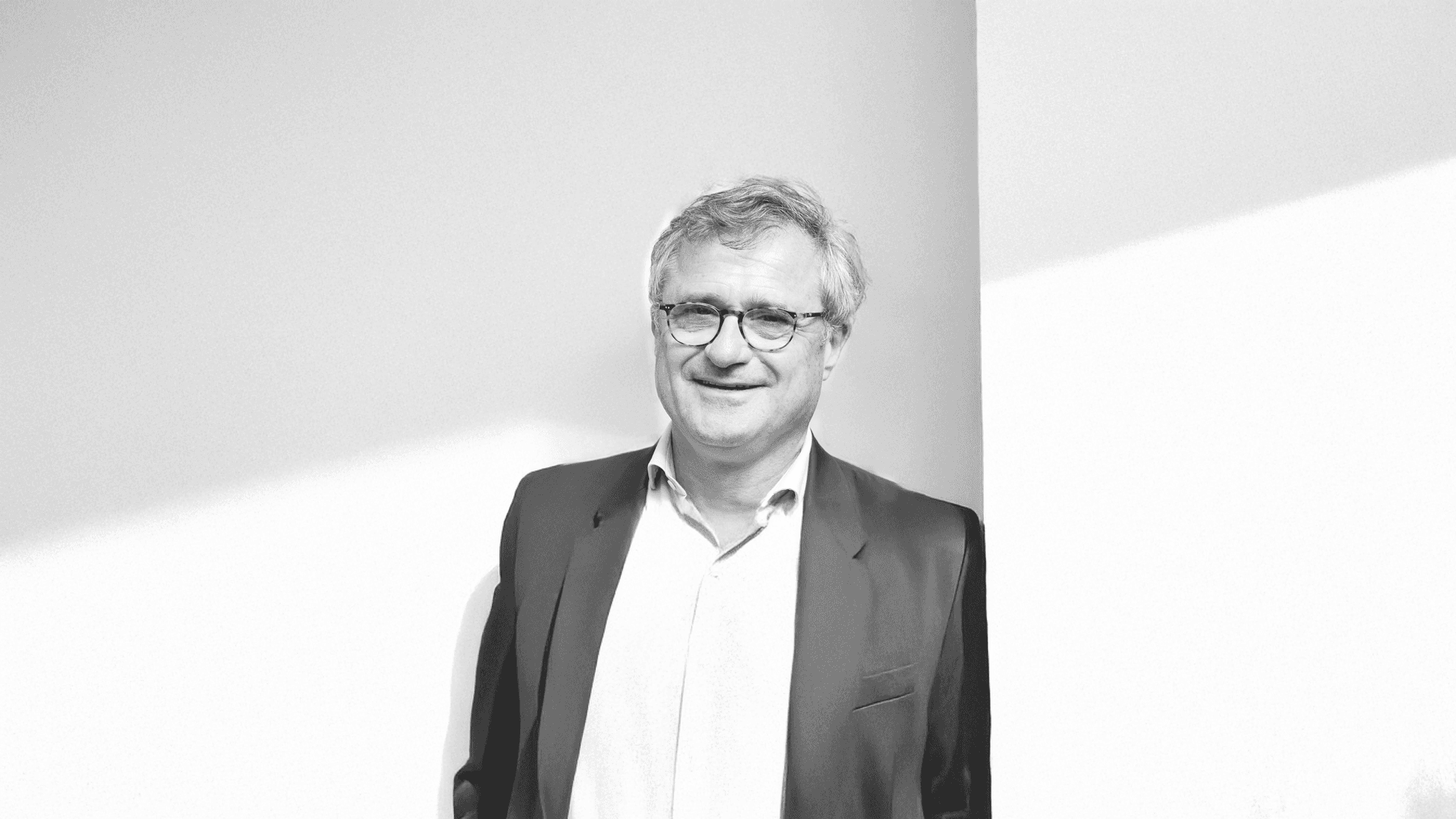
"Sustainable development was, 30 years ago, a concept for guys who wanted to go, with their catogans, to the Larzac to tend goats. It's a bit of a caricature, but that was it," recalls Thierry Sibieude. "Today, these issues are recognized as worthy of interest by everyone." Thierry Sibieude has never gone to the countryside to raise cattle or goats, but that hasn't stopped him from working in his own way, since his early days in the workforce, to promote a different approach to finance.
With a graduate degree in law and management, he quickly embarked on a career as a professor in higher education, primarily at ESSEC, where he taught until 2023. He created and founded the chair of innovation and social entrepreneurship, the social business incubator, the laboratory for evaluation and measurement of social impact, and contributed to the establishment of a chair in philanthropy and a chair in circular economy. He launched the equal opportunity program for access to higher education for young people from disadvantaged backgrounds. "I had the chance to drive everything that was extra-financial at ESSEC. And we were the first every time," he proudly states.
His professional journey, but especially his personal one, shaped by chance, as he describes it, has allowed him to understand other realities and experiences. He created and founded an association to support children and individuals with autism, la Clé pour l'autisme, after one of his five children was diagnosed. He also holds numerous local elected positions. The idea emerged that social organizations and associations could be better managed. "We realize that what is useful for a for-profit business in the private sector can be effectively mobilized for the management of an association, thus serving the cause it seeks to promote." His elected positions have made him aware of the common good and the general interest, with a complementary approach to all these dimensions.
Impact financing and sustainable finance encompass all of this. The idea that one can pursue a financial profitability objective while also serving a cause and pursuing social and environmental goals. This notion has gained traction over the past 30 years, driven, in particular, by increasing regulations encouraging actors to mobilize funds towards impact projects.
"But all of this is fragile," warns Thierry Sibieude. "We know that between 5,000 and 7,000 billion euros per year are needed to finance a just social and environmental transition. Forty percent will come from public authorities, while the remaining 60 must come from the private financial community." The challenge now is to determine how to encourage, incentivize, and obligate, but not too much, he emphasizes, these financial community actors to engage on these issues. These will be the major challenges of the coming years.