translate This article was automatically translated from its original Français version. Read the original
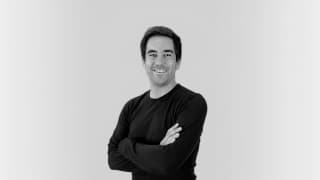
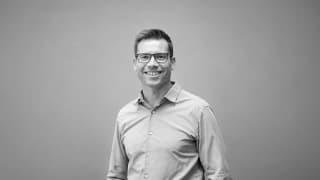
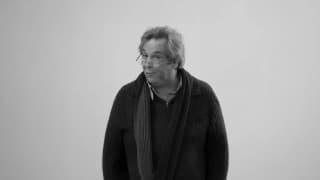
Freddy Halet is the Deputy Director of the Dispositif sensoriel et du langage de VYV3 Pays-de-la-Loire in Angers, deployed at the Centre Charlotte-Blouin, which supports young people with hearing impairments and those with oral language disorders, and at the Institut Montéclair, which assists young visually impaired individuals, operating throughout the Maine-et-Loire department. They developed the SENS application.
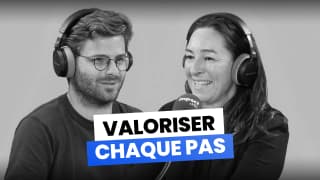
During the summer break, the teams at impact.info invite you to (re)listen to one of our episodes published this year.
This episode highlights the testimony of Freddy Halet , Deputy Director of the Dispositif sensoriel et du langage de VYV3 Pays-de-la-Loire .
Enjoy listening!
Florence Jaillet
impact.info journalist
Published on 17 August 2026
Transcript Audio in Français — text automatically translated· AI-generated transcript
0:00 Hello and welcome to the podcast for those who want to make a difference in their company. 0:10 A person with a disability is primarily in a situation of disability. 0:11 If we make the environment accessible, it can disappear. 0:16 So providing accessibility to its audiences can change everything. 0:20 Freddy Allais. 0:23 Freddy Allais, September 13, 1983, I was born in Châteaubriand in Loire-Atlantique. 0:25 I am the deputy director of the sensory and language device of VYV3 Pays-de-la-Loire in Angers 0:32 across two establishments, the Charles de Bourgogne center which supports young people with hearing 0:40 impairments and young people with oral language disorders, and the Montéclair Institute 0:43 which supports young visually impaired people. 0:48 In both establishments, we operate throughout the Maine-et-Loire department. 0:51 In this context, you had the idea and the desire to create an application called 0:54 Sens. 0:58 Explain to me. 0:59 Yes, so the Sens application actually came from an observation made about 1:00 seven years ago with field professionals, but also the young people we 1:05 support, meaning that the young people we have in both institutes often 1:10 arrive right after birth, following the diagnosis of their disability, and then they 1:13 leave once their training path is finished, so they are adults and we realized that once they left our care, it was with us, it was a bit of a cocoon, 1:18 they are followed by all the professionals and once they arrive in everyday society, in their adult lives, there were few adapted and accessible answers 1:23 to all the questions that could arise in daily life, so questions regarding transport, their rights, the world of work, etc., 1:26 regarding housing. 1:30 So with them, we said we should create a tool that could help them 1:35 on a daily basis and we started from a piece of paper, a booklet in 2018, 1:39 which we gave them at the end of their journey with us, with good addresses, the 1:45 right numbers in Angers, some answers to their questions and then we started 1:46 to ask, we looked further into their responses, into the questions they 1:50 were asking and one day we received a call for projects from the Rural Health Agency at the end of 2018, 1:55 the call for projects was specifically about technological innovations for the 1:59 sensory impaired population, to which we responded and we managed to get 2:04 the call for projects and that's how we came up with this app idea and a first 2:07 version was released in 2021, so there you go. 2:13 So how does this application work, what does it allow, how does it work? 2:18 So the application has eight main themes. 2:22 Today, these themes, as I said, since it is a project made 2:26 with the concerned population, for the concerned population, we started from the theme. 2:29 2:34 2:37 2:42 2:48 that young people were able to take away each time. 2:50 That's why we're going to have a theme on health, on housing, on the world 2:56 of work, on a theme called 'I'm 20 years old'. So here, it's more 3:00 questions related to their rights, particularly with the departmental house of 3:05 disabled persons, so the question of what is the recognition of quality 3:09 of work for disabled people, the compensation benefit for disability, so we have 3:15 themes with articles inside. 3:17 And the person who enters the application for the first time can 3:21 choose a profile. 3:22 Either I am a deaf person and I need accessibility in French sign 3:26 language, so they will choose that profile. 3:28 Or I am a deaf person but with a profile where I am more into oral 3:33 communication with the spoken French complemented tool, so I would choose that profile. 3:38 Or I am a blind or visually impaired person and I would choose the visually impaired profile. 3:44 So for deaf profiles, as I said, all articles are translated into 3:47 French sign language or complemented spoken French, coded by 3:52 a coder. 3:53 And for visually impaired users, they actually have choices regarding contrasts, so 3:58 there are different contrast choices, colors, black-white, yellow-black, blue-white, 4:04 and especially when they connect, the application automatically takes the parameters of the 4:08 phone regarding voice synthesis, so they can navigate the application. 4:13 Find information that is geolocalizable based on the questions, for example about 4:19 transport, if I am in Maine-et-Loire and I choose the department of Maine-et-Loire, 4:23 we will have transport information in Angers or in the department of Maine-et-Loire, 4:28 and this choice is made from the beginning and can be modified later. 4:31 So are there other departments where it is possible to use the application 4:37 and how is this content ultimately created, how is it adapted? Do you go and find it 4:42 and how do you create it? 4:43 So we do have information on all the departments of France, meaning that today 4:48 no matter where you live, you can choose your own department and so 4:53 if the information we provide in an article is more local, it will give the information 4:58 related to the department. 4:59 We start with a construction of the articles where we said with the young 5:05 people concerned, we focus on essential information, we are not about a lot of fluff with a lot 5:10 of lines, because already today I think society no longer has the time 5:13 to read and spend five minutes reading an article, we are talking about 15 lines maximum 5:18 per article. 5:19 We then redirect to a real site, the dedicated site, the official site, for example 5:24 the sites of the MDPH or the government site which will explain the information in 5:29 more detail behind, and we build the articles with the young people and it is the professionals. 5:34 who will write this with them, and so we have our services verify the articles 5:39 to check if the data is correct. 5:41 In terms of writing, we also hired someone specifically for writing the articles 5:46 which is a full-time job. 5:47 Facilitators who can also benefit more broadly to other audiences? 5:53 It would be a great result if the application serves not only the young people we support. 5:59 That is to say, when we see the promotion we can do for the application, we say that it 6:04 is 100% accessible, it's because it's not an application made 6:07 only for young deaf people or young blind people or young visually impaired or hard of hearing. 6:10 Anyone can use it, but it is 100% accessible for them. 6:15 That is to say, in addition, on certain articles, we have facilitative videos, meaning that 6:21 they translate the text into sound and images. 6:23 The reason we decided to do this in the first place is that among the young people we support, 6:28 we have more and more allophone families who do not have access to the French language, 6:31 we also have regular families who do not have access to written French either, and so 6:37 through images and sound, we manage to provide at least some basic information and to 6:42 redirect to the right media behind to get the information. 6:45 So in any case, it would be a nice goal to say that everyone can use it, 6:50 whether it's a regular young person or a young person with a disability, whether it's 6:54 dysphagia, dyslexia, mental handicap, why not. 6:57 I mean at some point, we are open to any evolution of the application. 7:01 In what way do you think the application makes sense? It shifts the lines, changes things 7:06 for the audiences who use it, but also on a larger scale. 7:09 In what way does it change things? First of all, it's a first at the national level, but 7:14 a world first. 7:15 It's true that we did some benchmarking to see what was being done 7:19 in France, elsewhere. 7:21 There is currently no free, accessible application for that audience, it 7:26 does not exist. 7:27 And I think it can also be the spearhead at the national level to show that 7:32 accessibility is possible for that audience, especially since this year we are celebrating 7:36 the 20th anniversary of the disability law, of which accessibility was one of the major pillars of this law. 7:42 We see that for 20 years, it hasn't really progressed, regardless of accessibility, 7:47 and I think it can be a showcase to say that if we provide the means, especially 7:52 and we give time, and if we raise awareness in society to make the environment accessible, 7:58 because that's also a battle choice, to say that a person 8:03 has a disability, but they are mainly in a situation of disability, it's that if we make the environment 8:09 accessible, sometimes the disability can disappear. 8:11 So in any case, I think that's one of the philosophies of the application that we 8:15 want to instill and convey in our messages. 8:24 Freddy Halet, you are the deputy director of the sensory and language device of VYV3 Pays-de-la-Loire 8:28 in Angers, which launched the Sens application. 8:32 16 years old, that's the age in France to start your own business, so at 16, what 8:36 were you doing, what were you aiming for, what led you to where you are 8:40 today, was that already present back then? 8:42 Well, if someone had told me at 16, Freddy, you will be the deputy director of a 8:49 medico-social structure, I would have said, what is that, medico-social? If someone had 8:54 told me, you will really be involved in project management, creating projects, I wouldn't have 8:59 believed it, because at 16, you are still young, it's a young age, we talk a lot 9:02 about orientation, we put a lot of responsibilities, I think, on today's youth, 9:07 about choosing their path after middle school, maturity is not there, 9:11 so no, at 16, I had my mindset on saying, I need to study, my mother 9:16 was a teacher, so I will be a teacher, so I went into that path to become 9:20 a teacher at the time, I did a week of substitute teaching, I realized 9:23 that wasn't for me, so it wasn't years of studies wasted, because I had stopped Spanish at university, I had taken sign language as my 9:26 second language, so there you go, it was destiny that 9:30 brought me back to the Charles de Loin center, where I started at the bottom of the ladder 9:33 as a school educator, and then, through projects, we 9:37 have been able to create many beautiful things over the past 20 years. 9:41 Thank you to Freddy Halet, deputy director of the sensory and language device of VYV3 9:44 in Pays de la Loire in Angers, you can find this podcast on our site impact.info. 9:49 This was impact.info, doing business differently. 9:54 Embed this interview on your site
Show this player directly on your site to share the interview with your audience.
Copy embed code View generated code
![[Rebroadcast] Why a digital application can raise awareness about disability on a large scale?](/_next/image?url=%2Fuploads%2Fimages%2F2026%2F07%2F042eb9c0-ad8a-4951-8393-5137019210f6.webp&w=1920&q=75)