translate This article was automatically translated from its original Français version. Read the original
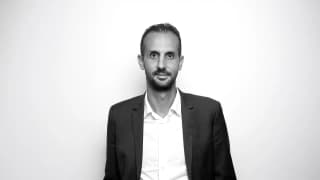
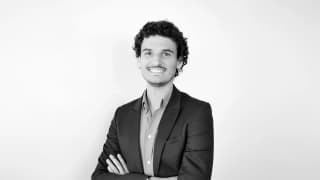
Sylvain Denoncin chose to counter the stigma surrounding recruitment for people with disabilities. Yet, 80% of disabilities are invisible. He created tailored solutions through his company Okeenea.
As part of the summer break, the teams at impact.info invite you to (re)listen to one of our episodes published this year.Okeenea led by Sylvain Denoncin .
Enjoy listening!
Juliette Boulegon
impact.info journalist
Published on 7 August 2024
Transcript Audio in Français — text automatically translated· AI-generated transcript
0:00 Hello, this is Juliette and welcome to the podcast for those who want to make 0:10 changes within their company. 0:13 Adapting your company to all its employees seems obvious, but as soon as 0:18 that employee is in a situation of disability, it seems more complex, more complicated 0:24 to implement. 0:26 So, to counter this, Sylvain Denoncin, our guest today, created Okeenea, a 0:31 company that develops tools to make places deemed inaccessible 0:37 accessible to its employees in a situation of disability. 0:40 So hello, my name is Sylvain Denoncin, I'm 45 years old, I was born in Melan in the 0:46 Yvelines. 0:47 Currently, I am the president of the Okeenea group, based in Lyon and which has been 0:54 specializing for 30 years in making the city and its buildings accessible to people 1:00 with disabilities. 1:01 And I am also the vice-president of the association of professionals for the accessibility 1:06 of the city, which brings together about sixty structures specialized in this field 1:11 of accessibility. 1:12 And so, my first question, Sylvain, I would like to understand precisely your actions 1:20 within your company. 1:22 So, the Okeenea group specializes in making the city 1:27 and public buildings accessible to people with disabilities. 1:31 This takes several forms today. 1:33 We have an Okeenea building activity that carries out accessibility work, whether 1:39 for local authorities on their buildings or for private clients 1:44 like FNAC, Cultura, the hotels of the Accor group for example. 1:48 And so, we make these buildings accessible in accordance with the law of 2005 and the standards 1:54 in force. 1:55 We have a second activity where we distribute products on a website, Okeena-products, 2:00 for accessibility professionals. 2:03 Then, our historical job at Okeena-tech is to create solutions for sound signage. 2:09 So, you may have heard us at a pedestrian crossing with a bell, a jingle, 2:10 or a spoken message saying 'Red, pedestrian, rue de la République.' 2:16 These are systems we have developed that allow visually impaired people to activate the sound signal that is embedded in the pedestrian crossing to 2:20 simply know if the light is red or green. 2:23 And then, on this same idea of sound signage, we install beacons at the entrance 2:29 of public buildings or in transport networks like the metro in Paris, the 2:31 Lyon metro, the SNCF train stations and soon the Grand Paris train stations. 2:36 Our latest activity, which is the most innovative, is our startup that has developed a guiding application for people with disabilities, but it is... 2:40 2:45 2:49 2:54 A lot of inclusive design means that as a tourist, you can also be in a 2:58 situation of disability or with a stroller or temporarily in a wheelchair or with 3:04 crutches. 3:05 And so, the goal of this free application called Evelity is to 3:09 offer you, in a way, a pedestrian GPS that adapts to your needs to help you move 3:14 around transport networks, universities, museums, or local government buildings. 3:19 And I think it's good, at the beginning of the interview, to perhaps remind what it means to be 3:20 disabled. 3:25 And then, maybe a figure, how many people are disabled in France? 3:26 So, worldwide, there are 1.3 billion disabled people, in France, 12 million 3:32 disabled people. 3:37 Often, we have a much narrower image, which is schematically limited to 3:38 people in wheelchairs, blind people, but 81% of disabilities are invisible. 3:44 So, if I take this figure of 1.3 billion people worldwide, that's 500 million 3:49 people with a hearing impairment, 500 million people with a cognitive 3:54 or mental disability. 3:59 We could create entire continents with these profiles. 4:00 And in fact, we can easily imagine that 60 million people in wheelchairs worldwide, 4:05 could create a country like France, which would then be perfectly accessible. 4:10 What I mean by that is that it's the environment, ultimately, that creates the 4:13 disabling situation and we could design spaces that are much more accessible. 4:18 And we realize this when we use a stroller in Paris, when we have a leg 4:23 in a cast or when we have a temporary hearing problem. 4:28 So, it's really the situation that creates the disability. 4:33 So, how do we create these solutions in cities that were 4:35 not at all built for people with disabilities? 4:40 So, for us, there is a dual approach. 4:44 There is a historical approach to accessibility which is to work on the built environment. 4:46 Ideally, we should design it right from the start. 4:50 When we build a new building, it doesn't cost much more to design it 4:53 in an intelligent and accessible way or very little more. 4:56 These are adaptations. 5:01 But indeed, the 2005 law in France leads us to do a lot of renovations 5:02 of old buildings. 5:07 And for example, the Paris metro network is starting to age and was not at all designed for 5:08 people with disabilities. 5:13 So, it's a mix of equipment, adaptations, and physical work that 5:15 will facilitate, with a very simple example being the ramp, access to a 5:20 facility. 5:26 5:27 And then, more and more, and it's a field that we care about, is to integrate 5:32 the concept of digital solutions to facilitate the interface between a physical person, 5:38 a user and the environment to be able to communicate, to make the journey easier, 5:45 like for example smartphone applications that will allow to activate beacons, 5:49 lights, have a GPS that guides me in the building, that gives me information related 5:54 to that building and that will allow, in reality today, to have a greater 5:59 autonomy for users. 6:01 It might also be important to remind people who are not disabled of the positive impact 6:06 it can have for them too and maybe they can realize, with examples you will give us, 6:11 how it is a daily mental burden to be disabled in a city that is not adapted. 6:15 If we project ourselves into a situation of disability, we quickly understand, even if we will be far from a 6:20 total empathy, that being blind in the Paris metro network is incredibly complex. 6:26 Being in a wheelchair, going down at home, but does the road that leads me to transport, 6:33 and from transport to my destination building not have breaks with thresholds of more 6:34 than 10 cm for example, it's actually 2 cm, what guarantees me that I won't 6:38 end up in a dead end? That's where the question of data and the digital part 6:43 of accessibility can allow us to propose routes that perfectly adapt 6:48 to the needs of people. 6:55 That's the first thing. 7:00 The second is that we realize that when we design buildings to 7:02 be accessible to everyone, it benefits everyone. 7:06 When we create a ramp at the entrance of a bakery, it allows everyone to 7:11 access it more easily, especially with a stroller, there is a flow of circulation 7:14 that is smooth and it benefits everyone. 7:19 These adaptations make the experience of visitors, whoever they are, more pleasant 7:23 and today we talk a lot about positive experience. 7:25 Ultimately, accessibility, if it is essential, vital for 15% of the population, 7:33 is useful for 100% of visitors to a site. 7:36 What is it that you have created, what you are putting in place, for example, for a 7:42 person in a wheelchair, but also a visually impaired person or a person who simply has 7:45 certain disorders, whether physical or mental, what are you putting in place 7:49 to simplify their life within a company? 7:54 Specifically, if I take an example of a workspace with several floors 7:58 where there are employees, the only physical part is that we will install small 8:00 Bluetooth beacons, it's a kind of tiny box that runs on battery 8:07 with a 5-year autonomy, we install this on the ceilings of circulation areas, 8:11 halls, corridors, to geolocate the user's phone, know where they 8:15 are, since GPS does not work inside buildings, and so once we have installed. 8:20 8:25 8:31 These little Bluetooth beacons will help us know where the person is, and from there we 8:36 will be able to guide them. 8:37 The specificity of our Evoliti application is that the interface will adapt, so 8:45 if you are blind, for example, you will have an interface that is dedicated to you, mainly 8:49 voice-based, we will guide you step by step, continue straight ahead, turn right, go down 8:55 the stairs, take the elevator, so it's a vocal description for visually impaired people, 8:59 but it's also useful for cognitively impaired individuals, 9:04 and we realized that even for people in wheelchairs, when I need to have 9:07 both hands free to use my wheelchair if it's not motorized, having 9:13 an earpiece that gives me step-by-step instructions is very useful, but at the same time 9:18 many users are now used to using a map and therefore to 9:22 follow a blue path and orient themselves, and so ultimately it's this idea that the interface 9:29 of the application will adapt to my needs, and then the route itself will adapt 9:34 to my needs. 9:35 If I don't want to or wish to or can't take the stairs, for example, in the 9:41 settings I can say I only want to take the elevators, and so the 9:44 route that will be proposed to me will be adapted to my capabilities. 9:47 Impact.info, doing business differently. 9:52 Well, thank you Sylvain for all these answers. 9:56 Did you imagine that at 16 you would be doing everything you do 10:00 today? 10:01 Well, when I was 16, I dreamed of being an astrophysicist, yet I became 10:06 a business leader, maybe because at the end of high school you have to make 10:11 a choice, at least back then you had to choose between the economics 10:15 or science tracks, so maybe today I would have mixed the two by doing economics 10:20 and physics, but back then you had to choose so I leaned 10:25 more towards the economic track out of interest, and at the same time I don't regret it since today 10:30 as a business leader it allows me to develop a whole bunch of projects with a 10:36 social impact. 10:37 And well, thanks to Sylvain who is the head of Okeenea, and this is a meeting that 10:42 you can find in our Disability section which brings together all the episodes 10:46 focused on best practices for people with disabilities. 10:50 This was Impact.info, doing business differently. 11:00 Subtitles created for the Amara.org community. Embed this interview on your site
Show this player directly on your site to share the interview with your audience.
Copy embed code View generated code
![[Rebroadcast] Why a customer with a disability is even more important than others?](/_next/image?url=%2Fuploads%2F2023%2F10%2FSylvain-Denoncin-1.png&w=1920&q=75)