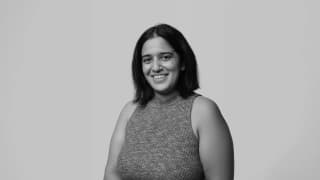
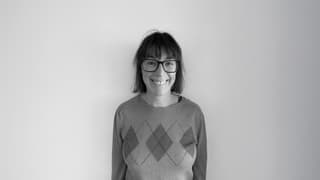
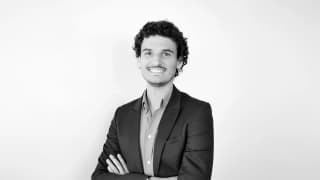
Bristol & Bath Regional Capital is an investment company with a significant difference, summed up in director Jari Moate’s own words: “Money is fuel”. In this case, fuel for wide-ranging positive societal and environmental impact across south-west England.
As part of our summer break, the impact.info team invites you to (re)discover one of our episodes.
You can also find our article on the topic right here .
Enjoy listening!
Killian Flagey
impact.info director
Published on 20 August 2026
Photo credit — Bristol & Bath Regional Capital
Transcript Audio in English· AI-generated transcript
0:00 We do a tiny bit of micro-lending for very high-impact startups. 0:05 Also some highly strategic, from a national perspective, 0:09 companies in, for example, the circular economy and recycling of renewables and materials. 0:15 So the hard stuff, critical minerals and so on that we need in this country, 0:19 and that would be in tens of millions. 0:23 impact.info 0:25 Doing things differently. 0:27 Hello and welcome to Impact Info, 0:29 where we meet the people making a positive impact on society. 0:34 Today's guest heads a team at an organisation that aims to do just that 0:39 via the single thing that underlies almost everything else in this world. 0:43 Money. 0:45 Hi, I'm Yari Mote. 0:47 I'm Investment Director at BBRC, or Bristol-on-the-Bath Regional Capital. 0:51 Hello, Yari. 0:52 Hello. 0:53 Now, I know BBRC defines itself as a place-based impact investor and asset manager. 1:00 For many listeners, there is a lot to unpack there. 1:03 From the name, I'm guessing that place-based refers to Bristol-on-the-Bath in south-west England. 1:10 But tell us what you actually do. 1:12 Well, in terms of place-based, our remit is really across the south-west. 1:17 And what is that activity? 1:19 As an investment firm, what we do is raise, arrange, and deploy investment into companies 1:27 that are highly purposeful, that are delivering lots of impact, 1:30 into sometimes charities, who I like to call enterprising charities in particular, 1:35 and also asset owners who are, for example, perhaps decarbonising something that they own. 1:41 So it is about channelling money from outside the region into the region to create impact. 1:47 And like you said earlier, the concept of money for us is fuel for those purposes as much as anything. 1:53 Can you give us a couple of examples of the type of business or specific businesses? 1:58 Yeah, sure. 1:59 So we invested into what is the tallest wind turbine in England. 2:04 But this is just under 5 megawatts wind turbine. 2:08 It's community-led, community-owned, and it generates clean energy 2:13 and also surpluses to serve a vulnerable community, 2:16 which is high under the deprivation indices here in the north part of the city. 2:21 It's a delightful kind of mix of a lot of different impacts coming together there. 2:25 And the team that worked on that were excellent, led in part by Dr. Andrew Garrod, 2:31 who's kind of one of the gurus and godfathers of wind power in Europe. 2:35 And then, of course, a dedicated team from local community with tons of expertise in how to do renewable energy. 2:41 Others are quite different, actually. 2:43 As we support a company or invested in a much smaller company 2:47 led by a Moroccan originally migrant to this country. 2:52 And we invested into his company, which produces a variety of nut butters, 2:56 which are, can I say, Vanessa, absolutely delicious. 3:00 The company's name is Yumelo. 3:02 Don't mind giving them a shout. 3:03 But the point is that on the one hand, those are produced ethically, 3:06 which is obviously a baseline for us. 3:08 But the second point is that the firm is run by often an underrepresented or underinvested in founder. 3:14 And we link him up and his team up with others who might be operating in that sort of demographic space. 3:20 And so there's a sharing of knowledge and experience as well that goes on, which is delightful. 3:24 Currently, do you know how many organizations BBRC are supporting? 3:30 The number is really quite high. 3:32 It's well over 100 that we have been engaged with, supported in some way in another over the years. 3:37 And we actually celebrated our 10th year anniversary this year at a very civilized event. 3:43 And what that showed me was how many partners, both civic and private institutions, 3:50 both investors and investees and academic institutions have supported us over the years 3:55 and partnered with us and delivered some of these initiatives. 3:58 And that's really, really crucial for place-based impact investing. 4:02 It is the networks that you spend time building up, generating trust with, 4:07 and delivering sort of goals on their behalf, 4:10 as well as allowing them to kind of join forces with your own aims and objectives in terms of impact. 4:15 So sometimes that means we've managed money into that investment for that investee. 4:20 At other times, we've also advised them on how to secure investment with third-party investors. 4:27 And the ones, the live cases obviously churn and change. 4:31 So at any given time, we've probably got about 10 to 15 live cases that we're working on. 4:36 And it can be a super broad span as well from we do a tiny bit of micro-lending for very high-impact startups, 4:44 also some highly strategic from a national perspective companies in, for example, 4:50 the circular economy and recycling of renewables and materials. 4:55 So the hard stuff, critical minerals and so on that we need in this country. 4:59 And that would be in tens of millions of investment that's required for that. 5:03 So it's quite a spectrum at times, you know. 5:05 And in the middle as well, across or parallel, I should say to that, 5:09 BBRC delivers on homes as well, so ethical and affordable homes. 5:13 I've done a few in my team which have had very specialist partners working with them, 5:18 such as refugee resettlement partners or small batches of affordable housing for high support needs. 5:25 OK, yes, as you say, very wide ranging people that you are supporting. 5:30 You learn a lot, Vanessa, on this journey. 5:33 Honestly, I've learned about, you know, scores of different types of technologies, 5:38 a hundred different business models over the year. 5:41 And you meet some absolutely wonderful people. 5:44 But I tell some of the new joiners in my team as one thing we're sure of, 5:47 we only work with two kinds of people in this firm. 5:50 They're either nice people or very nice people. 5:54 And I would say it gets proven to be the case time and again. 5:57 So clearly all of these projects have social or environmental impact. 6:02 There's a lot of ethical basis in there. 6:05 So do your investors in effect sacrifice a degree of financial profitability 6:10 because of their commitment to that social or environmental impact? 6:14 Not from our side. 6:15 So that is never the proposition that we make at BBRC at all. 6:19 We talk about risk adjusted returns, 6:21 which means matching the returns with the form of risk 6:23 that an investor is being asked or expected to take. 6:26 Typically, investors have kind of buckets they take investment sums from, 6:32 and that usually has parameters around it. 6:36 So then they're seeking to meet their own internal parameters. 6:39 And that's what we try and tune into when we're making investments 6:42 and support those kind of returns that investors need. 6:46 The real purpose for being kind of as firm as we can in that way, Vanessa, 6:49 is that we want more capital to enter the space. 6:52 And generally speaking, capital is conservative. 6:55 So people generally speaking want to try and stick to the parameters 6:58 that they've already been sticking to. 7:00 You know, this can offer challenges, particularly if you think, 7:03 well, some of what you're doing in the impact space 7:05 is dealing with economic externalities. 7:08 There are previously costs that have not been met. 7:10 Just think of waste or pollution or indeed a waste of human resource 7:13 in terms of poverty or lack of skills. 7:16 Those kind of things have to be sort of priced back in. 7:19 But no, we never make a proposal on the basis that an investor 7:23 should invest at a lower rate and receive a lower rate 7:26 simply because it's impact. 7:28 It's the one particular project that you've really enjoyed yourself 7:32 that you personally have been involved in. 7:34 I'm going to talk about the Park Community and Workspace Centre 7:38 in South Bristol. 7:40 This is where a dilapidated school building, 7:43 one of those things that was sort of built in the 60s 7:46 and was full of rotten stuff falling in roofs and so on and so on, 7:50 was housing three different things actually. 7:52 One was a regular sort of workspace for hire 7:56 by private sector small businesses. 7:58 Number two, it was offering community space for hire 8:01 with leisure facilities, sports and so on. 8:04 And number three, it was offering a school for children with special needs. 8:08 And all of those things were at high risk of closure 8:11 because of the costs of that building, 8:13 maintaining it, constantly paying utility bills 8:16 literally through the roof, 8:18 because the roof was letting water in and heat out, right? 8:21 So the plan that group brought to me 8:24 was to pull down whatever was there initially, 8:27 just level it and start again. 8:29 And they built a whole new environmentally excellent building. 8:34 But we invested quite early on into that plan. 8:37 What I really enjoyed about that, I have to say, 8:39 I do like a bit of kick it, feel it, touch it, walk in it, 8:42 sit in it, enjoy it, you know? 8:44 And it was from seeing kind of a demolished car park 8:47 eventually going through all the stages 8:49 because it was my job to not only invest but visit regularly, 8:52 stick a hard hat, boots and high viz on 8:55 and go and check on progress, right? 8:57 So I got to see it at all of these points of progress. 9:00 That building's been completed now and fully occupied for three years. 9:05 It's doing great guns. 9:07 All its costs are reduced absolutely dramatically. 9:10 It's now working with a community surplus in its balance sheet. 9:14 It's repaying its loan back to us because it was a construction loan. 9:18 But the result has been absolutely brilliant 9:20 and I love to take visitors who come to see what we do 9:23 and we can just host meetings up there, you know, 9:25 and the team are delightful and you'll get a brilliant tour. 9:28 Are they still doing those same three activities? 9:31 They're doing the same three activities. 9:33 Thank you, yeah. 9:34 So the same three activities have been now decanted from the old into the new 9:39 but they've added a few additional things in as well, 9:41 like a really excellent kitchen and cafe area, 9:45 additional buildings for producing music, 9:48 particularly for youth, studio spaces and so on. 9:51 So they upgraded everything tremendously as well 9:53 and increased the number of uses it could be in. 9:57 impact.info 9:59 Doing things differently. 10:01 Right, I have a personal question to end on, if I can. 10:06 What would 16-year-old Yari Mote say about the work that you are doing today? 10:12 Ah, 16-year-old Yari Mote would probably be utterly baffled. 10:19 It's been quite a switch along the way to end up in this space, 10:22 but I think it's about problem solving as you go through life. 10:25 I've always had a desire to see a better world than the one we find 10:29 and to leave a better world behind than the one we depart from. 10:32 So I think 16-year-old me would probably say, yes, that remains consistent. 10:37 You go, yeah, that makes sense. 10:39 Yari Mote, thank you. 10:40 And thanks for all of that insight into the essential role of investment 10:45 when we are aiming for impact, clearly. 10:48 Thank you. 10:49 You're very welcome. 10:50 Thank you. 10:51 That was impact.info. 10:54 Doing things differently. Embed this interview on your site
Show this player directly on your site to share the interview with your audience.
Copy embed code View generated code
![[Rebroadcast] Why focus on money when you’re aiming for impact?](/_next/image?url=%2Fuploads%2F2026%2F03%2FJari-Moate.jpg&w=1920&q=75)