translate This article was automatically translated from its original Français version. Read the original
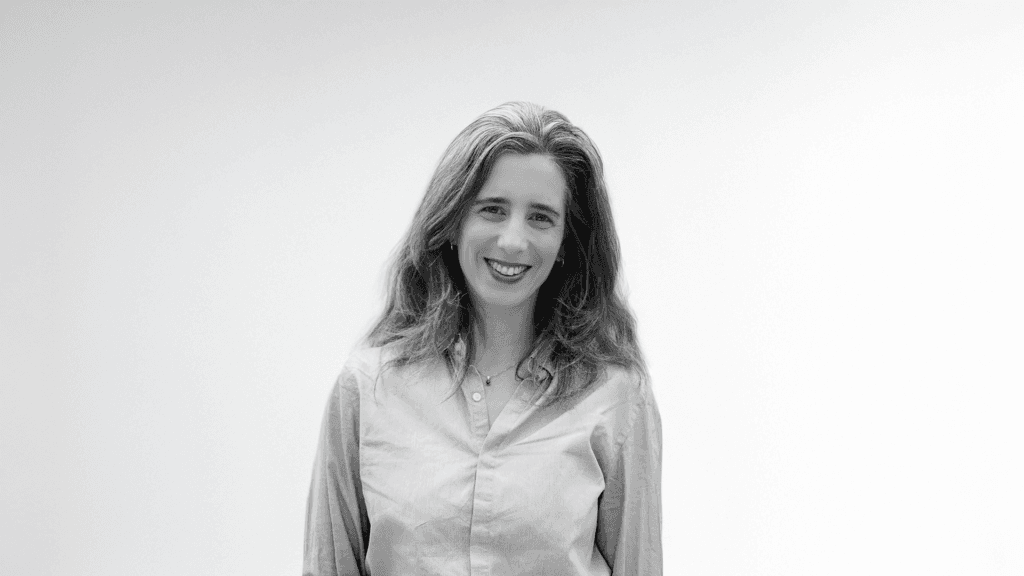
Clémence Vaugelade is the Deputy General Director at FAIR, an association that brings together banks, management companies, NGOs, and social enterprises that open their capital to citizens, working together to promote and develop impact finance and solidarity savings in France and around the world.
During the summer break, the impact.info team invites you to (re)listen to one of our episodes published this year.
This episode highlights the testimony of Clémence Vaugelade , Deputy General Director at FAIR .
Enjoy listening!
Florence Jaillet
impact.info journalist
Published on 25 August 2025
Transcript Audio in Français — text automatically translated· AI-generated transcript
0:00 Hello and welcome to the podcast for those who want to make a difference 0:09 within their company. 0:11 Our money has power, political, social, and environmental power. 0:16 But we need to know where to invest it, Clémence Vaugelade. 0:20 Clémence Vaugelade, I was born in 1984 in Paris and I serve as the deputy 0:28 general director at FAIR. 0:30 So what is FAIR? 0:31 FAIR is an association that brings together banks, asset management companies, 0:36 NGOs, and social enterprises that open their capital to citizens, particularly experts 0:41 who work together to promote and develop impact finance and solidarity savings in France, 0:46 but also around the world by participating in various initiatives 0:52 in France and Europe. 0:54 FAIR has been managing a private savings label called the Finansol label for 25 years, 0:59 which certifies financial products that are solidarity savings products and 1:05 which allow savers to recognize different solidarity savings products, 1:09 but also to have a guarantee of transparency and social utility of the financial product. 1:16 Can we explain what impact investing and solidarity savings are? 1:18 I'll start with solidarity savings because in France, we have more history 1:22 ultimately on this alternative finance that was born in the 1980s, at a time 1:26 when there were many unemployment issues in France. 1:32 Engaged individuals, particularly at the Caisse des dépôts, decided to create products 1:35 that would allow savers to contribute to solving social and environmental issues and 1:42 to really finance the real economy in the territories. 1:47 So, solidarity savings was born like this in the 1980s in France and it's 1:51 the circuit between the saver and the social utility project. 1:56 Between the saver and the project, there are financial products and that’s what 1:59 has allowed the association to develop the FinanSol label and to have developed 2:04 a number of solidarity savings channels that mean today we have 2:09 over 36 billion in assets in these products. 2:14 As for impact investing, there are overlaps with solidarity savings 2:18 but it’s a movement that comes to us more from the United States. 2:21 Impact investing was born in the 2007-2008 period, it was the Rockefeller 2:24 Foundation that first used the term impact investing and 2:30 what does it consist of? It simply consists for an investor to formalize 2:35 an impact thesis, to have an intention and through their funding to enable 2:39 companies to carry out projects with a strong social or environmental impact and 2:44 to have what we also call additionality, meaning that these projects would not 2:50 necessarily have come to fruition, would not have been realized in the same way without 2:54 the funding in question. 2:57 2:59 Where can we put our money as citizens? Solidarity savings, 3:03 where is that going to happen? 3:04 So, there are three main channels for solidarity savings, the first one is 3:11 solidarity employee savings, so simply all the French people, who are 3:17 about 12 million in France, who have employee savings plans can 3:21 save in what we call solidarity funds where part of the fund will help 3:27 finance projects with high social utility. There is the banking and insurance channel where 3:34 you can also save in solidarity savings products through your 3:38 bank or your insurance, so there is a variety of products, for example, the 3:43 sharing savings accounts, which simply means contractually agreeing that part of the 3:48 income from your account will be donated to an association of your choice. But there are also 3:53 solidarity funds in banking savings and also in life insurance since in unit-linked insurance, 3:59 all insurances are required to present solidarity units to savers, just like in employee savings, 4:05 there is an obligation for companies to present a solidarity unit to 4:09 savers. And then the third channel is what we call solidarity shareholding and so 4:14 this is simply the fact that a saver will directly take social shares, investing 4:21 directly in social enterprises that open their citizen capital, and in these 4:26 enterprises, we will find a variety of actors who will intervene in different 4:31 fields, such as inadequate housing, organic agriculture, renewable energies, and these are often 4:36 cooperatives, actors in the social and solidarity economy who are in this approach and who 4:41 thanks to the savings of citizens, citizen savings, will be able to carry out a number of 4:47 projects with a strong social impact all over France and even abroad since there are also 4:53 actors who then invest this money in emerging countries to finance 4:58 development. How does all this ultimately change the game, profoundly changing things 5:03 in society, in our daily lives? First of all, the fact that this channel has been established in 5:08 fact of solidarity employee savings, it has really allowed to significantly increase the 5:14 amounts invested in solidarity savings and thus increase the collection, we are seeing very good growth rates and we see that with the regulatory framework that 5:20 has been imposed on this channel, it has really allowed to mobilize more and more citizens, 5:25 French people in this adventure of solidarity savings. It should be noted that indeed around 5:30 2010, the 90-10 solidarity funds are mandatorily presented to savers, 5:36 everyone is free or not to deposit their money in these funds but in any case everyone is 5:42 exposed to it. All French people who have an employee savings plan and company savings plans are systematically offered these funds and then we see that some 5:47 companies have also decided in their policy, also with their supervisory board which is 5:52 the body that will allow the development of all the employee savings plans of the company 5:57 managed both by company management and by unions, to also promote 6:02 the visibility of these funds with, for example, matching mechanisms. So there are 6:09 certain companies that will prioritize matching only on this fund to 6:14 6:20 , 6:25 , 6:31 encouraging their employees to save in solidarity funds in particular. This obviously allows 6:37 solidarity companies to raise more funds to have a greater impact and we see 6:46 that we reached for example in 2023 30.2 billion euros in solidarity savings with about 6:55 18 billion euros of that amount in solidarity funds which are 7:01 distributed towards employee savings and this is what allows concretely in terms 7:06 of funding flows to have financed to the tune of 680 million euros social enterprises 7:12 that have social or environmental impact projects in France or abroad and which 7:18 has financed nearly 1450 projects. So we see that it has a concrete impact. In 2023, the 7:26 solidarity savers ultimately contributed to supporting these 1450 projects but also to concretely 7:33 housing more than 2000 people in decent housing, converting more than 2600 hectares to 7:41 organic farming, also supporting farmers who are converting to organic and 7:47 also financing development since part of the companies also direct funding towards agricultural cooperatives in Africa, Latin America, and Asia to 7:53 finance development through microfinance for example. 7:59 Impact.info, doing business differently. Clémence Vaugelade, you are the deputy general director 8:04 at FAIR which works to promote and develop impact finance and solidarity savings. 8:11 At 16, we let ourselves go in France to create our own business or at 16 what were you doing? Can you 8:16 imagine being where you are today? I think I might disappoint you 8:20 but at 16 I didn't necessarily have a clear plan for my life, I didn't really know what 8:24 I wanted to do. I was a high school student maybe the most classic type who 8:30 was looking for her path and hesitating a bit about her future professional journey. My 8:37 commitment later to the non-profit sector came really later, a bit by chance as well in 8:42 life since I have a background more in lobbying and public affairs and it was by starting an adventure in the non-profit sector in the field of disability that 8:49 I got bitten by all these subjects and that I really wanted to contribute in my own way 8:54 also within the framework of my professional journey to all these issues and so there you go I 8:59 really started in the context of the rights of people with disabilities and then 9:06 to eventually go down the path of how we finance all these projects and how 9:11 we can all at our level contribute to providing solutions since unfortunately 9:17 and it's been a long time we've been observing that the state and public authorities are not able to 9:23 meet all existing needs and that I wanted to also encourage everyone to contribute to these solutions and savings obviously is a very interesting lever and that we 9:28 sometimes underestimate due to lack of financial education sometimes because we don't really look at 9:34 what's in our financial products we don't really know we get lost quickly and it's scary 9:42 to open Pandora's box but so it's really the role of the FAIR association it's 9:48 really to raise awareness among savers about the power of their money and the finançol label really 9:53 also aims to serve as a compass if you're lost there's this compass that 9:57 of the finançol label you can follow it and you will indeed have plenty of information on all 10:02 the different ways to save solidarity through employee savings, through your bank, through 10:07 your insurance but also directly if you want to invest directly in social enterprises. 10:14 10:20 10:25 10:29 Thank you to Clémence Vaugelade, Deputy General Director at FAIR, who works to promote and 10:35 develop impact finance and solidarity savings. You can find this podcast 10:40 on our website impact.info. This was impact.info, doing business differently. Embed this interview on your site
Show this player directly on your site to share the interview with your audience.
Copy embed code View generated code