translate This article was automatically translated from its original Français version. Read the original
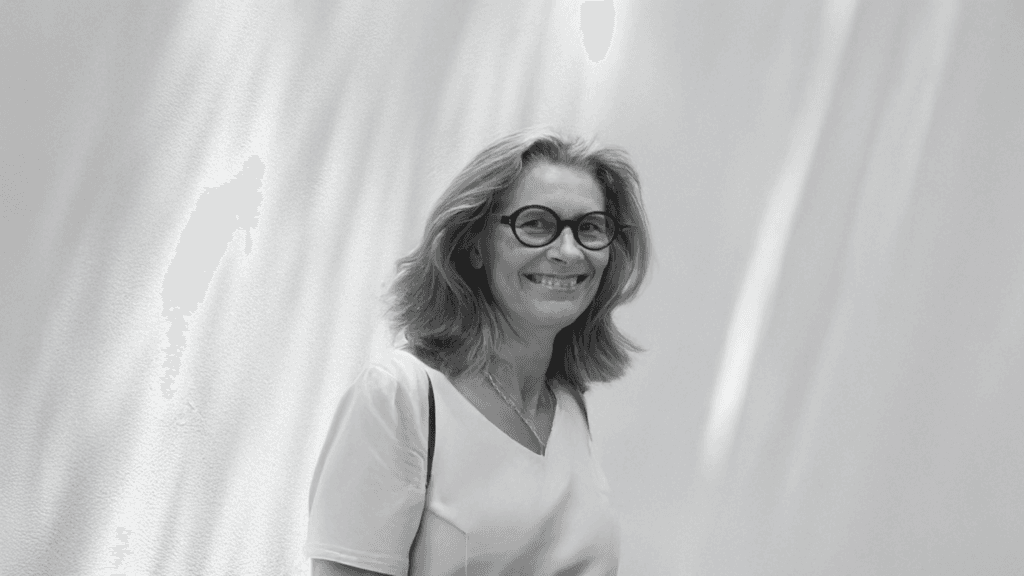
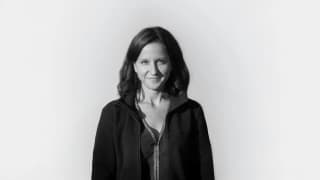
Anne Guénand is the founder and director of the cooperative company Django mesh, which publishes the Bip Pop solution for cooperation and coordination of local solidarities, based in Oise, connecting people in need of help with those who want to help.
During the summer break, the impact.info team invites you to (re)listen to one of our episodes published this year.
This episode highlights the testimony of Anne Guénand , founder and director of the cooperative company Django mesh, which publishes the Bip Pop solution for cooperation and coordination of local solidarities.
Enjoy listening!
Florence Jaillet
impact.info journalist
Published on 18 August 2025
Transcript Audio in Français — text automatically translated· AI-generated transcript
0:00 Hello and welcome to the podcast for those who want to make a difference 0:09 within their company, by reviving the human connection that unites us all, the intergenerational bond 0:16 as well. 0:17 I am Anne Guénon. 0:18 I am Anne Guénon, I was born in 67 and I have been a teacher-researcher at the University 0:24 of Technology of Compiègne for over 20 years, and I am also the founder and today 0:28 the manager of the cooperative society Django Mesh, which is known as the bipop solution 0:35 for cooperation and coordination of local solidarities. 0:39 What does this type of structure allow to highlight and what do you do? 0:43 Today, there are still difficult situations for 2 million elderly people 0:48 in France, 7 million people of all ages who are isolated, 0:53 11 million family caregivers, who often do not identify as caregivers 0:56 because they are not aware of this specificity, they do it naturally. 1:00 It should be noted that about a third of caregivers disappear before their care recipient. 1:03 One in three French people has mobility difficulties, there are issues, we know 1:08 a number of reasons, loss of mobility and autonomy is one, the distance 1:12 between children and their elderly parents, in France it is an average of 260 km, the changed 1:17 relationship between generations, the neighborhood solidarities that fortunately still exist 1:22 but are no longer sufficient, and then more recent problems, post-Covid, associations 1:28 are struggling to recruit new volunteers. 1:31 Solutions exist, first of all, citizens who are ready to act, we can also count 1:35 on these millions of people who are elderly or active and who wish to engage in a 1:40 punctual and secure way. 1:43 Volunteering is evolving from a more regular commitment to an à la carte and 1:48 occasional commitment, always with a necessary framework. 1:51 Our cooperative activity of collective interests, approved and fair, so we also have visibility 1:58 with local authorities, we have a social utility solidarity enterprise, aimed at 2:02 local authorities who wish to mobilize their citizens in local solidarities 2:08 for mobility and the prevention of isolation of the elderly or vulnerable people. 2:14 So we provide them with both the engineering and the technical system to coordinate 2:21 this flexible, secure, à la carte volunteering, so it is the citizens who choose 2:26 the types of missions they will undertake, from accompanying shopping, accompanying 2:30 to medical appointments, to accompanying to the hairdresser to buy a baguette 2:34 or friendly visits, help with small DIY tasks, IT assistance, 2:39 administrative help, any type of action that will help these people who are losing autonomy 2:44 in their daily lives. 2:45 Flexible, because it is when the person wants, when they can, without constraint or 2:50 obligation to have a recurrence every week, it is the citizen who chooses the mission 2:55 they want to respond to and then secure because each volunteer meets the local authority 3:01 or the association that has the delegation to animate the volunteers and will sign a 3:06 volunteer charter, which in a way commits them to enter into a 3:09 mindset and a formality in their relationship with others. 3:13 It's time saved for local authorities, since once the elected officials 3:19 and services have identified the needs, Hip-Hop allows them to address 3:24 these needs in the form of an intermediation platform, connecting 3:29 people who need help with those who want to help. 3:33 And where we really need to meet a challenge is that 95% of people 3:38 who need help are not connected to the Internet. 3:40 So we provide a multichannel solution with a phone component, we equip the 3:46 telephone service desk with an administrative tool that allows us to capture 3:52 requests coming in by phone in exactly five clicks. 3:55 And then once the request is formalized, it is sent to all 4:00 the volunteers who have chosen the area of intervention and who have also chosen 4:05 the type of mission concerned. 4:06 Then, what we can tell you is that 50% of requests are accepted in less 4:12 than three hours across all four regions where the Hip-Hop platforms are deployed. 4:16 I have a strong belief in new modes of civic engagement and in the Hip-Hop solution as an antidote to the isolation we see spreading across the national territory 4:17 and sometimes the selfishness we can observe. 4:22 In fact, no, what is optimistic is this concrete engagement that serves 4:29 the elected officials. 4:31 And we know how difficult it is today, elected officials are losing financial resources. 4:37 We can provide human contributions to this deficit. 4:38 And the state cannot cover everything. 4:44 I think that, precisely, it's a bit the same stance regarding digital technology. 4:48 Digital won't do everything either. 4:50 If we want to build a society in which we want to live, it's up to us to 4:54 roll up our sleeves and connect with one another, in the richness 4:56 of our diversities. 5:00 In what way do you think this work you are doing, these actions, this platform are shifting 5:04 the lines, contributing to changing things at this level? 5:05 Because we are bringing to local authorities, to mayors and services, a set 5:11 of tools they can seize. 5:15 They will ultimately take ownership of this engineering that will allow them to coordinate, to transform 5:20 solidarities in a very concrete way and to rehabilitate this active solidarity 5:22 compared to a more passive solidarity represented by family or friends, which is taken for granted. 5:28 So here, there is really a role for local elected officials in their ability to empower 5:34 their citizens. 5:39 5:41 5:47 5:49 And the device completely fades away in favor of the identity of the community. 5:53 So we distribute it as a white label and allow the territories to reclaim it 5:57 and also benefit from reaching a whole range of residents, from the youngest 6:01 to the oldest. 6:02 So we have a real benefit from intergenerational meetings. 6:06 There is also a definite advantage, that of staying at home, it allows them to remain 6:12 a bit more autonomous and to stay in their homes. 6:14 More than 85% of French people wish to continue living where they have lived 6:19 their lives and to be able to stay connected to what ultimately constitutes the foundation of their 6:24 lives and their social ties. 6:26 We support this desire in an intergenerational logic as well. 6:30 The range is also very broad. 6:32 It allows communities to refine their actions; we see in some municipalities 6:37 for example that it is the seniors who come to support the younger ones in academic 6:41 support. 6:42 We can imagine that sometimes, it is rather the seniors who will be helped by being younger. 6:45 Here, it’s the opposite. 6:46 And then in another municipality, in the Nord department, the municipality bought a tricycle 6:47 and volunteers come to pedal along the canal and allow the oldest people to take walks with the wind in their hair. 6:52 I find that extremely poetic and also a magnificent generosity. 6:57 What was the origin of this desire to create for you? What motivated you to start from this theme? There was something that particularly touched you. 6:59 What brought you onto this path? 7:04 My planet was hit by a meteorite in January 2015. 7:08 I was hit by a car at a crosswalk and I was bedridden for several months without daring to ask for help from my neighbors who offered it to me. 7:11 And that was the beginning of a personal questioning. 7:12 I wanted to understand how it happens for others, especially how it happens when you are in a situation of a bit more durable fragility. 7:14 I met the evening club in my city of Compiègne and I understood by questioning 7:19 the members of this club that meets to play cards, play Scrabble, they prefer to keep their neighbor's phone number prominently displayed on the wall above the phone 7:24 just in case. 7:29 But that 'just in case' is always too late. 7:33 That is to say, we never want to disturb our neighbor thinking 'I can still manage, at worst I'll stay at home, it's not a big deal.' And in the end, we lock ourselves in. 7:37 7:40 7:45 7:51 7:55 7:56 7:58 8:02 8:06 8:07 We close ourselves off to possibilities of acting, going out, meeting other people 8:11 to avoid disturbing others. 8:13 We prefer to say, 'I don't need help, I don't need anyone' because 8:17 it's actually quite validating for our self-esteem to say, 'I don't need anyone, I'm doing just fine.' But recognizing at some point 8:21 that we are fragile, that we can no longer do what we would like to do or what we used to do 8:25 is ultimately an affront to our own dignity that we prefer to hide 8:28 under the rug. 8:33 So, this is a topic I wanted to bring to light and I chose to create 8:34 something that is useful to society and that is easy to grasp, easy to use 8:40 and that is transformative. 8:46 At 16, you can start your own business in France. 8:52 At 16, did you want to be useful? Did you have specific life plans? What did you desire? 8:55 Well, I remember that at 16, I applied to an association. 8:58 I have always done a lot of tinkering, making, building. 9:03 I had an engineer father who really taught me how to do things and I wanted 9:08 to help build all the prosthetics, orthotics for people who were 9:11 victims of those wars in the Middle East, I remember the year 76 which really 9:15 marked me. 9:20 It was a year of drought and then a year, I believe, of quite atrocious war 9:26 in Lebanon. 9:27 I have a pretty clear memory of wanting to get involved, so yes, it's part of my 9:30 DNA. 9:31 And then, I wasn't accepted into that humanitarian association, I didn't speak 9:35 the right languages according to their needs, but that's the memory 9:36 I have today. 9:40 And then, it transformed, I was a designer for several years in the 9:43 Rhône-Alpes region. 9:44 Then, I did research work in Japan at a design institute for the 9:49 mobility of elderly people and then I returned to the University of Technology 9:50 of Compiègne to teach, do research, so to pass on knowledge and be interested 9:56 in our society from the perspective of the use of tools or devices that we design. 10:00 Since we have, as designers, an important responsibility to propose 10:04 systems that transform our society, our way of living together. 10:10 Thanks to Anne Guénand, founder and director of the company that publishes the BIBOP 10:15 solution for cooperation and coordination of local solidarities. 10:20 You can find this podcast on our website impact.info. 10:26 This was impact.info, doing business differently. 10:29 10:34 Embed this interview on your site
Show this player directly on your site to share the interview with your audience.
Copy embed code View generated code