translate This article was automatically translated from its original Français version. Read the original
In an insightful interview, Marie Adeline-Peix, Executive Director of BPIfrance, guides us through the essential steps to successfully realize an entrepreneurial project. Creating and developing a business can seem daunting, especially if you decide to go it alone.
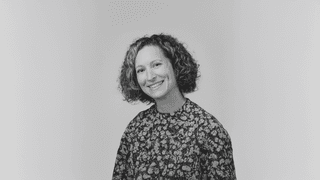
During the summer break, the teams at impact.info invite you to (re)listen to one of our episodes published this year.Marie Adeline-Peix , the Executive Director of Regional Partnerships and Territorial Action at BPIfrance .
Enjoy listening!
Juliette Boulegon
impact.info journalist
Published on 30 August 2024
Transcript Audio in Français — text automatically translated· AI-generated transcript
0:00 Hello, this is Juliette and welcome to the podcast for those who want to make a difference in their company. 0:09 Starting a business and creating your first or future company can seem daunting 0:12 when you don't know where to start or feel like you don't have a chance in this vast world of entrepreneurship. 0:17 However, our guest, Marie-Adeline Peix, who is the executive director at 0:21 BPI France, will prove throughout this interview that it's not impossible 0:24 for anyone to start their own business. 0:30 Hello, I'm Marie-Adeline Peix, I'm 54 years old, I was born in Fels, Morocco, and 0:34 I am currently the executive director at BPI France, and I am particularly 0:37 in charge of two topics: on one hand, the partnership with the regions and on the other hand, all 0:46 the support actions for business creation and entrepreneurship. 0:51 Thank you, Marie, for that introduction. I'd like to ask you as my first question, 0:58 what do we need to start a business? 1:01 Well, first and foremost, we need to be extremely motivated because 1:06 entrepreneurship is demanding. There isn't much that would prevent you from starting a business for some 1:09 reason or another, however, what is certain is that it requires a commitment and dedication at all times. 1:15 Then, the other thing that is also very important, not only for starting a business 1:20 but especially for succeeding in your entrepreneurial journey, which we strongly believe in, 1:27 is the importance of support. 1:31 An entrepreneur is often very lonely, and an accompanied entrepreneur has two to three 1:35 times more chances of succeeding than an entrepreneur who starts alone without support. 1:43 Today, if you start without support, you have a one in two chance that your business 1:47 won't last for three years. 1:53 If you start with support and well-funded, you have an 80 to 90% chance of growth. 1:58 So, if someone is alone and wants to start a business, how does that work? 2:03 The good news, once we've said that, is that there is in France an extremely 2:05 dense network of actors present all over the territory that has come together in a collective we call the Cap Créa collective. 2:12 These are associative networks that are, as I said, present throughout the territory. 2:17 They have over 3000 locations across the country. 2:23 Their mission is to support entrepreneurs in all phases of their project 2:30 with solutions that differ depending on the networks. 2:32 So, they are there to help and support you. 2:37 Thanks to these tools that are relatively new, can we all start a business? 2:41 Well, yes, we can all start a business. 2:46 What these networks cannot provide you with is the idea. 2:49 And that idea is yours; you are the one who built it. 2:53 On my pass Créa, you can contribute to its development. 2:59 3:03 3:07 3:11 3:15 We will support you in developing a business plan. 3:19 We will share information on many things related to your project. 3:24 But the idea is primarily yours. 3:26 Another thing that these networks can help feed and develop is your motivation. 3:31 But once again, this motivation comes from you first. 3:33 Are there certain aspects to consider that can be limiting for entrepreneurship? 3:36 It's true that when you live in a very entrepreneurial environment, 3:40 the act of starting a business probably comes more naturally. 3:46 Just like when you're the daughter of an astronaut, 3:49 you probably think that going to space is more natural 3:51 than if you're not at all in that kind of environment. 3:55 So, we have a strong desire to fight against the 'it's not for me' mindset. 3:59 There's a quote from General de Gaulle that I really like which says, 4:04 'between possible and impossible, there are two letters and a state of mind.' 4:09 This is one of the challenges we have in the Entrepreneurship for All program 4:13 that we have set up to promote the development of entrepreneurship in neighborhoods. 4:17 What we actually observe when we look at the numbers is, 4:21 one in three French people considers themselves to be in an entrepreneurial dynamic, 4:24 one in four French women, and one in five residents of neighborhoods. 4:29 So, fighting against this perception of impossibility 4:32 is absolutely essential to promote 4:37 the spread of the entrepreneurial spirit everywhere across the territory and to everyone. 4:41 So, why in this case is talent not enough to start a business? 4:47 Because there are strong forms of self-censorship, 4:51 because this self-censorship is often linked to the perception of insurmountability, 4:56 lack of network, lack of resources, lack of initial funding, 5:03 in short, all the reasons that make it seem impossible. 5:08 We need to bring and make visible both the solutions that exist 5:12 to overcome these constraints and the inspiring examples of women and men 5:17 who have managed to overcome them and have succeeded in starting businesses 5:23 even though they didn't necessarily have all the cards, let's say, 5:28 presupposed for an entrepreneurial site. 5:32 When you talk about these successes, 5:34 can you prove to us that when we don't necessarily have all these cards, 5:36 we can still succeed just as well? 5:39 Yes, there are actually dozens of examples. 5:41 The two examples I will give you are two winners of the Talent décité competition 5:45 which has been around for 20 years now and has rewarded more than 700 businesses across the territory. 5:49 5:52 5:57 The first example is a company created by a young woman 6:01 who is originally from Uzbekistan, who arrived in Lyon 6:05 and who, in Lyon, first set up an associative program 6:12 to support women from neighborhoods who do not speak French 6:17 and who have sewing skills in their hands. 6:21 So, this young woman went to Lyon's social events 6:26 to collect fabric scraps with the women in her neighborhood, 6:30 to set up a workshop to sew straps. 6:34 And during this sewing activity, on one hand, they were less alone 6:38 and on the other hand, they were learning French. 6:41 And the clothes that were made were then resold 6:46 to the museums of the evening in Lyon to be valued. 6:50 So, this young woman started by doing that, 6:52 then she developed her activity, she set up a company called Baor 6:57 and she now works closely with Uzbekistan 7:01 to promote closer ties between France and Uzbekistan. 7:06 The second example is completely different. 7:09 These are two engineer boys from Grenoble 7:13 who started a company called Kuntakt 7:16 that supports security managers 7:18 in the emergency evacuation of people 7:20 in all public establishments. 7:23 These two brothers, named Lounis and Iles Lacal, 7:27 they invented this almost in their garage. 7:30 And today, they are winners of almost all possible and imaginable awards 7:33 and they are developing their activity, 7:37 even though they come from a so-called disadvantaged neighborhood in Grenoble. 7:42 Thank you for these very beautiful inspiring examples. 7:45 Did you suspect that at 16, you would be doing what you do today? 7:48 Well, no, probably not. 7:51 First of all, because when I was 16, the public investment bank did not exist. 7:55 I think back to when I was younger than 16. 7:56 I wanted to be an actress, 7:58 but that said, what I do today, 7:59 is not necessarily completely different. 8:02 In any case, there is still a small desire to stage solutions, let's say. 8:07 What I am certain of is that for a long time, 8:11 I wanted and I wanted to do a job that serves, 8:15 that has an impact. 8:16 So, in a way, even if I didn't know it was within BPI France, 8:21 Without a doubt, even at 16, I had the desire to serve the future. 8:25 Thanks to Marie, who is, I remind you, the executive director at BPI France. 8:30 And you can find this meeting in our Entrepreneurship section, 8:34 which gathers all the episodes addressing the challenges faced by leaders 8:38 who want to undertake differently. 8:40 This was impact.info, undertaking differently. Embed this interview on your site
Show this player directly on your site to share the interview with your audience.
Copy embed code View generated code

![[Rebroadcast] Why Talent Alone Is Not Enough to Start a Business?](/_next/image?url=%2Fuploads%2F2023%2F11%2FITW-V2.png&w=1920&q=75)