translate This article was automatically translated from its original Français version. Read the original
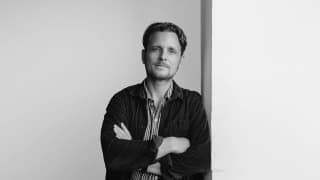
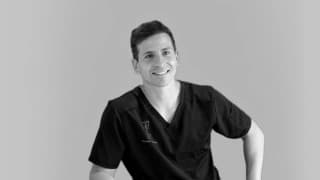
Jérôme Stioui and his wife Emmanuelle Stioui created “Le village des enfants extraordinaires” in Saint-Maur-des-Fossés in Val-de-Marne. A space reserved for children and adolescents with mental disabilities, as well as for families to help them break free from isolation.
On the occasion of the summer break, the teams at impact.info invite you to (re)listen to one of our episodes published this year."Le village des enfants extraordinaires" founded by Jérôme Stioui .
Enjoy listening!
Juliette Boulegon
impact.info journalist
Published on 8 August 2024
Transcript Audio in Français — text automatically translated· AI-generated transcript
0:00 Hello, this is Juliette and welcome to the podcast for those who want to make things happen 0:09 within their company. 0:11 Today in France, only 20% of children with disabilities have access to education, 0:15 which undeniably creates isolation for the child, but also for 0:20 the families. 0:21 So Jérôme Stiwi and his partner Emmanuelle Stiwi created the extraordinary to offer 0:26 these families much-needed ordinary moments. 0:30 My name is Jérôme Stiwi, I am 47 years old, I was born in Paris and I am currently 0:37 the co-founder of the non-profit association Le Village des Enfants Extraordinaires 0:42 and an Operating Partner at the Serena Venture Capital fund. 0:46 So let's first focus on Le Village des Enfants Extraordinaires, 0:52 can you tell us about it? Of course, Le Village des Enfants Extraordinaires, 0:55 is a unique place in the world that has a certain touch of magic and is dedicated to children 1:01 and adolescents with significant mental disabilities, allowing them to come learn 1:08 while having fun. 1:09 It's a playful educational space where we develop learning with support 1:14 from art therapists and professionals in dance, music, 1:19 theater, sports, and circus, helping to take them out of their 1:23 isolation as well as helping to take families out of their isolation. 1:27 When you say it's a unique place almost in the world, is it because it's 1:31 difficult today to develop places adapted for children with 1:36 disabilities? My wife, who is a co-founder, and I have noticed this, 1:39 we are parents of a daughter with multiple disabilities who is now 18 years old. 1:42 In the world of disability, places were often quite austere and we found that 1:47 unfortunate because what we experienced with our daughter is that from the 1:51 moment you find a medium that appeals to your different child, you can 1:55 ignite them and allow them to learn without even realizing it. 2:01 We wanted a place that was extraordinary in its form. 2:02 To do this, we called on designers who work for Disney, Puy-du-Fou. 2:06 We designed each room primarily for these different children. 2:11 In France, it is estimated that there are between 100,000 and 300,000 children or adolescents who 2:14 are disabled and cannot go to school because they are not 2:20 accepted in school. 2:24 They have a disability that is too significant. 2:26 They are directed to specialized institutes and yet, there are no places available. 2:28 There are waiting times of 3 to 4 years and so, they find themselves at home, between 2:34 four walls with their parents. 2:38 We provide them with a solution to have, on a temporary basis, for half a day 2:39 every week, a place to go that is completely adapted to them and that 2:44 2:49 to allow them to break free from their isolation. 2:50 How crucial is it to create places like this 2:54 today for our society? 2:55 Today, there is a policy of full inclusion. 2:58 This means that we no longer want to open specialized institutes and the policy 3:02 is to integrate these children, the different children, into regular schools. 3:04 I am very much in favor of this, I think it's great, but there are still limits. 3:07 That is to say, when you have children with such significant disabilities, particularly 3:11 in terms of intellectual development, you realize that inclusion, 3:14 it just can't work because the school cannot accommodate these children. 3:18 At best, it will give them half a day a week with an AESH, they will be 3:23 set apart, they will disrupt the teacher and the class, and the child will be unhappy. 3:29 In fact, it's a lose-lose situation. 3:30 My conviction is that we cannot have only inclusion in regular 3:35 structures, we also need structures that are adapted. 3:39 The two must coexist, but these adapted structures should not be hidden, as 3:43 has long been the case in the middle of the countryside. 3:47 No, they should be visible, in the middle of the city, they should be 3:50 open to everyone. 3:51 To date, the Village des Enfants Extraordinaires is an association. 3:55 Have you considered developing this project as a social enterprise? 4:00 Some of our patrons have indeed challenged us, asked the question 4:04 'why don't you do it as a business?'. 4:06 I have a background as an entrepreneur, I created three startups over 20 years. 4:11 The issue when you create a business and seek investors is that 4:15 even if you have investors who are impact funds, at some point 4:17 you have a problem of returning their money, one way 4:21 or another, whether we like it or not. 4:23 An equity investment in so-called impact funds, which want to help change 4:29 the world, will still, even if the expected returns on investment 4:32 are very low, even zero, they at least want to recover their investment. 4:36 However, my wife Emmanuelle and I really wanted a project with 4:41 a very long-term environment and horizon. 4:43 Already, between the moment we had the idea and the moment we opened it, there were 4:46 four years, we needed significant investments, since just to open 4:49 the place, we needed 3.5 million euros just for the construction. 4:52 And so, we wanted in this philosophy to say that we are not going to be in a 4:55 logic of return on investment. 4:56 Our project is not intended to make money. 5:00 Our performance criterion is to help as many families as possible. 5:04 What we want and what we promise to our donors, our patrons, and our foundations, 5:08 is that the money that will be given will be used directly with the least 5:12 friction possible to help families who are excluded from society 5:18 and who have a child who has no schooling solution at all. 5:22 And then, I could be wrong, but in our case, we thought that the associative format 5:25 was the most suitable. 5:27 And after six years, I must say we are quite happy to have made this choice. 5:31 You are also an entrepreneur, you've more or less expressed that to us. 5:35 Could you quickly explain your other mission as a business leader? 5:41 I actually created, before creating the village, three startups that I no longer manage 5:48 and that have a life after me, mostly in the field of new technologies 5:53 and in the field of marketing and data. 5:56 And today, alongside my volunteer roles, I am also an operating 6:00 partner within an investment fund. 6:02 And my role is to help entrepreneurs who themselves are creating companies that may or may not have an impact. 6:07 Our mission is really to help entrepreneurs who want to change the 6:09 world a bit and make it better. 6:13 But we are dealing with formats, as I said, of companies that at some point have a 6:14 vocation to sell or go public, etc. 6:17 Throughout your long career, have you also wanted to have impactful actions for the inclusion of employees with disabilities? 6:22 Well, where it gets mixed is today within my experience at Serena, 6:29 where we have a very active policy regarding diversity. 6:33 We have been quite proactive in establishing a charter within venture capital funds to promote diversity in a broad sense. 6:37 This includes disability, but not only that. 6:41 First of all, the first point is to raise awareness about it. 6:45 We ask our entrepreneurs to measure, for example, the distribution of their workforce, 6:48 to ensure that in their recruitment process, they properly integrate diversity criteria, 6:49 in a broad sense. 6:52 We use a tool called the diversity fresco, which somewhat mirrors the climate fresco. 6:56 As a result, they come out of there with a much greater and broader awareness of the issues and a willingness to act. 6:59 And then, we have a recruitment team that can help them, when they are not sure how to proceed, find new sources of candidates that can be more 7:00 diverse. 7:04 And so, disability is indeed part of that. 7:05 The idea of our media Impact.info is to give a voice to those who are doing. 7:09 7:10 7:14 7:18 7:19 7:21 7:25 move the lines. 7:26 That's our slogan. 7:27 In your opinion, how can your actions change the game? 7:32 First of all, reopening structures that are adapted, I think that's already 7:37 an important message. 7:39 The second point is promoting what we call reverse inclusion, meaning that instead of 7:45 starting with ordinary children and saying that extraordinary children need to fit 7:49 into the mold that was designed for ordinary children, the school was 7:53 designed for ordinary children, we try to fit extraordinary children 7:57 into that mold, with adaptations, with ad hoc classes, etc., but it remains 8:02 that the starting point was designed for ordinary children. 8:06 We believe there is a need, and we demonstrate it with the village, to have a base 8:11 that is first thought for extraordinary children. 8:13 What truly fills us with happiness is seeing that the families who have 8:17 subscribed to the village come with smiles, and when we are closed, as it was 8:22 the case between Christmas and New Year, we receive messages asking when 8:25 we will reopen, to show you how much the structure is lacking. We have 8:28 a family that came from Normandy during the holidays, who rented an Airbnb for 8:32 a week so that their child could have a dance workshop for a week. 8:36 That fills us with happiness and that's our criteria for measuring impact. 8:40 Of course, we conduct an NPS survey among families, and it is quite incredible; out of our 60 families 8:44 who are subscribed today, I have never seen this in business, we have NPS 8:48 scores around 90, which means we have an average score above 9, 8:53 we have 400 families waiting, and unfortunately today, we cannot 8:56 welcome them all because we need scholarships. The real cost of welcoming a 9:02 family is about 6,000 euros per year, and the average price that families pay 9:07 is about 400 euros. 9:08 So, we also have a social mission to find scholarships; the average price depends 9:13 on income, of course we adapt it, but even in the wealthiest families, they will 9:17 have a price that is at most 800 euros, so we finance a large part of the subscription. 9:22 We cannot say yes, unfortunately today, to all the families knocking at the door, 9:26 we welcome them gradually, but we feel that we are responding to a real need 9:30 and a real expectation. 9:36 To conclude this interview, you just talked to us a bit about some 9:40 of your actions. 9:41 Did the 16-year-old Jérôme dream of doing everything you have done and what 9:46 you are still doing today? 9:48 The 16-year-old Jérôme didn't know exactly what he wanted to do, but he had 9:54 a passion for creating. 9:56 I loved making things out of nothing. 9:58 A little anecdote, when I was between 10 and 15 years old, I spent every summer 10:03 in the countryside in an area where we only moved around by bike and indeed, 10:07 everyone had problems with their bikes, they would get flat tires, they would derail, etc. 10:11 There was no bike repairman, so I started learning how to fix 10:14 bikes and then gradually, I opened a little repair shop, a little garage 10:17 for bikes in the area, without really intending to, so to speak. 10:20 I think this aspect of responding to a problem has always been part of my DNA. 10:25 I wasn't fully aware that I wanted to become an entrepreneur, but I enjoyed 10:28 doing that. 10:29 Thanks to Jérôme Stioui, who is an entrepreneur and creator of Le Village Extraordinaire, a 10:35 place for welcoming children with disabilities, but not only that. 10:39 And you can of course find this interview on our website impact.info, in the 10:44 disability section, which gathers all the episodes focusing on good practices for 10:49 people with disabilities. Embed this interview on your site
Show this player directly on your site to share the interview with your audience.
Copy embed code View generated code

![[Rebroadcast] Why the Lack of Suitable Structures Isolates Children with Disabilities?](/_next/image?url=%2Fuploads%2F2024%2F01%2FJerome-Stioui-1.png&w=1920&q=75)