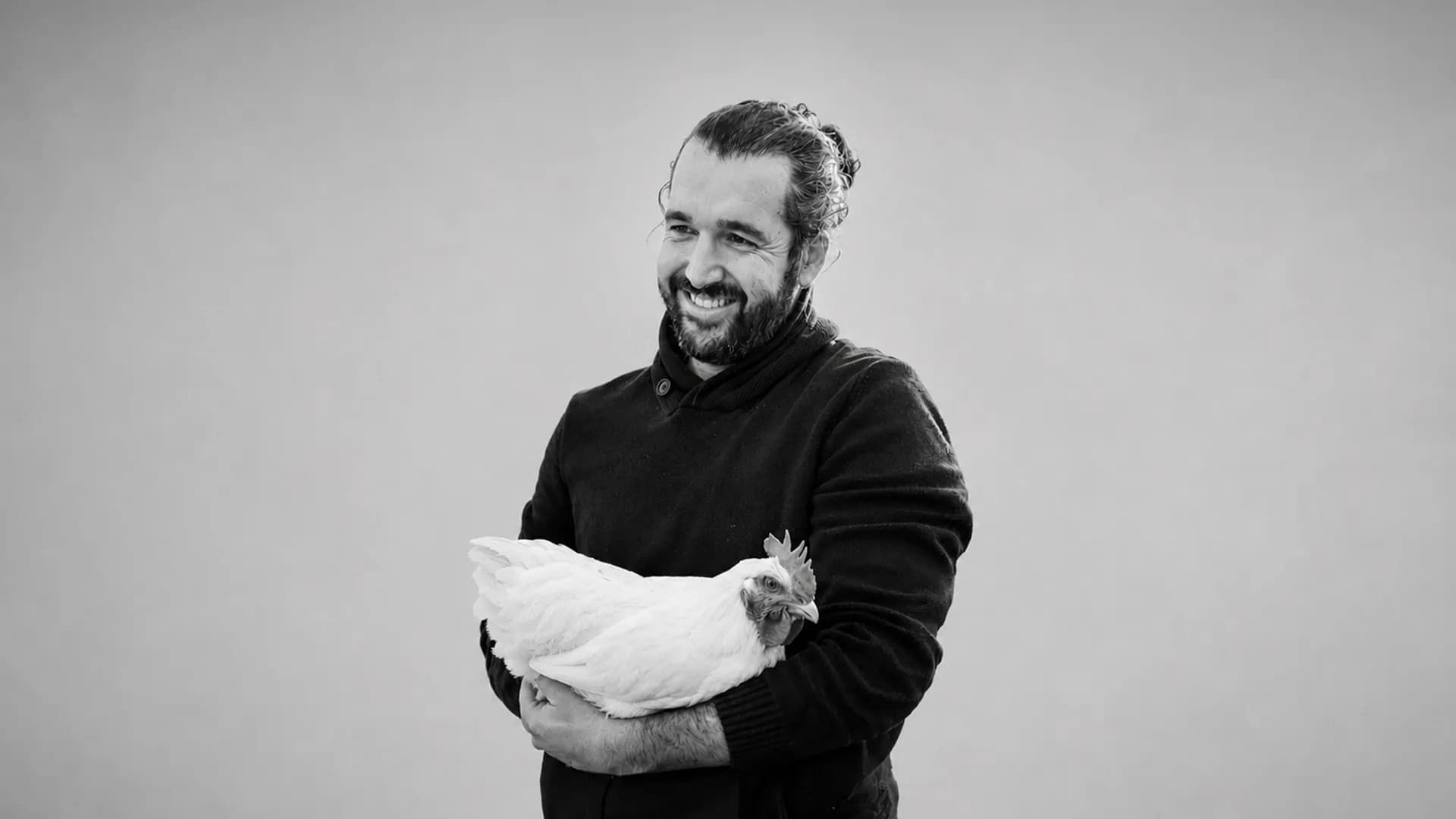
Poultree was founded in 2019 with the conviction that if there is a model that has been functioning in nature for millions of years, why not apply it to livestock farming? Their animals continuously move across the land. The chickens live in mobile coops that rotate through three-day pastures. The cattle do not have barns: each cow wears a GPS collar, and García de Castro designs the pastures they will occupy each day from his mobile phone. The result is more productive soil, healthier animals, and meat with higher nutritional density.
With no prior experience in livestock farming (something he considers an advantage), he built the economic model on direct sales and a closed production cycle, with their own butchering and distribution facilities. Last year they reached break-even. "They achieved it because they didn’t know it was impossible," García de Castro quotes regarding those who bet on models that the sector considers unfeasible.
Poultree is also, for its founder, proof that rural areas can offer a quality of life that cities do not provide. "In the end, the future is uncertain, but we have a lot to do in it. If you lay the groundwork, that future sometimes gives you answers,” he adds.