There is growing need for support for people across society, and the UK landscape of service provision is a complex one. Charity Catch22 addresses that complexity in many ways, most of them thoroughly hands-on, assisting and accompanying people, often one-to-one.
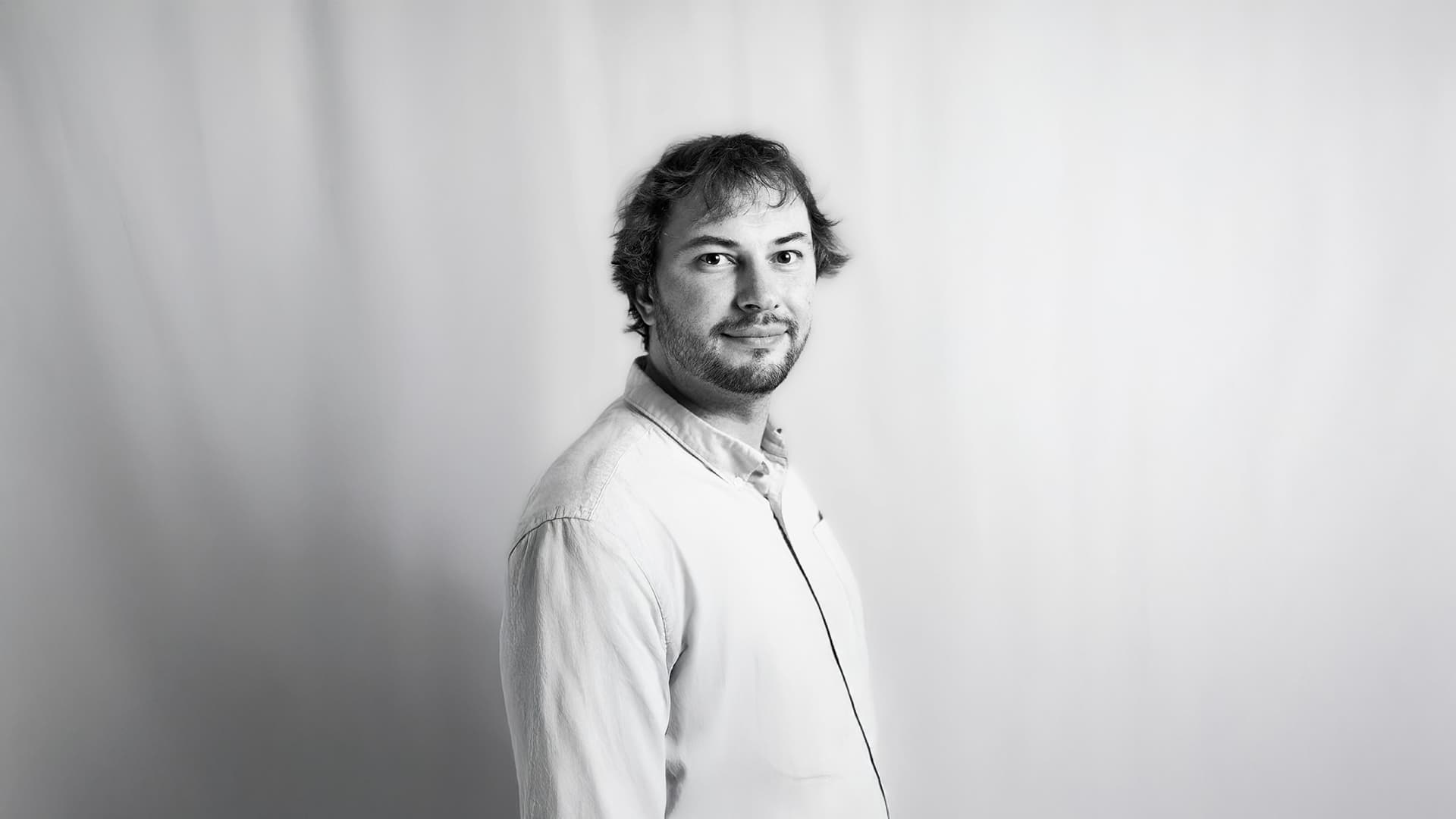
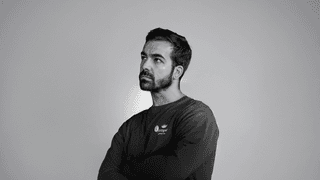
Andy Canniford is Chief Development Officer at Catch22 where his work is wide-ranging, far-reaching and yes, complex! The historied charity has two main missions today: actual services on the ground, ranging from assisting with housing issues, to employment, to work in prisons; and the ‘bigger picture’ – overhauling service provision across the board. It is that double profile that gives them the legitimacy to advise state actors on how to get the system to work efficiently for the benefit of the people who need it. Listen to Andy talk about the charity’s unique position, and hear him share his passion for the work and his pride in the teams at Catch22.
Vanessa C. Stone
impact.info journalist
Published on 3 March 2026
Photo credit — Catch22
Transcript Audio in English· AI-generated transcript
0:00 We have the heart of a charity, but a mindset of a business 0:05 impact dot info 0:07 doing things differently 0:09 Hello, and welcome to impact info where we meet the people making society work better for all of us 0:15 the American writer Joseph Heller coined the phrase catch-22 in his 0:21 1961 book of the same name a 0:24 Sadly relatable concept it has become part of the English language as a way to talk about absurd bureaucracy 0:31 Making desired outcomes impossible, but the catch-22 we are exploring today is the exact opposite 0:38 My guest in the studio is here to tell us all about the good fight to take the absurdity out of bureaucracy and make 0:45 desired outcomes possible 0:47 My name is Andy can of it and I'm chief development officer at the charity catch-22 0:54 Hello, Andy. Good morning, Vanessa 0:56 I know 1,000 people make up catch-22 and you work on many different fronts 1:02 But I think there are a couple of principles underlying everything you do. So first of all, can you tell us about your three P's? 1:10 Well, our vision at catch-22 is that a strong society where everyone has good people around them 1:17 A good place to live and a purpose in life is one that we should be aiming for 1:22 So the peas are place to live people purpose. Is that right? Exactly? 1:27 Yes, and so how does catch-22 work towards that sort of big principle? 1:33 What do you actually do our charitable mission is to design and deliver services that build resilience? 1:40 aspiration and prosperity in people of all ages within communities across the UK 1:45 So predominantly we do that through delivering public services on behalf of the central or local government 1:51 Supporting people who face disadvantage or barriers to accessing all of those things 1:57 so with that's purpose for good work, but that's a place to live and amongst local communities or 2:04 How they have them connection to those people that we rely on that support network 2:10 Professional or otherwise? Okay, so you actually provide the services 2:15 Yes of the a thousand colleagues and 80% of those are working directly with people who need support 2:21 Whether that's through education employment support people on probation 2:26 Right and in terms of them, I know you're a charity obviously, but in terms of an economic model 2:33 So are the local authorities paying you for that work? Yes 2:37 so central government local government, we work with police and crime commissioners currently and 2:44 Combined authorities catch-22. We've always phrased ourselves a social business 2:49 So we have the heart of a charity 2:51 but a mindset of a business is an organization that is commissioned and funded by authorities we need to be sustainable and 2:59 Responsible with that public funds and that comes with a sense of business acumen while still maintaining that impact focus 3:05 And so do you do outside fundraising? 3:08 We do have some cause-based particularly around where we're trying to influence policy change currently 3:14 We're operating a campaign around child exploitation and county lines called drawing the line as part of that 3:20 We have demonstrated through a public donation offer of what 30 pounds can do what a hundred pounds can do and maybe on the corporate 3:27 Side more around that charity partner and corporate sponsor how they can get involved 3:33 But we also work closely with business on a day-to-day basis 3:36 So towards them or the social value that businesses want to drive 3:40 we work closely with 3:42 Microsoft or Salesforce where we deliver digital skills and digital employability 3:46 Programs to support people from disadvantaged backgrounds or with barriers to work to find good jobs 3:52 But we work with Barclays for example who fund us to work specifically with young people leaving care to support them again with careers 4:00 But also that holistic support that they need to overcome some of the structural barriers that care experience young people face 4:06 I see in effect you're you're providing services mainly to your users and people who are in in need of that support 4:14 But you're also in effect providing services to the people funding you 4:18 Yes, of course 4:18 We work in partnership with other providers from other charities where we come together to form partnerships that have aligned values 4:27 But also have aligned skill sets right through to working with the private sector where for example in HMP 4:33 Tempside which is run by Serco. We provide the offender management unit there. So that's that's a prison 4:40 That's a prison. Sorry 4:41 Yeah 4:41 and we support with the rehabilitative model the reception of individuals coming into custody and making sure that they have everything they need in a 4:49 plan for their release and 4:51 So focus very much on the individual and we know that that gets great results 4:55 So you really do have a very vast field of intervention 4:59 We really do and you also have a 200-year history obviously not always under the same name but back in 5:07 1788 the organization was founded wasn't it as the 5:12 philanthropic society and 5:14 Its stated mission was to unite the spirit of charity with the principles of trade 5:19 So it sounds like that holds true today 5:22 Yeah 5:23 And the social business concept is rooted in that history making sure that we are working in partnership with business 5:29 Be operating as a business ourselves while having that spirit of charity that partnership and that focus on communities 5:35 We apply that to all our services, but I would say in our partnership with business 5:40 We see a huge opportunity for the future and going back to that 18th century 5:45 Sort of founding is actually almost 230 years ago. Isn't it? That was pretty innovative at the time, wasn't it? 5:52 Yeah, usually it was a small group coming together 5:55 Utilizing private funds initially to really instigate change and over time as I think you mentioned earlier catch 22 has evolved and 6:04 Catch in itself is a relatively recent kind of brand for the organization 6:10 But we have a long history of mergers and partnerships even last year 6:14 We've been merged with another organization called red thread and that provides hospital based youth work to young people who have experienced 6:22 Violence or a traumatic experience and that really works closely with some of our other child 6:27 Exploitation services our youth violence our work with people who are gang affiliated 6:32 And so whilst we have this huge variety of services 6:37 There are those linkages that bring together our overall purpose and it's I mean, obviously it's admirable 6:43 But it's also a bit sad really that over 200 years later. You're still very much necessary 6:49 Hugely there's a lot of need out there the services that we deliver are seeing more complex needs 6:55 the volume of support being requested is higher and 6:59 We know that economically it's more challenging for authorities to fund those effectively 7:04 Now coming back as you said to the current name the more recent name of catch-22 now that really speaks to your sort of 7:12 overarching goal doesn't it of actually 7:14 Reforming public service. Yes for sure 7:17 So our strategy which we've just launched to 2030 has two key guardrails and we've talked a lot about the impact side 7:24 But the other side that is public service reform and that is making sure that those services which people need from time to time 7:32 Are really accessible and they're of the highest standard 7:35 They're efficient and effective and they're locally tailored 7:38 I think is probably one of the newer things but we see a lot of diversity across the UK 7:43 Diversity of need and how we deliver those services are really important and we believe that every individual 7:50 deserves the right to 7:51 access those services when they need them and we're here to try and design them to make them as effective as possible and deliver them as 7:58 Efficiently as possible. And so when you talk about 8:01 Reforming these public services are these the services that you provide or are you also trying to influence? 8:08 The way other entities provide public services 8:11 So we work across a scale 8:13 Primarily, we're a delivery organization. But what we do is we use that experience of people using our services and 8:20 Understand their need we use the data we collect to form opinions and evidence of what works and we then amplify that 8:28 Through innovation are you doing something differently and and really capturing that and evaluating what works and then we move out and try and 8:36 Replicate that so whether that is 8:38 Replicating it through influencing local commissioners with evidence and insight or whether that is a national level our policy 8:45 influence and advocacy 8:46 Taking that insight that we have and putting it into the policy machine that is central government 8:52 And I guess the ultimate of trying to change what public policy looks like in the UK for the better huge ambition important ambition 9:00 impact dot info 9:02 Doing things differently I 9:04 Have a personal question for you if sixteen-year-old Andy saw you now, what would he think? Oh 9:12 I think he'd think how did he get there? I guess I've always been interested in supporting people following my education 9:20 I went on to study the education system and probably with the ambition of going into teaching 9:25 But over time I became aware of the welfare system and 9:30 ever since have worked in some part of that and delivering services and then moving into more how 9:35 collectively as partnerships organizations can deliver more diverse services integrated services and 9:42 Eventually ended up in a role where I'm fortunate enough to set strategy and to think innovatively and creatively about how we make step 9:49 Changes in how public services integrate 9:53 So you reckon sixteen-year-old Andy would have approved I'd like to think so as I say, I think I'm surprised 10:00 Potentially but approved that organizations I've worked in over the last 20 years 10:05 Have had a huge amount of direct impact and I've broadened that and amplified it beyond just what I can do and into 10:12 What ultimately supporting the great frontline workers at catch-22 to have that on a daily basis now and he can afford 10:18 Thank you very much Vanessa. Thank you very much. It's been great to be here 10:22 That was impact dot info 10:25 doing things differently Embed this interview on your site
Show this player directly on your site to share the interview with your audience.
Copy embed code View generated code