translate This article was automatically translated from its original Français version. Read the original
In response to social injustice caused by lack of electricity, Moon offers accessible solar kits, transforming the lives of thousands of families in Africa. With 20,000 beneficiaries to date and an expansion in Nouvelle-Aquitaine, the company is committed to a fair and sustainable energy transition.
During the summer break, the teams at impact.info invite you to (re)listen to one of our episodes published this year.
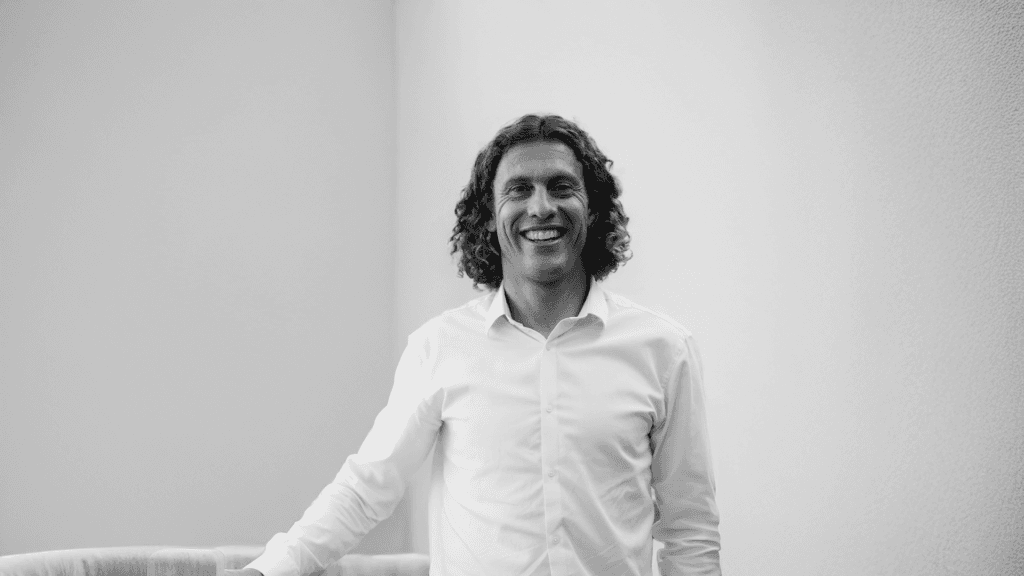
This episode highlights the testimony of Thomas Samuel , founding director of Moon .
Enjoy listening!
Florence Jaillet
impact.info journalist
Published on 28 July 2025
Transcript Audio in Français — text automatically translated· AI-generated transcript
0:00 Hello and welcome to the podcast for those who want to make a difference 0:09 within their company. 0:11 The sun is a provider of life and energy. 0:13 It's a fantastic tool for electrification in remote or unserved areas 0:18 of the globe. 0:19 Thomas Samuel. 0:20 Hello, my name is Thomas Samuel, I'm 43 years old, I just celebrated my birthday, 0:26 I was born in Belgium in 1981, I'm the founder of Moon. 0:30 So, what is Moon? 0:31 Moon is a company that works on two major projects, one is rural electrification 0:38 in sub-Saharan Africa and the other is solar self-consumption for individuals 0:43 in Nouvelle-Aquitaine. 0:44 So, did this idea come to you during a trip? 0:47 Yes, I was fortunate to travel a lot after my studies and during my first 0:52 professional years. 0:53 And as a result, I was able to realize the incredible social injustice faced by millions of people 0:59 who live without access to energy, mainly today in sub-Saharan Africa. 1:04 And that really motivated me to work towards providing sustainable, long-lasting solutions, 1:10 which are extremely necessary today. 1:13 When you don't have access to electricity, I imagine there are many consequences. 1:17 What does that mean in everyday life, daily life? 1:19 Not having access to electricity has dramatic impacts on several 1:25 aspects of the lives of these populations and these villages. 1:28 The first and most obvious is a deficit in education. 1:33 Obviously, homework is mainly done at night and unfortunately, in far too many places today, 1:39 it's done with candlelight or kerosene lamps. 1:43 It works, but it's not qualitative at all, it's polluting, it's expensive. 1:45 So, it has almost only disadvantages. 1:49 There are also obviously many problems for mothers who cook. 1:52 And in fact, to be more global, one of the issues we find a bit everywhere is the lack of digital inclusion. 1:56 Today, if you don't have lighting at home, it means you don't have electricity 2:02 at home and it means you can't charge a smartphone. 2:05 The penetration rate of feature phones, so the phones we remember, 2:09 like the 3310, is huge in sub-Saharan Africa because we remember less, but we charged them once a week back then. 2:12 So, it was fine to go to the market once a week, pay a few cents 2:15 to charge your phone and go back home. 2:21 But today, there is an incredible aspiration for smartphones, for any kind of... 2:24 2:29 2:31 2:36 which citizen of humanity and rural Africa cannot escape it. 2:40 On the other hand, we all know that a smartphone needs to be charged every day. 2:43 So, having an individual solar kit at home obviously has incredible 2:46 impacts on children, on social life, but it also affects the 2:51 feeling of inclusion in our century and all the benefits that digital can 2:55 bring in terms of payment, education, health, and information in general. 3:00 So, a solar kit, as you just mentioned, how does it work, what is it, 3:03 what does it allow? 3:06 We have developed kits that are quite simple and can be deployed on a very 3:10 large scale. The problem is so big that we needed to create something that could 3:13 be massively deployable. 3:16 So, imagine a big shoebox, a case that contains a 3:20 battery and two USB ports and three lamps that we will install in the 3:25 house with cables a few meters long and a solar panel that 3:29 will be installed on the roof. 3:30 Overall, something that can be installed in less than an hour by teams that we 3:34 train on the ground to operate, like what we are already doing 3:39 in Togo as a mini EDF, where we actually provide this essential access 3:44 service to villages in partnership with the government that has not yet 3:48 had the opportunity to bring them real electricity. 3:53 We are very aware that this solar kit is a minimum service, but it 3:58 already brings incredible benefits. 4:00 Everyone aspires to be connected to the grid, but the reality of financing 4:05 and deploying these heavy infrastructures means that there are still today 4:09 600 million people who do not have access. 4:10 And we position ourselves as a rapidly deployable pre-electrification solution 4:14 on a large scale. 4:16 How did you finance all of this? 4:18 The initial costs are typically borne by the state or donors, and then the 4:22 maintenance and recurring costs are covered by user payments, which are very 4:26 modest. We're talking about less than 2 euros per month. 4:28 To date, how many people have you equipped? 4:32 In which country? 4:33 We started our operations in Senegal and for the past three years, we have been operating 4:37 under a public service delegation in Togo, in a public-private partnership scheme that works very well and where we have already equipped over 20,000 beneficiaries. 4:41 And we are in real acceleration, as we are going to reach 30,000. 4:46 Connection just for next year. 4:49 Do you have another service, do you offer other things here in France? 4:51 There are two aspects to your work? 4:55 4:57 So yes, we had some reflection during the Covid period. 5:00 We realized that our social impact was already very significant, but our 5:05 environmental impact, if we're critical, negative. 5:08 If we look at our net CO2 impact as a company, we manufacture 5:13 products that we install for people who had nothing. 5:17 Obviously, it's socially unfair not to have access to energy, but in 5:20 any case, environmentally, those people hardly polluted at all. 5:24 And so, we equip them with a system that has a manufacturing cost like 5:28 any other product. With the real ambition to be regenerative at 5:31 the scale of our global operations, we looked into what could help us 5:35 reduce our carbon impact. 5:38 And we realized that we didn't need to look for it deep in the 5:41 African bush. We ourselves, in France, have the best lever by using 5:47 energy savings and solar power for self-consumption to really reduce 5:51 the impact of our electricity consumption. 5:53 So, we launched, starting this year, a solar activity for 5:58 individuals in Nouvelle-Aquitaine, where we offer to equip them with solar panels 6:02 and support them in reducing their consumption. 6:05 It seems quite obvious, but how do you think what you're doing changes things, 6:09 shifts the realistic lines that haven't been realized so far, the furthest? 6:13 There are many companies working in solar for individuals in 6:14 France, and there are few that are truly virtuous. 6:18 There are really large national groups that sell very 6:21 expensive installations and rely on foreign subcontracting. 6:26 I'm not going to shame anyone, but that's not at all what people expect and 6:29 overall, it's very disappointing for those who are getting equipped. 6:34 There are many craftsmen who work very well and have very virtuous personal 6:37 relationships with their clients and explain to them how to properly equip, 6:40 install, and use their solar installation. 6:44 But these are not people who have the ambition to do it at scale. 6:47 And in the middle, there are a few startups funded by venture capital that hope 6:49 for hyper growth to sell themselves to national players that I imagined at the beginning. 6:55 And I don't really think that's the only solution. 6:59 And that's what we hope for, it's the bet we're making, that there's a whole portion 7:03 of the population that just wants to be equipped by good people, who don't make 7:06 huge margins, but who have invested in growing quality customer service, just like what we do in Africa. 7:11 Ultimately, it's about focusing on the experience and customer satisfaction to 7:15 grow with a well-thought-out offer of products and services. 7:17 7:21 7:26 We are a whole team of engineers at the base, and so we made sure that 7:30 technologically, we are better than the others. 7:32 But in fact, it's almost invisible to the buyer. 7:35 The one who is going to buy a solar car, in the end, won't see the little 7:39 details that make ours work better in the long run. 7:43 And so, there is a price competition that we don't want to play in. 7:46 There is always someone cheaper than cheaper. 7:49 There are even discounters, there are plenty of big old companies getting into the 7:52 hard disc like solar. 7:54 I don't think that's the right solution at all. 7:56 In fact, the barriers to entry, in my opinion, are really going to be broken down thanks 8:01 to a better understanding, a better trust in the impact of solar for 8:06 each of us. And in fact, there are two impacts. 8:08 There is a feeling of doing what needs to be done, and that's one of the big drivers for 8:12 people. Today, everyone is well aware that everyone needs to do 8:17 something to contribute to not accelerating the environmental crisis. 8:21 And so, solar is a very simple solution, but it's also a very 8:24 cost-effective solution because we can demonstrate returns on investment in 8:28 five, six years by adding a little bit of intelligence and home automation. 8:32 And that's any financial investment. 8:34 So, there are a lot of advantages to that. 8:36 Unfortunately, not everyone has that. 8:38 Typically, an installation costs 7000 euros. 8:40 So, there is also a whole reflection on how to support this segment of the 8:44 population to obtain low-cost loans. 8:49 And today, we already have some great experiences with local banks that 8:52 are playing the game and offering green loans that allow for a very good 8:56 return during the repayment period. 8:58 And then, a kind of price shield, because once the 9:02 installation is amortized, afterwards, it's the assurance of not being hit too 9:07 hard by the inexorable, inevitable increases in energy costs. 9:13 Impact.info, doing business differently. 9:17 At 16, it's the agent in France to create your business, your startup. 9:20 You, at 16, what were you dreaming of? 9:22 Were you thinking about these topics, were you dreaming of traveling? 9:25 What occupied your mind? 9:28 Nothing. I was just going through my life as a high school student at 16 and I just dreamed of the classes ending so I could go home. 9:33 And at that time, I was doing a lot of outdoor sports, so I had no 9:36 interest in studies or anything. 9:39 9:42 Fortunately, my mother enrolled me in a school after high school, 9:46 because if it had been up to me, I would have found myself at the start of the school year and I would have 9:50 done nothing, I wouldn't have taken care of anything. 9:51 Really no interest, apart from short-term satisfaction at that moment 9:55 or that comes to us. 9:56 And in fact, that's what reassures me too. 9:58 And when I see some teens in my surroundings and when I talk to their 10:02 parents, if we are able to have fun and find pleasure in what we 10:06 do, depending on our age group, we will find it. 10:09 Today, I find incredible pleasure in work. 10:11 I would have never imagined that at 16, because at 16, I found a 10:14 great pleasure in doing something else. 10:17 This desire to find pleasure might be a good fundamental. 10:22 Thanks to Thomas Samuel, founder of Moon, a company that offers 10:26 rural electrification solutions in sub-Saharan Africa and solar 10:29 self-consumption for individuals in Nouvelle-Aquitaine. 10:32 You can find this podcast on our website impact.info. 10:37 This was Impact.info, doing business differently. Embed this interview on your site
Show this player directly on your site to share the interview with your audience.
Copy embed code View generated code