translate This article was automatically translated from its original Français version. Read the original
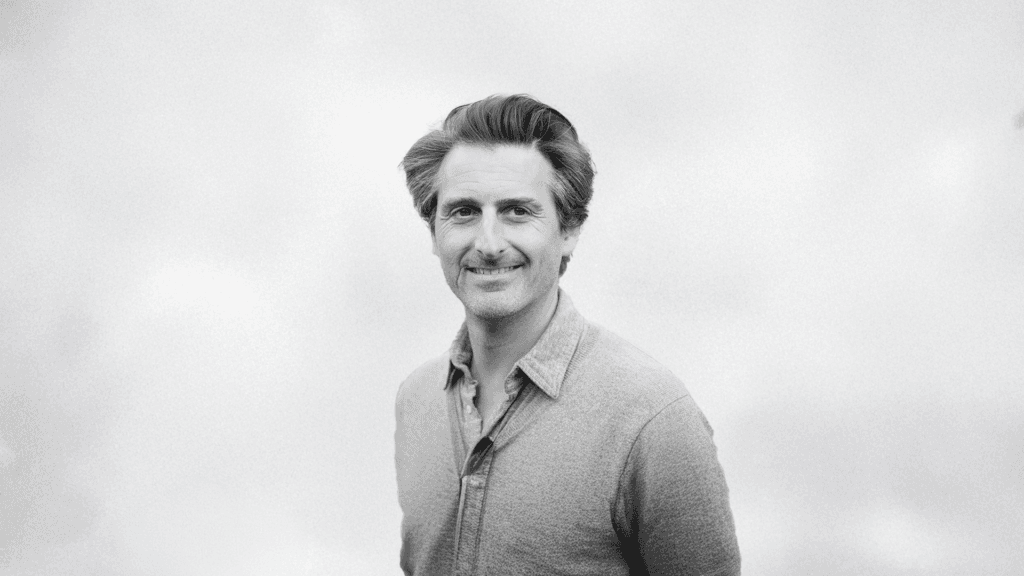
Victor Augais is the founder and CEO of La Casa, a company offering residential coliving and shared housing in a comfortable and affordable living environment in major cities, while fostering connections.
During the summer break, the impact.info team invites you to (re)listen to one of our episodes published this year.
This episode highlights the testimony of Victor Augais , founder and CEO of La Casa .
Enjoy listening!
Florence Jaillet
impact.info journalist
Published on 11 August 2025
Transcript Audio in Français — text automatically translated· AI-generated transcript
0:00 Hello and welcome to the podcast for those who want to make a difference in their company. 0:09 Could shared living be the solution to combat loneliness in urban areas, but also to tackle the housing crisis? That's what 0:15 Victor Auguet thinks. Victor Auguet, I was born on March 23, 1976 0:20 in Bois-Guillaume in Seine-Maritime, and I am the founder and CEO of La Casa, which 0:25 does co-living. La Casa, can you explain to me 0:31 a little bit about what it is? La Casa is a company that offers 0:34 residential co-living. It's shared housing where we provide a 0:37 comfortable and affordable living environment in big cities while creating connections. We target 0:43 people who are living alone during a transition period. Either they are moving to a 0:48 big city, or they are after a separation, or they are changing their environment and don't want 0:52 to live alone. We solve a very important housing problem in big 0:56 cities because there is a housing shortage, especially for people who live 1:01 alone. And also a social connection problem because we have a growing sense of loneliness in France. We try to address these two issues at La Casa by developing 1:04 shared housing in big cities, which often takes the form of large houses 1:10 where everyone has their own room and bathroom and then access to shared 1:15 common areas. And in these large houses, we create communities where people 1:20 learn to live together. There are plenty of joyful moments, but you also have to know 1:24 how to make compromises, so we try to ensure that everyone who joins a Casa understands 1:28 what they are committing to by living in a Casa. 1:32 Is the feeling of loneliness something important in our cities today in France? 1:37 When we look at studies we can find, it's a feeling of loneliness 1:40 that is growing in certain segments of the population. And in France, there is a study 1:46 that mentioned that over 50% of young professionals felt lonely. And then, we, 1:49 we measure this every year at La Casa. We currently have 600 rooms 1:55 and the last measurement we did showed that only 7% of our roommates reported 1:59 feeling lonely. So you can be surrounded and still feel lonely, so it's 2:03 still possible to feel lonely in shared housing. But that's very low, and that 2:08 compares to those same people who said over 60% had felt this feeling 2:12 of loneliness before joining a Casa. 2:16 Is it more likely to affect young people in the end? 2:21 I'm not sure about that. It probably affects more people who live alone. 2:23 We tried to launch large Casas for elderly people and unfortunately, 2:26 it didn't work as well as we hoped. But for elderly people, the issue of 2:30 felt or even real loneliness is really very important. I believe that nearly 2:34 half of people over 75 do not have multiple conversations per day. 2:38 So no, I'm not at all convinced that it is limited to young professionals. However, 2:44 it is probably more difficult to experience for people who live alone. 2:48 Well, it has evolved a lot. 10-20 years ago, when we talked about co-living, already. 2:53 2:56 3:01 It wasn't even called that, it was a bit like "wow", it was revolutionary. 3:05 Even if it's not that much. Today, it looks really more structured, organized. 3:10 When you go to your site, it’s almost like ads. How does it actually work 3:14 to find a co-living? First of all, the term co-living is quite generic, it's quite 3:18 broad. There are offers that are closer to short stays and hotels. What we 3:23 offer is really residential, meaning it's the main residence, 3:26 so it's people who are settling in. So actually, we don't even have to use the 3:31 term co-living, it's shared housing that is managed with services. This management, 3:35 it starts with the fact that the properties we offer are made for that. So there are 3:39 many rooms, but they are designed for it, meaning each with a bathroom, 3:44 large common areas. The property itself is designed for shared housing, for a shared 3:49 living environment. And then, in the services we provide, there is a common trunk of services like 3:54 cleaning in the common areas, maintenance, upkeep. But there are also things that are 3:59 really specific to community living. We will provide a grocery fund at the beginning 4:03 of the month for everything that is shared. We will have a meal delivered once a month to share and 4:08 cook together. And then a special care. We will make sure that everyone 4:15 who joins a casa has understood the concept. And then, be there to keep it alive, 4:19 try to solve problems when they arise. We do quite a few activities. There are 4:23 after-work events every two months where all the casas are invited. This is the form it takes, 4:27 but there you go, it’s shared housing managed by a company that specializes in it. 4:33 To what you said, they need to have understood what to expect. That means what 4:37 kind of desire or quality, at least, is needed to join a casa? 4:41 The mindset you need to have when you go there is to want to meet people. 4:44 If it's to stay locked in your room all the time, it's better to go for a studio. 4:51 Knowing that in community living, you need to be able to listen to others. You need to be able to make 4:55 compromises. We live with others. Then, there are people who are shy. There are people 5:00 who are more extroverted. There are different ages. There are different personalities. 5:05 The only real issue is wanting to meet people and understanding that 5:10 living in a community requires being a bit adaptable and knowing how to make compromises. 5:14 In a casa, for example, you can have people of different ages, 5:18 from different backgrounds. How do you ensure that there is this diversity? 5:22 What we notice is that the roommates are on average in their thirties. It's 5:27 very mixed. There are a few students, not many. There are also quite a few foreigners. 5:33 Topics that can be complex, issues of diversity. These are things we consider are not for us. In any case, there are no criteria from 5:38 a company like Casa to impose. However, we ensure that people understand what it is 5:42 and are motivated for shared living. What made you want to create 5:48 Casa? What motivated you behind this project? 5:51 This is my second company. Before, I set up football centers. I'm starting to get a bit 5:54 older. It was about twenty years ago. At that time, the notion of impact, of solving some issues, was not really... 5:59 6:05 Problems, it wasn't necessarily as pressing as it is today. In my first company, 6:11 the football centers, I found it complicated to play football. We couldn't 6:14 book a field. So, I created football centers. That was the problem I was trying to 6:18 solve. When I left, I asked myself what problem I was trying to solve in my 6:22 next business. The one that interested me was both the quality of life in big cities. 6:28 When you don't have high salaries, rents are very expensive. Quality of life is 6:33 a real issue. The second topic was loneliness. When you arrive in a city and 6:37 you don't know anyone, it's not easy to meet people. These are issues that 6:42 affect us. I became interested in this topic. I looked a bit at what was happening abroad. 6:46 Then, I saw this co-living concept that was emerging at the time. It was about ten years ago, 6:49 with different versions. The one that was more community-oriented in large houses, 6:55 that was the one that interested me the most and that I drew inspiration from to launch in France. 6:59 In what way, in your opinion, does La Casa change the game, make a difference? 7:02 There are several topics that are different and, in my opinion, all very important. The first topic, 7:09 is about social connection. We talked about the feeling of loneliness, but I think we are also in 7:13 a society that produces loneliness. Screens, there was Covid, remote work. I am 7:21 convinced that humans are social animals and that hell is other people. That's not what I 7:25 think. Being an antidote to loneliness, I believe that's one of the functions of La Casa. 7:30 It's not always easy to live with others. It’s something you learn. I’m exaggerating a bit, 7:34 but it also creates good citizens. I am completely convinced of that. I think knowing 7:39 how to live in a community is a school for knowing how to live in society. Then, we have other 7:44 issues. We have environmental issues and today, sharing furniture, 7:51 an electricity bill. We renovate real estate rather than building new ones. 7:57 So all of this, I think, has a virtue. At least, when we are sensitive to the carbon footprint of 8:03 what we do, it has a very clear virtue. And then, the last point, which is an 8:06 extremely important societal issue on which we are currently at an impasse, 8:10 is the production of housing in large cities. And today, there is a huge shortage. 8:14 We lack housing. Plus, right now, there is a real estate crisis with 8:18 real estate developers going bankrupt. We don't want to grant building permits. We don't 8:22 want to artificialize the land, the energy performance diagnostics, the thermal passports. We don't want to rent out our 8:26 housing. All of this, to me, is justified. But once we've said that, how do we house people? 8:31 And I think what we do at La Casa is one of the only solutions to densify the city 8:35 near public transport without building new buildings. We buy a suburban house of 8:39 300 square meters where two or four people live. We turn it into a 8:43 shared living space with twelve rooms where each person will have about 25 square meters. 8:47 All of this, without building new, just by renovating a large house. So today, 8:52 living well in big cities, there is an impasse because there aren't enough homes. And in 8:56 any case, we are not at all on a trajectory to solve this problem. And I believe that what 9:01 we do at La Casa can be part of the solution. 9:04 Impact.info, doing business differently. 9:07 Victor Auguet, you are the founder and CEO of La Casa. At 16, you were there to create your 9:13 business. You lived in a community. You wanted to solve problems already. 9:17 What were you dreaming of back then? What was your plan? 9:20 No, I didn't have that kind of dream. I think at 16, I wanted to do well in school, but I didn't see much further than that. And it sometimes makes me a bit more 9:29 tolerant towards kids. I'm surprised that in middle school, they don't have a career plan. 9:35 Indeed, if I think back to their age, I didn't have one either. So no, all of that 9:39 came later. Would this type of housing have appealed to you back then? 9:44 Well, I had experiences living in shared housing that I really enjoyed. And then, 9:48 I kept friends for life from those experiences. We have a lot of testimonials from former housemates of 9:52 La Casa. More than 60% of housemates say they found a second family at La Casa. 9:58 So it's something really strong. And many also through the encounters they wouldn't have 10:02 made elsewhere, due to the diversity of profiles. So yes, at least for me, 10:07 I'm really convinced that happiness comes through encounters. It's a topic that touches me 10:13 a lot and I've always been sensitive to that. So I think if it had existed, at least, 10:18 about twenty years ago, I think we would have probably lived in a Casa. And then, 10:22 failing that, I'm happy to have created it and to see people happy when they are there. 10:27 Thanks to Victor Audier, founder and CEO of La Casa. You can 10:32 find this podcast on our site impact.info. This was impact.info, doing business differently. 10:37 Embed this interview on your site
Show this player directly on your site to share the interview with your audience.
Copy embed code View generated code