The barriers faced by families with autistic children are rarely physical. They are sensory (noise, lighting), cognitive, communicative, and especially social: the fear of judgment, that their child's behavior will not be understood, and that they will be asked to leave.
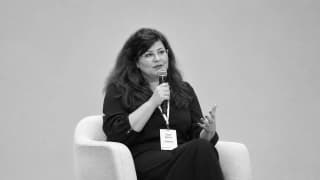
"Many families stop going to cultural spaces not because they don't want to, but because the experience ends up being too stressful", explains Donis, founder and CEO of Empower. Her response with Empower aims to transform how institutions understand accessibility: training teams, reviewing spaces, and above all, co-designing activities alongside the families themselves.
The process with each institution lasts about nine months and involves a group of seven families who participate in designing the supports their children need. Everything is anticipated at least a week in advance: who will be there, what activities will take place, which rooms will be visited. Empower has already worked with the Museo de Pontevedra, the Museo de América, and the Casa de México in Spain, among others. Convincing institutions takes time. "Politically, it would be incorrect to deny that a museum must be accessible", acknowledges Donis, "but mobilizing resources for this remains a challenge."
In collaboration with