translate This article was automatically translated from its original Français version. Read the original
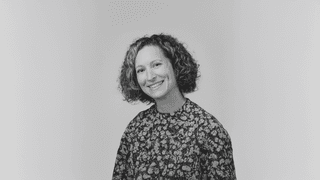
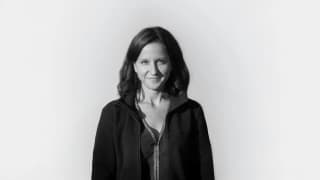
At the head of an ESAT (Establishment and Service for Work Assistance), Alice Freysz has developed a solidarity restaurant with her teams: “Les petits plats de Maurice”, which hires people with disabilities.
During the summer break, the teams at impact.info invite you to (re)listen to one of our episodes published this year.“Les petits plats de Maurice” created by Alice Freysz .
Enjoy listening!
Juliette Boulegon
impact.info journalist
Published on 9 August 2024
Transcript Audio in Français — text automatically translated· AI-generated transcript
0:00 Hello, it's Juliette and welcome to the podcast for those who want to make 0:08 a difference within their company. 0:11 Making society more inclusive and more open to differences is the goal 0:16 of ESATs that help people with disabilities integrate more easily into the 0:21 workforce. 0:22 Alice Freysz is the director of one of these establishments. 0:26 My name is Alice Freysz, I'm 47 years old, I was born in Lail-les-Roses in Val-de-Marne 0:32 and today, for a little over three years, I have been running an ESAT, which is an establishment 0:38 and service for work assistance, so very concretely, an establishment 0:43 of about 120 people. 0:45 We recruit, we train, and above all, we support people with disabilities in employment. 0:50 And so, through this ESAT, what do you do directly? 0:51 We train and support people with disabilities in employment. 0:55 So in our establishment, we have three main work areas. 1:00 First, we have a restaurant which will be the main topic today, called 1:05 Les petits plats de Maurice. 1:11 We also have a sales shop and especially a bike repair shop called 1:12 Les petits vélos de Maurice, where we teach the trade of bicycle repair. 1:17 And finally, the bulk of the ESAT consists of workshops where we work in B2B on various 1:21 trades. 1:22 So we do assembly, packaging, we do routing, and we also do administrative 1:27 work. 1:28 That's a brief introduction to our establishment. 1:34 Indeed, we will focus on Les petits plats de Maurice, a restaurant 1:35 located in the 11th arrondissement of Paris. 1:37 Could you start by telling us a bit about its creation, its 1:43 history, so we can immerse ourselves a bit in this restaurant? 1:46 In fact, what you need to keep in mind is that our ESAT belongs to a large 1:50 association, a wonderful association called ANRH, which is celebrating its 70th anniversary this year. 1:53 At ANRH, we have a little over 1,800 employees, more than three-quarters of whom are people with 1:57 disabilities. 2:02 Our historical trades at ANRH are B2B trades, so similar to services 2:08 as I explained earlier, industrial services, tertiary services, assembly, 2:09 etc. 2:14 And we wanted, a little over five years ago now, to open up more, to connect more 2:19 with the world around us. 2:20 And the idea of the restaurant came from that, because ultimately, what better place than a 2:27 restaurant to be open to the world around us? 2:32 2:35 2:38 So, this is really what was at the origin of this restaurant that exists today and that 2:42 was designed, even in its architecture, to be a true place of 2:48 diversity and inclusion. 2:49 Within your team, most of the people are in a situation of disability. 2:54 How is this organized? Is it simply a classic organization 2:57 of a restaurant where there are different processes to adapt? 3:01 Both. 3:02 First of all, we are a restaurant, so we start by being a real restaurant. 3:06 Our mission is the professional integration of people with disabilities. 3:11 So, we have to be a restaurant, as professional as possible. 3:14 Therefore, there is a whole part of the work and organization that is completely professional. 3:18 We have a kitchen setup that is great, worthy of a very good restaurant. 3:22 We obviously have a top-level chef. 3:25 We train our teams on all the basics, whether in the kitchen or in the dining area. 3:29 And above all, we train the team, whether our cooks or our servers, in a very 3:35 professional manner, each in their own job. 3:38 So, in that sense, we are a real restaurant. 3:40 And we must not forget that when we talk about professional integration, the idea is 3:43 also to work like in a company or, in this case, a classic restaurant. 3:48 And for that, we will really work on support. 3:51 So, it's true, the supervision can be a bit specific, whether it's 3:55 about adapting workstations according to disabilities, there may be a need 3:59 for adaptation, there may be a need for a bit more pedagogy, a bit more support 4:04 in training, even support that goes beyond just the professional. 4:10 We have a whole team of psychologists, a specialized educator who will focus 4:15 on social issues to respond holistically to all the needs 4:19 that our team may have. 4:21 And I imagine there are people who are both in a situation of disability, 4:25 but others who may not be. 4:27 Are these people also trained to work with these individuals? 4:32 Well, the reality in ESAD is that all our staff, whom I would call production, 4:38 all the teams are in a situation of disability. 4:40 Completely. 4:41 So actually, it will be the supervisors who, for the most part, are not in 4:46 a situation of disability. 4:47 Our supervisors, but like any other classic restaurant or company, 4:52 are professionals in their field to be able to teach the job to our team. 4:57 Of course, they also work on support themselves and with the help, 5:02 that's the specificity of an establishment like an ESAD, with the help of the 5:06 medical-social team of the ESAD, who are the ones I mentioned earlier, psychologists. 5:10 and specialized educators. 5:11 So, what do you think it brings to have a restaurant, to have opened 5:16 an inclusive restaurant, both in the neighborhood, for the customers, but also for 5:21 the employees? 5:22 Well, as you said, it's as much for the employees as it is for the customers. 5:26 First of all, for the employees, clearly, and for most of them, these are people who 5:31 were originally distanced from employment. 5:33 So, very concretely, a person distanced from employment, you train them, you support them 5:38 in getting a job. 5:39 Today, our team consists of servers and kitchen helpers who are skilled 5:44 in their profession and recognized for that. 5:46 We have great Google reviews, customers who give them excellent feedback. 5:49 And beyond the economic value of having a job, whereas before, 5:56 they were a bit more distanced, having a job means 5:59 having a place in society, a role, a purpose. 6:03 So, there is a human issue that is extremely important. 6:08 So, that's the first thing and that's why we do this job, 6:11 it's really about professional integration, the work of our team. 6:15 And the second issue, indeed, is that it's more than just a classic restaurant, having 6:20 an inclusive restaurant like this, because we show, in fact, we demonstrate 6:26 that professional integration and disability are not incompatible. 6:30 And that's really very important, with, as I said, our support. 6:37 These people who were originally distanced from employment are now recognized as 6:41 kitchen helpers, servers in their profession, and in fact, disability is no longer 6:45 the issue. 6:46 And are the employees on permanent contracts or not necessarily? 6:49 Well yes, people with disabilities in an ESAT are not legally 6:54 employees, but I would say it doesn't matter, because in the end, they have 6:57 employment contracts that are indeed indefinite, just like the supervisors 7:03 also have permanent contracts. 7:04 And then the idea with Impact.info is to give a voice to those who 7:08 are making a difference within their company, as you understood, 7:12 but also more broadly in society. 7:14 I think you feel concerned about this issue. 7:17 In your opinion, how do your actions make a difference, precisely? 7:20 Well, our issue is, beyond my ESAT, more broadly our 7:25 association, the NRH, is the unemployment rate of people with disabilities. 7:30 I don't know if you know, but their unemployment rate is about twice 7:34 the average of the active population. 7:36 So for us, that's our issue, it's a big issue. 7:38 Where we want to push the boundaries a little further, and I would like to talk to you 7:42 about a project that is not yet in place, but that we are currently considering 7:45 for this year. 7:46 We want to develop a real training and support pathway for employment 7:53 for people with disabilities in the restaurant industry. 7:56 Let's talk a little more about you, Alice, 16 years old, that's the legal age in France to 8:04 start your first business. 8:06 Did you know what you dreamed of when you were 16? 8:10 When I was 16, and I think this is the case for many teenagers, I didn't really know what I wanted to do, 8:16 but I did have a dream of getting involved in a town hall. 8:19 In fact, I wanted to work for the common good, but not at all with ambitions 8:26 for national politics. 8:33 I wanted to work within my city, my neighborhood, to help people 8:34 who might be more vulnerable. 8:40 At that time, I was mainly thinking about young people, education, or the elderly, I admit. 8:41 Today, concretely, I have never engaged in politics, neither national nor local. 8:47 However, I work in an association, not completely for young people and the elderly, 8:52 but for people with disabilities. 8:56 I think there might be a link between that dream and the job I have today. 8:58 Thanks to Alice Presse, director of an ESAT in Paris. 9:02 You can of course find this interview on our website impact.info in the section 9:06 on disability, which brings together all the episodes focusing on good practices for people 9:11 with disabilities. 9:16 This was impact.info, doing business differently. 9:17 Embed this interview on your site
Show this player directly on your site to share the interview with your audience.
Copy embed code View generated code
![[Rebroadcast] Why a solidarity restaurant is more than a culinary experience?](/_next/image?url=%2Fuploads%2F2024%2F05%2FAlice-FREYSZ.png&w=1920&q=75)