translate This article was automatically translated from its original Français version. Read the original
In response to the waste of temporary decor, Bastien and Nathalie founded Gimmic Design to revolutionize interior design. Their approach? Reuse, renovation, and leasing, for sustainable and responsible furniture.
During the summer break, the teams at impact.info invite you to (re)listen to one of our episodes published this year.
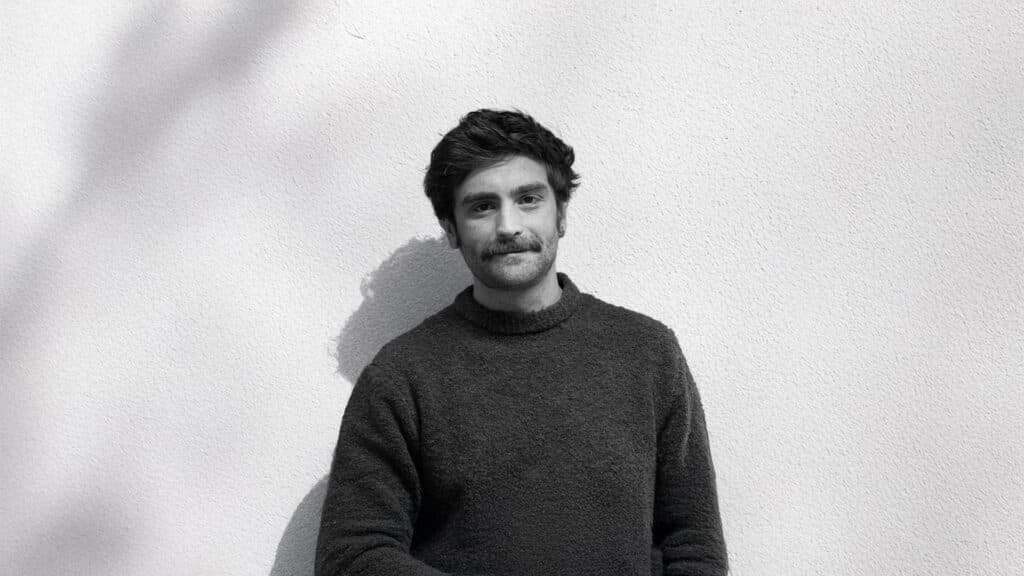
This episode highlights the testimony of Bastien Carretier , co-founder of Gimmic Design .
Enjoy listening!
Florence Jaillet
impact.info journalist
Published on 28 July 2025
Transcript Audio in Français — text automatically translated· AI-generated transcript
0:00 Hello and welcome to the podcast for those who want to make a difference 0:09 within their company, working for reuse while being creative, Bastien 0:15 Carretier. 0:16 I'm Bastien Carretier, I was born in Dax in the Landes, you might be able to 0:22 hear it in my accent, and I was born in 1992, so I'm 32 years old. 0:28 I am the co-founder and, let's say officially, the general director of the company Gimmick 0:36 Design. 0:37 What is the principle of your company, what do you do? 0:39 At Gimmick Design, we are designers and manufacturers of responsible and deposit furniture, 0:44 which means we design and manufacture furniture from sustainable materials 0:50 like wood, recycled materials, and also, our specialization is 0:55 mainly industrial waste and offcuts, meaning we do factory visits, identify offcuts or waste that we then integrate into our furniture, 1:01 and on top of that, we also develop services, meaning once we sell a 1:06 piece of furniture, we offer a renovation service to extend its lifespan, 1:10 a deposit service where we offer to take back our furniture for free at the end of its life 1:14 to refurbish it internally, and we also offer furniture leasing. 1:17 What made you want to get into this? What was the genesis of this project? How did it come about? 1:22 My partner Nathalie and I, when we met, we were doing quite a bit 1:25 of construction, set design, and scenographic design, so indeed we were building sets 1:28 or huge things, large quantities of materials for very ephemeral things, 1:32 so we could find ourselves assembling, let's say, a fake apartment set with lines 1:38 inside, things like that, for about 15,000 euros worth of wood for a week 1:43 of shooting and then end up taking it all apart and throwing it in the trash, so we 1:49 started to reintegrate, to create bridges between our different activities 1:53 of construction, set design, interior design, and clips, where we try on 1:56 several shoots to use the same material to reuse it, and it was following that 2:00 that we thought about how to go further by working, yes, on sourcing, going 2:05 beyond simply reusing a material, and how to also manage the end of life of what 2:09 we're going to manufacture. 2:13 The idea was really to try to align as much as possible with the most 2:18 perfect approach to the life cycle of the object, in this case, 2:19 the furniture. 2:23 As for the current state of things, how far can we go? 2:27 What I like to say is that in our sector, ultimately what's very strange is that we 2:28 know nothing, since we are all developing initiatives with things we discover more or less as we go along, so 2:30 nothing is perfect, but in any case, that's what's interesting, it's to develop 2:34 new initiatives and realize that we can always improve them. 2:37 2:43 2:48 2:51 So in fact, we are not in something finished, but we are in a field 2:54 of endless discovery and improvement. 2:55 So what we can improve is the way we source, as soon as we source 3:01 a material there is necessarily a journey, so sourcing locally, are we 3:05 dealing with waste, are we dealing with offcuts, those are two different things. 3:08 Then there's the way of designing, that is to say designing furniture, the way it is 3:14 assembled to ensure a bit of its recyclability. 3:17 That's where we will talk about partial or total recyclability, meaning the way 3:22 we assemble two different materials, if they are not separable or 3:26 if we can't remove them, we lose the recyclability of the materials. 3:29 And then the end of life, how we manage this end of life, with ultimately a lot of initiatives, 3:35 especially in furniture where there are recycled materials, but we also realized 3:39 by doing a market study that we are using materials better, more bio-sourced, recycled, 3:47 but ultimately if we don't have a solution for the end of life, we have simply pushed back 3:51 a problem maybe by 5 to 10 years. 3:53 So the idea was to also look at this end of life, so how 3:58 we ensure the end of life, with whom and how, and that's where there are plenty of things 4:02 to improve, because we can easily think that there would be an environmental impact 4:07 that could indeed be linked to social aspects as well. 4:09 So today, how do you approach the end of life? 4:13 For the end of life, it's under construction, since what we are making is being 4:18 sold, so we are in the process of setting up the end of life. 4:21 So the end of life can be through refurbishment with this 6-month notice, which actually means 4:26 that the client has 6 months to notify us for the return of the furniture, which 4:30 allows us to reintegrate it for 6 months into other projects, to talk with 4:34 future clients, do you want this material, is a simple renovation 4:37 sufficient for you? No, do we refurbish, do we simply renovate? And then, the big 4:43 topic is how we transport these solutions, between furniture that ends up with a client and how it comes back to our workshops, and that's really the 4:47 most interesting part, well not the most interesting, but where there are really 4:51 things to put in place, because we see quite a few things at the local level, but 4:54 we're starting to get requests from increasingly distant places 4:59 so how do we manage to set this up, so these are discussions we have with 5:02 transporters to work on these themes, like Varesito in particular, on how we will 5:06 manage to recover these materials, and either bring them directly to Gimmic or store them 5:11 while waiting for them to be refurbished to reintegrate them into the circuit. So 5:15 that's it, the big project is that in fact. So what do you offer, what 5:19 types of materials do you have, what types of furniture do you have, what 5:22 can we find? So in terms of furniture, we will have quite a bit of furnishing 5:25 for businesses, so we go from work benches, to sofas, to armchairs, coffee tables, 5:29 5:35 meeting table, which is let's say the bulk of what we do, even if we can obviously have 5:40 some custom pieces, like obviously reception desks, storage furniture 5:44 separators, and then the materials we will use, in durable materials we will use 5:49 wood, a few species but not many, because in fact it also allows us to be under a 5:54 zero waste policy, it's not to offer 500,000 species of wood, because otherwise we end up not being able to reuse them, 5:58 making the connections in the zero waste logic, we use recycled materials, so here we will rely on recycled plastic, people who 6:02 lead initiatives on this, or other materials, and then we specialize a lot in industrial waste, we have for example the big theme at the moment, 6:06 it's cardboard avirol, which comes from Dalalu, which is an aluminum group that will receive 6:11 aluminum in rolls, which will be unrolled, formed to create either a 6:15 cover or a gutter, and once all the aluminum is unrolled, there remains this big 6:21 cardboard roll, here we are not talking about a scrap, but there is really an industrial waste, a kind of 6:26 toilet paper roll, and we will reuse this big cardboard tube to create systems of 6:30 legs, chairs, storage furniture, counters, reception bands, so we use this 6:34 material that will replace other materials in fact, so the idea of working on this is 6:39 that we will be on a notion ultimately of upcycling, if we divert a waste that will come to 6:44 replace another material, so we will save a material from a more energy-intensive process, either 6:51 from transport to landfill or incineration, and we will also substitute it for another material 6:55 that we would normally have to use to make the same shape, we would have had to go through a process either 7:00 of bending, mechanical or by machine, so when we treat a waste like this, it's a double 7:07 positive impact, because we avoid the whole journey, the recycling process or incineration or 7:11 landfilling, but above all we substitute materials that we would have had to buy to make 7:17 the same shape, it's a bit the double impact and the interest of working with waste. 7:22 How are you more innovative, have you gone further than those who existed, 7:26 how are you making things move as well? 7:31 We are making things move, but I want to say, it's collectively, 7:37 it's a lot of initiatives, it's industries at the local level, like the Alalu group and like 7:40 others who come back to the table, who come to meet us, we have ideas, 7:43 but then we find the ideas thanks to them who bring them from their factories too, 7:47 I am quite attached to this notion of collective that makes things move, 7:51 and we if we manage to do things, it's only because we are surrounded by people 7:54 who also put in good will, and then we have ideas, we need to transform that. 7:58 There is a greater willingness today than there was 5-10 years ago, 8:02 do you feel that there are more initiatives, more possibilities in this direction? 8:06 From the moment when Asian countries refused to take waste in 2018, 8:10 it accelerated the solutions for what do we do with all this waste that we can no longer 8:14 send to Southeast Asia either. I think that's also one of the reasons that has accelerated 8:19 all these beautiful recycling, reuse, upcycling initiatives. 8:22 Impact.info, doing business differently. 8:27 8:30 8:35 So Assezon, it's the age to start your first business in France, it's possible, 8:40 if you want, would you have wanted, would you have imagined starting a business Assezon? 8:45 Not at all, because in fact the business is a pretext, it's a form, 8:49 the idea, what drives us forward is not to create a business, it's the passion for creating 8:52 things and sharing moments with people. So the only thing that has pushed me forward 8:56 that I've always dreamed of, has always been to create, to invent things. And so 9:00 today I'm going to create, I'm inventing furniture. And it turns out that it took the form of a 9:04 business, but let's say that wasn't the main motivation. 9:07 And what did you want to do Assezon? Were you sensitive to ecological issues, 9:12 recycling, reuse, were those already topics, or were you dreaming of something else? 9:17 I had a lot of dreams, I dreamed of writing, writing things about humor. I dreamed 9:23 of inventing, designing furniture and clothing. It was more about creative processes 9:28 that I liked. And then it got mixed up with a lot of behaviors very related to education, 9:33 where it's true that we realize quite late, but I spent my time with my mother, 9:38 she raised me a lot not to throw things on the ground, I spent my life having 9:40 papers in my pockets when I was little. So ultimately it's a kind of education that 9:44 we don't realize because it’s part of our upbringing. But ultimately, 9:47 when we mix this child who wanted to invent a lot of things with his pockets full of 9:51 papers because he didn't want to throw them away or because he picked up other people's papers in the 9:53 playground, we start to find a little bit of the rest of the story. 9:57 Thanks to Bastien Carretier, co-founder and CEO of the company 10:02 Gimmick Design in Bordeaux. You can find this podcast on our website impact.info. 10:08 This was impact.info, doing business differently. 10:14 Subtitles created for the Amara.org community. Embed this interview on your site
Show this player directly on your site to share the interview with your audience.
Copy embed code View generated code