translate This article was automatically translated from its original Français version. Read the original
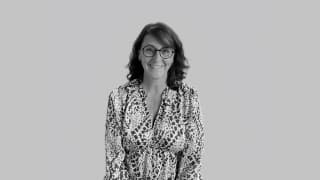
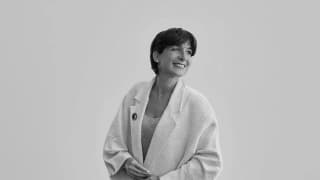
Aurélie Leclercq is the co-founder of Robin des Moulins, a social and solidarity economy enterprise in Oise, which hosts green corporate seminars and redistributes wealth to its community.
During the summer break, the teams at impact.info invite you to (re)listen to one of our episodes published this year.
This episode highlights the testimony of Aurélie Leclercq , co-founder of Robin des Moulins .
Enjoy listening!
Florence Jaillet
impact.info journalist
Published on 28 August 2026
Transcript Audio in Français — text automatically translated· AI-generated transcript
0:00 What if corporate seminars could serve to both raise ecological awareness, 0:05 but also to redistribute wealth to the territories that need it most? 0:10 An idea that has gained traction and works in Oise. 0:13 The goal was also to reconnect like we were in a family vacation home, 0:17 and break a bit from corporate codes. 0:19 And above all, it's about discussing topics that are difficult to address, 0:22 like all the transition issues. 0:23 So taking a step back, looking a bit further than a short-term horizon, 3-6 months. 0:29 Finally, we are in a place that is 200 years old. 0:35 In the podcast for those who want to change the game within their company, 0:40 we're talking today about this actor in the social and solidarity economy, 0:45 who wants us to rethink our relationship with the world 0:48 to positively contribute to social and ecological issues, Aurélie Leclerc. 0:53 My name is Aurélie Leclerc, I was born in Saint-Lys, in Oise. 0:57 The year of birth is October 19, 1984. 0:59 And my role, I am co-founder of Robin des Moulins, 1:02 which we will talk about. 1:03 Robin des Moulins, what is it? 1:05 And then, what inspired you to choose this name, where did it come from? 1:07 So, Robin des Moulins is a social and solidarity economy enterprise 1:11 that we started with my partner from a bit of a dream, actually. 1:16 The dream of restoring an old mill. 1:18 Not only to live there, we live on site, 1:20 but also to make it a place that is useful to the residents 1:24 and, let's say, to the planet, in a very broad sense. 1:26 The idea is really to, like Robin Hood, 1:29 be a place that is generous, that is useful to its territory. 1:35 And then, we don't really have the dimension of taking from the rich 1:40 to give to the poor. 1:41 Well, we don't have this problem of stealing from Robin Hood, 1:44 but there is still an idea of redistributing wealth across territories, 1:48 since our economic model is to host seminars, 1:51 so in a green setting, in the countryside. 1:53 And in fact, since we are 45 minutes from Paris by train, 1:56 we mainly host Parisian or Île-de-France companies. 2:00 Knowing that we are located in Oise, 2:02 less well-off, let's say, than Île-de-France and the nearby suburbs. 2:05 The idea is still to redistribute the money, 2:08 since the value of the companies that come, 2:10 is that they redistribute in our territory. 2:12 What do companies come looking for with you? 2:15 Well, first of all, they come looking for a calm place, open, easy to access. 2:21 That's definitely one of the key points, 2:22 because we are really just 10 minutes on foot from the train station. 2:24 It's also part of our values. 2:26 In short, we try to be a committed place where we can do low-carbon things. 2:31 So, having train access was really key for us. 2:33 They also come looking for the home-like atmosphere, 2:35 since we are not a huge place, actually. 2:37 So, the mill is about 400 square meters, 2:40 but it's really a home-like format. 2:41 And so, the goal was also to recreate connections 2:44 as if we were in a family vacation home, 2:46 and to break a bit the corporate codes, 2:48 which are still somewhat the standard for seminars. 2:50 Like that, for a day, two days. 2:52 And especially, it's about discussing topics that are difficult to address, 2:55 like all the transition issues. 2:57 So, taking a step back, 2:58 looking a bit further than a short-term horizon, 3, 6 months. 3:02 After all, we are in a place that is 200 years old, 3:03 so it really invites you to take a step back. 3:05 We are surrounded by nature, so likewise. 3:07 In fact, we are not alone. 3:09 Well, I don't know if you can hear, behind me, there's a pigeon cooing. 3:12 There are trees everywhere. 3:14 Really, the place is inviting to reflect on one's impact and trajectory. 3:20 And trying to make sure it makes more sense, 3:22 that it is more useful to the living and to the planet. 3:25 How do we work when we are in nature? 3:27 What changes? 3:28 What changes in skill acquisition, in the body, in the mind? 3:32 I think we should actually do a thesis. 3:34 That would be one of my dreams, actually, to have a PhD student in numbers, 3:37 that we could host here and who could document everything that happens. 3:41 Because indeed, I don't have the scientific skills 3:44 to say exactly what happens from a scientific point of view in the experience. 3:48 Then, in a more empirical way, I've noted quite a few things. 3:51 Well, for me, because it's been about two years now that we've been operating this place. 3:55 First of all, it's a place that brings back memories. 3:57 Because it's an old house and we've sourced all the furniture, 4:01 people feel like they're going back to their grandparents' place. 4:03 And so, right away, there's this kind of atmosphere of 4:05 "Oh yes, I remember when I was at my grandparents'." 4:07 And often, it's the grandparents who connect us to nature. 4:11 So, there's that dimension, both very emotional 4:14 and very focused on positive memories, actually. 4:18 So, that's something that happens through the place, through the house, 4:21 through the smells and through the objects. 4:23 A simple detail, but actually, we've sourced all the mugs. 4:26 So, generally, people arrive in the morning, they have a little coffee. 4:29 A chicory that I always offer to have a more ecological alternative to coffee. 4:34 And we have cups with little myosotis flowers, retro patterns. 4:40 And so, often, people gravitate towards the pattern their grandparents had. 4:43 And that really creates a different atmosphere than what we have at the office, actually. 4:48 Then, being in nature, for sure, changes a lot of things too. 4:52 There's the sound of the wind in the leaves. 4:55 Here, since we're in a mill, it's a water mill, so there are streams. 4:58 So, we have the sound of water. 5:01 And then, we have the birds. 5:02 So, it really invites you to disconnect. 5:06 And at the same time, I think there's a feeling of relaxation that happens 5:10 which is conducive to both tightening the bonds within the team 5:15 and also addressing these impact topics, 5:17 especially when they already matter to the people involved. 5:19 But that's generally the case when they come here. 5:21 There's at least one person who wants to push these topics in the company. 5:26 And it's that person who contacts us and wants to bring their colleagues. 5:29 So, we have several types of activities. 5:31 We also do training sessions. 5:32 We have two training modules, one on carbon and climate 5:37 and one on living things and biodiversity. 5:39 And these are things we also offer in addition to the companies that visit us. 5:43 On the more out-working formats, it's something we've invented. 5:46 Based on the co-working model, coming to work outside with a drink. 5:50 And regularly, when we don't have a group for a seminar, 5:54 I open the doors of the mill and invite anyone who wants to come. 5:57 Either Parisians who really need nature and are a bit deprived 6:01 and who come, well, in 40 minutes by train, they're here, 6:04 they spend the day here and it's free. 6:06 Local entrepreneurs. 6:08 We are in an area where there isn't much co-working, 6:10 because we are more in a rural area. 6:13 And there are many entrepreneurs who work from home, actually, 6:15 in their living rooms, so there is still a sense of solitude. 6:17 And so, regularly, we open when we can, for free, 6:21 so that people can meet, work differently. 6:24 So, it's not the days when we do the most foundational work. 6:26 We don't come for that. 6:27 We also come to recharge, to nourish ourselves with different perspectives, 6:31 you know, to meet people who generally share values 6:34 since we have a committed link in our voice, actually. 6:37 Often, we attract people who are like us. 6:38 And the third thing we do here, in terms of audience, 6:42 is that we really want the place to be useful to the residents. 6:44 We don't officially have the status of a third place 6:46 because we don't necessarily have a café here. 6:48 Well, that's not how we operate. 6:49 But on the other hand, we try to work hand in hand 6:52 with local associations to create meaningful events. 6:56 Always in small groups. 6:57 Here, we have a capacity, we can't host more than 50 people. 6:59 So, small groups, but creating encounters. 7:02 Trying to inspire on ecological topics in a broad sense, 7:05 but without being pushy and without using those terms. 7:07 We are really in a small village where ecology, 7:10 is not something that resonates, actually. 7:12 If we want to reach the population, 7:14 we have to go through intermediaries. 7:16 We do a Repair Café. 7:17 That's typically the kind of thing I love hosting here 7:19 because it's a project that is obviously ecological 7:22 because, in fact, a Repair Café, 7:23 we come to repair rather than throw away or buy new. 7:26 Plus, it's about passing on knowledge 7:28 since there are volunteer repairers 7:30 who come to teach people how to fix their items. 7:34 And then, it creates connections. 7:36 But we also play on purchasing power. 7:37 And we don't talk about ecology, actually. 7:38 We're talking about repairing, obsolescence, etc. 7:40 But that's not the heart of the matter. 7:42 The issue is spending time together, learning to repair. 7:45 The second example, 7:47 we welcomed an association that teaches young people or adults to tell stories. 7:53 So, I discovered a bit what storytelling was. 7:55 I thought they would come with books to read. 7:58 But not at all. 7:58 It's really about learning a story and being able to tell it orally. 8:02 It's different from theater because in theater, 8:04 there are several of us and we can give each other lines. 8:05 Here, it's really individuals who will tell the story and keep their thread. 8:09 It was impressive to see children do that. 8:11 The youngest were 8 years old. 8:12 And I was very happy about that because, actually, 8:14 it's a person who recently retired in the village 8:17 who runs this storytelling workshop 8:18 and who asked me if she could hold their sessions here, 8:20 in our seminar room. 8:22 So, that very morning, we still had a group in a seminar, 8:25 working. 8:25 So, it was a working table, a screen, post-its everywhere, flip charts. 8:31 And then, in an hour, we tidied everything up. 8:33 And set up lots of chairs to welcome the audience and their storytelling. 8:37 So, that's really what we want to do here. 8:39 We want it to be a lively place, 8:41 that finds its economic model 8:42 because that's still a key thing. 8:44 We are not an association. 8:45 We are a social and solidarity economy enterprise 8:47 and we have no funding. 8:48 So, if we don't have a viable economic model, 8:50 we can't do anything. 8:51 That's why every time, 8:52 I always thank the companies that come for seminars 8:55 because it's thanks to them that we can, 8:57 both preserve this place 8:58 and find it a purpose in the territory. 9:03 Respond to the needs of the associations 9:05 that come to us asking to hold storytelling sessions. 9:09 I also have a sewing association 9:10 that suggested doing a clothing swap 9:12 with repair workshops. 9:14 Well, we try to be a place that thrives in service of the territory. 9:22 Aurélie Leclerc, you are the co-founder of Robin des Moulins in Oise. 9:26 At 16, there's the France agent to create your business. 9:28 So, I ask you, at 16, 9:29 had you already thought about starting a business? 9:32 What were you doing? 9:33 What were you aiming for? 9:35 At 16, I was in Amiens. 9:37 I had a hard time knowing what I wanted to do, 9:39 overall. 9:40 There were always many things that interested me 9:43 and I think at the time, that term didn't exist, 9:45 but I dreamed of being a slasher, really. 9:48 But that didn't exist. 9:49 It's still something quite recent. 9:51 I could never have imagined doing that, anyway, I think that... 9:53 Today, I have created my own tailor-made job, actually. 9:56 I take care of seminars, pretty much everything, actually. 9:59 I am the only employee of the company. 10:02 So no, I would never have imagined doing that. 10:04 I dreamed of being both a journalist and working in fashion. 10:07 Really, I was very far from imagining one day taking over a mill 10:11 in the department where I was born, moreover, 10:13 where my parents no longer live, where I have no family ties left. 10:16 And starting a project like that, 10:18 I don't come from an entrepreneurial world at all. 10:21 I have no entrepreneurs in my family, 10:22 so I think it was very, very, very far from me. 10:24 But in hindsight, 10:26 I feel like everything has aligned in a pretty good way. 10:30 Thanks to Aurélie Leclerc, co-founder of Robin des Moulins in Oise. 10:34 You can find this podcast on our site impact.info. ![[Rebroadcast] Why Create Living Spaces for the Community?](/_next/image?url=%2Fuploads%2Fimages%2F2026%2F07%2F794e6dda-b0be-4e7f-8c5b-d310dbb26941.webp&w=1920&q=75)