translate This article was automatically translated from its original Français version. Read the original
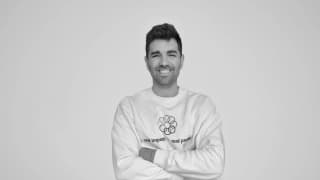
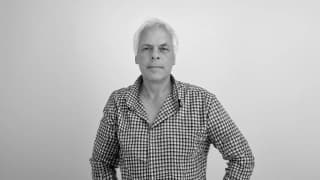
Emmanuel Claude founded Alphadiab 12 years ago with the goal of simplifying access to care for people with diabetes.
As part of the summer break, the teams at impact.info invite you to (re)listen to one of our episodes published this year.
This episode highlights the testimony of Emmanuel Claude , founder of Alphadiab .
Enjoy listening!
Frequently asked questions What is diabetes and why is it considered an epidemic in France? Diabetes is a chronic disease that affects how the body uses glucose, a sugar essential for energy. In France, more than 4 million people are affected, and the disease is often underdiagnosed, making it a true epidemic, as many people live without knowing they are diabetic.
What are the different types of diabetes and how do they manifest? Why is early detection of diabetes essential? How does Alphadiab contribute to improving access to care for diabetics? What technological innovations have been implemented to help people with diabetes? Florence Jaillet
impact.info journalist
Published on 4 August 2025
Transcript Audio in Français — text automatically translated· AI-generated transcript
0:00 Hello, this is Juliette, and welcome to the podcast for those who want to make things happen 0:08 within their company. 0:11 Diabetes in France affects more than 4 million people. 0:14 Getting tested is important, having access to necessary care is vital. 0:19 So, to facilitate this access for as many people as possible, Emmanuel Claude created Alpha Diab. 0:25 My name is Emmanuel Claude, I'm 61 years old. 0:29 I live in Villene-sur-Seine, in the Yvelines, and I was born not far from here, in Beauce. 0:34 I am the president of Alpha Diab, a company I founded with a partner about twelve years ago, 0:40 which distributes medical equipment for diabetics, with many specificities. 0:45 Can you tell us what Alpha Diab is? 0:47 Alpha Diab is a company that distributes medical equipment for diabetic patients. 0:54 The observation was made many years ago, with me who, at the time, attended international congresses in diabetology. 1:03 And I realized that there were many products available for diabetic patients that we couldn't find in France. 1:09 Many foreign manufacturers had very interesting products, and unfortunately, the French offer was quite limited. 1:16 So, I started proposing to some of these manufacturers to import their products to offer them to French patients. 1:23 In France, to date, how many people are affected by diabetes, knowing that there are several types of diabetes? 1:29 Diabetes is a real epidemic in the generic sense of the term. 1:35 It is a disease that now affects just over 5% of the population in France. 1:40 We talk about 4 million people who are diabetic, 1:43 including between 500,000 and 800,000 people who do not know they are, 1:47 since one can very well live without this diabetes diagnosis, 1:50 until the day diabetes catches up with you in the form of a heart attack, a stroke, or an amputation of the lower limbs. 1:58 So often, diabetes is a formidable disease, a daily constraint, 2:03 because you have to monitor your blood sugar every day, you may need to take medication and inject insulin as well. 2:10 In France, we don't die from diabetes, we don't die from diabetes anymore, since insulin is readily available. 2:16 However, complications can arise. 2:20 Diabetes still accounts for 8,000 foot amputations per year in France. 2:24 It is the leading cause of blindness and many causes of heart attacks, strokes. 2:30 Well, the picture is a bit daunting. 2:33 Today, there are many tools, clinical devices that help alleviate the daily life and constraints of this pathology. 2:41 Why did you create Alpha Diab 12 years ago? Was there a real need at that time? 2:46 Twelve years ago, there was already an interesting offer, of course. 2:53 Simply put, diabetes is multifaceted. 2:55 With 4 million people, you can imagine they don't all look the same when it comes to diabetes. 3:00 It can be a 6-month-old newborn, it can be an elderly person in a nursing home, 3:04 it can be a young adult with a hectic daily life. 3:09 In short, it's a multifaceted disease. 3:12 And so, quite legitimately, one might think that a product for monitoring diabetes for a baby 3:19 is not at all the same as that for an elderly person in a nursing home. 3:23 And 12 years ago, that was still somewhat the case since the offer was a mass market offer. 3:29 where ultimately, the blood glucose meter was the same for everyone and people just made do with it. 3:35 At that time, the systems were absolutely not secure. 3:38 That is to say, healthcare professionals, since we handle blood with blood glucose measurements, 3:43 since we handle needles with daily insulin injections, 3:48 the risk was quite high for all these people to accidentally prick themselves and contaminate themselves. 3:54 And in fact, we tried to direct the offer and multiply it, the available offer for patients, 4:00 but also for healthcare professionals on these axes, comfort for the patient, 4:05 ease of use and safety for healthcare professionals. 4:08 Can we also remind a little bit what the daily life of a person with diabetes is like 4:13 and why it is crucial to continue simplifying their access to care? 4:17 There are two main types of diabetes, type 1 diabetes which can occur at any age and is insulin-dependent. 4:25 So this type of diabetes needs to be monitored. 4:27 Often, it is diagnosed during an episode of discomfort or a coma in the emergency room 4:33 since the person did not realize they were diabetic. 4:36 It is still a disease that remains relatively rare for young people. 4:39 Type 2 patients, on the other hand, have diabetes that will appear much later. 4:43 It is a disease that develops over time, over 10 years, 15 years, 20 years, 4:47 which means that ultimately, type 2 diabetics, this disease will gradually set in, 4:52 indeed perhaps without people realizing they are becoming diabetic. 4:57 So prevention is important because the earlier you know you are diabetic, the sooner you can correct the course. 5:03 And I imagine that in 12 years, you must have also seen technological advancements 5:07 to improve the daily lives of people with diabetes? 5:10 I want to say that things are even accelerating. 5:12 I entered at a time when insulin pumps were reimbursed in France. 5:17 That goes back a few years already. 5:19 They were relatively archaic pumps, 5:22 even if we go back to the 80s. 5:25 I'm talking about this in the 2000s. 5:27 In the 80s, the first insulin pumps, 5:29 were the equivalent of a wheeled cart that you transported. 5:36 In the 2000s, when I entered this market, 5:39 the insulin pump fit in a pocket which, today, 5:42 it sits on the skin because it's a simple patch pump. 5:45 And moreover, it is connected to a blood glucose sensor. 5:49 Perhaps the most important, most significant evolution in recent years, 5:54 is that of blood glucose sensors which provide data 5:59 that we didn't have before, since before, in the best case, 6:01 we pricked our finger 5-6 times a day, 6:05 which is already a big constraint, and you had 5 or 6 measurements. 6:08 But between each measurement, you didn't really know what level you were at. 6:12 Today, we have a system that allows you to measure blood sugar over 24 hours 6:17 without having to prick your finger. 6:19 You install a sensor on your arm and you have this blood sugar reading for 15 days. 6:24 This makes it easier for you to adjust your retention. 6:26 And all of this can be controlled via their phone, for example? 6:29 Now, yes, there is a phone that can allow you to record a smartphone application. 6:35 So, since you mentioned the phone, that's also an important evolution. 6:38 It's all about telemedicine, remote monitoring, and connected devices. 6:43 All people today, all diabetic patients, 6:46 are not eligible for blood sugar sensors, mainly for financial reasons, 6:50 but also for the moment, the interest for the community to fund blood sugar sensors 6:57 which are very expensive compared to blood sugar strips. 7:00 There is a population, for example, that is currently not eligible for the sensors. 7:04 These are all the pregnant women who have diabetes during their pregnancy. 7:09 We are talking about gestational diabetes. 7:10 Gestational diabetes also means inducing fetuses that live in a slightly sweeter environment. 7:17 Studies show that these patients are more likely to become diabetic later when they are adults. 7:22 So, the connected system, connected systems are absolutely great for that 7:26 because it helps maintain a link between the medical team and the patient. 7:31 We have increases and drivers on this topic by offering Bluetooth connected systems with applications 7:37 where suddenly, communication is established. 7:41 It reassures everyone and the results are there, they are effective to the point that today, 7:46 the system is reimbursed by Social Security. 7:48 These are progress made in recent years, we don't need to go back ten years. 7:53 It's really in the last five, five years. 7:56 And then, the idea with impact.info is to give a voice to those who are changing the game within their company. 8:04 In your opinion, how do your actions change the game? 8:06 We are the little thorn in the side of the profession. 8:10 It sounds a bit strange to say it like that, but it's true that we are surrounded by big pharmaceutical labs 8:15 that live in a certain way on their laurels. 8:18 We have always tended to listen to what patients were looking for, what healthcare professionals were looking for. 8:24 So, we have kind of become the disruptors of the profession. 8:27 The case of Bluetooth systems seems simple, but indeed, today, it has become a bit of the norm, 8:32 even in relation to the big labs that, of course, do not want to be left behind. 8:36 Another important point is this notion of screening, of diagnosis. 8:41 We may not have said it enough, but diabetics, especially type 2 diabetes, 8:46 often come from disadvantaged populations, the notion of junk food, the notion of sedentariness. 8:51 All of this means that we realize that diabetes is often a disease of neighborhoods, disadvantaged neighborhoods. 8:57 People also don't necessarily take the time to get screened, to get diagnosed. 9:01 And we try to go into these neighborhoods and offer, especially in the pharmacies located in these neighborhoods, 9:09 screening discomforts. 9:10 Yes, we organize screening operations. 9:12 Once again, when you screen for diabetes, it's better. 9:20 To conclude this interview, Emmanuel, I'm going to ask you a question about yourself. 9:25 16 years old is the legal age in France to start your first business. 9:28 Did you know what you dreamed of when you were 16? 9:31 Well, not starting a company, and even less for diabetic products, which shows how life takes turns. 9:38 I always dreamed of being a water and forest engineer, so that has nothing to do with it. 9:43 However, I did study agronomy, I am trained as an agricultural engineer, 9:48 which also has little to do with diabetes. 9:50 And then eventually, through professional opportunities, I found myself in the diabetes field. 9:57 The only regret I have is not having done it sooner, thinking that it's really great to start a business. 10:03 And I try, as much as my modest means allow, to pass on this passion for entrepreneurship. 10:08 I joined the association 100,000 entrepreneurs, and whenever I can, I go to schools. 10:14 And at 16, I explain a bit about my journey, they sometimes look at me with wide eyes. 10:19 Finally, it's this old guy telling us his life story. 10:22 If we can pass on the desire to hear about entrepreneurship, honestly, I would be the first to live it. 10:27 Thanks to Emmanuel Claude, who is the CEO and president of Alpha Diab, 10:32 which distributes and sells medical equipment for diabetic people. 10:36 You can, of course, find this interview on impact.info, in the CSR section, 10:41 which brings together all the episodes about the challenges faced by leaders 10:45 who put responsibility at the heart of their business. 10:49 This was impact.info. 10:51 Entrepreneurship differently.