translate This article was automatically translated from its original Français version. Read the original
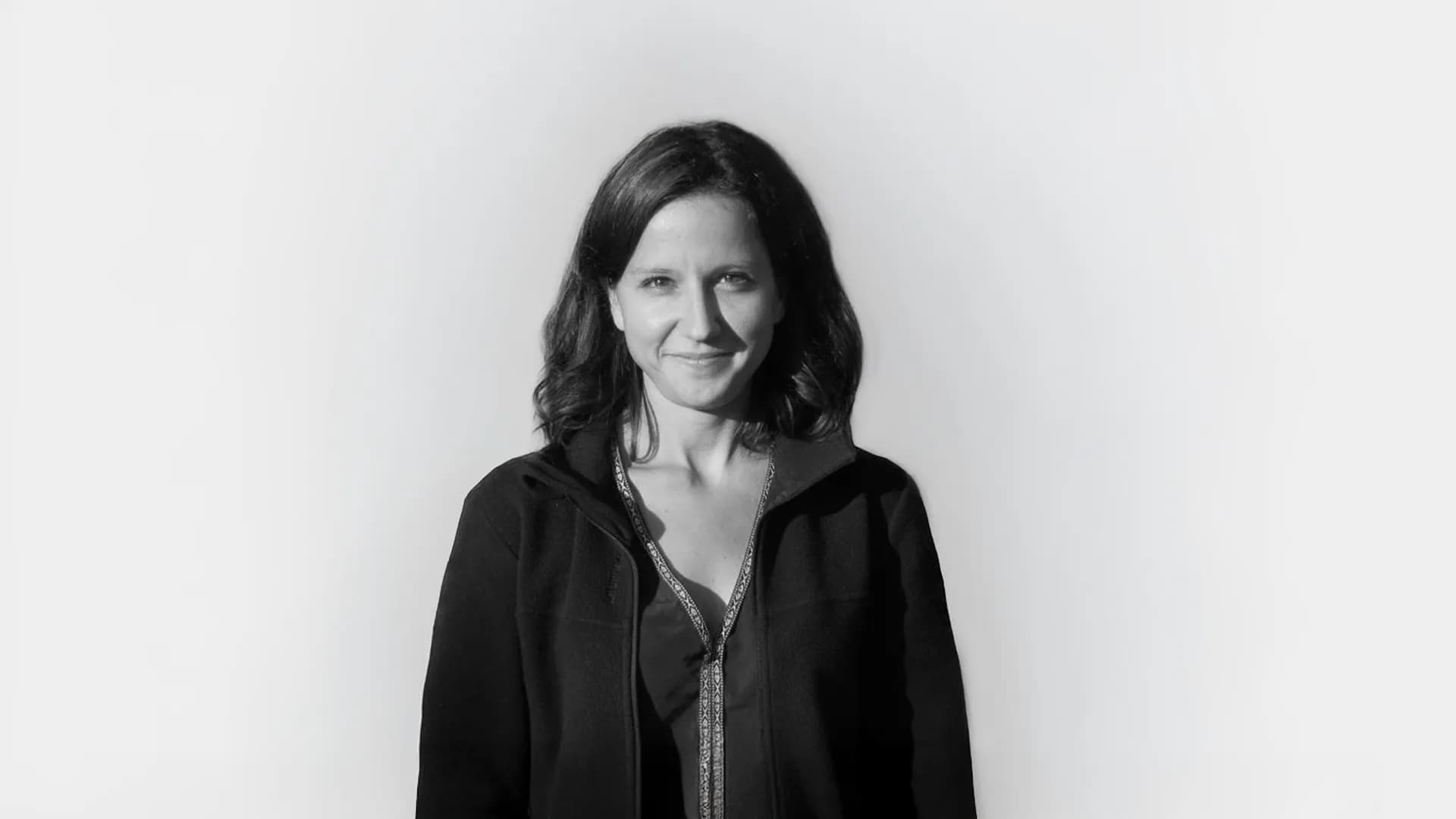
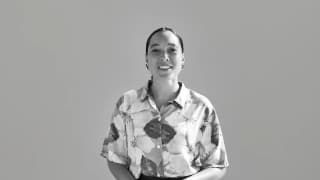
Charlotte Meyrueis is the director of Cœur de Forêt, an organization dedicated to forest preservation in France and internationally.
During the summer break, the teams at impact.info invite you to (re)listen to one of our episodes published this year.
This episode highlights the testimony of Charlotte Meyrueis , director of Cœur de Forêt .
Enjoy listening!
Frequently asked questions Florence Jaillet
impact.info journalist
Published on 13 August 2026
Transcript Audio in Français — text automatically translated· AI-generated transcript
0:00 Hello and welcome to the podcast for those who want to make a difference 0:10 within their company. 0:11 Our forests are precious, they are a refuge for biodiversity, they provide 0:17 resources. 0:18 Their preservation, their resilience is also ours Charlotte Meyrueis. 0:23 Charlotte Meyrueis, director of the Cœur de Forêt Association, and I was born on November 2nd, 0:29 1985 in the Paris region. 0:31 What is the Cœur de Forêt association, what does it do? 0:36 So, Cœur de Forêt is an association for the preservation of forests in France and 0:40 internationally, and we have been working for 20 years to restore the precious balance 0:45 between the forest and humans. 0:47 This means we will act on the regeneration of forest areas, either through planting, 0:52 or by supporting the natural dynamics of forests, and we will also 0:56 work to preserve existing forests by directly addressing the causes of 1:00 deforestation and forest degradation. 1:02 Today we operate in 4 countries, we work in Madagascar, Indonesia, Bolivia where 1:07 we will concretely support local populations to change their agricultural practices 1:12 because they are the ones causing deforestation, and we will also act in 1:16 France to help owners of small forests manage them better to be much more in tune 1:20 with climate change and much more resilient to this issue. 1:26 So how do we better manage forests, how do we pay more attention 1:28 to biodiversity, what are the things we need to know, the tips and tricks? 1:31 The most difficult thing today I find for preserving forests is already knowing 1:36 the forest. 1:40 We really start by collecting information on the knowledge of plants, either through 1:41 inventories or really anthropological studies as well, on the relationship between local 1:46 populations and aromatic and medicinal plants, and the local flowers and fauna as well. 1:50 And once we have this knowledge, it's about how we pass it on to future generations. 1:55 So there can be programs within schools, it can be traveling exhibitions that go through the villages. 1:59 Often we are faced with audiences who are not aware that the forest has value 2:00 and so we show them that they have a unique forest, that they have a unique biodiversity 2:03 and so they are in a way also responsible and they have a chance 2:04 to preserve it in the future. 2:09 So, what is the purpose of the forest? 2:12 The forest has many functions, there are the primary functions that 2:16 we imagine when we think of a forest, it produces wood, we can go foraging for 2:18 mushrooms, so these are really human needs. 2:20 2:24 2:28 2:31 But ultimately, above all, the forest is a habitat, it accounts for 80% of terrestrial biodiversity. 2:36 When a forest is healthy, it can also provide ecosystem services, 2:37 that's what we call them today, so it will capture carbon, it will contribute 2:41 to preserving the water cycle, it will help combat erosion, 2:45 so it's a whole bunch of services that are provided for free, that's why it's 2:48 important to keep it healthy because indirectly, we can benefit from all these 2:52 co-benefits that are delivered for the environment, the ecosystem, and the territory. 2:56 We hear a lot about deforestation, it’s happening at a phenomenal speed, 3:02 but are we also planting, is the forest progressing in other areas? 3:06 Unfortunately, deforestation is still a current issue, no matter how much we plant, 3:10 regenerate, deforestation is still at work and we struggle to slow down this mechanism. 3:17 We sometimes have good news and then the next day, we find ourselves facing a new 3:22 catastrophe from fires or political decisions that somewhat ruin the positive effects of the 3:26 previous days by bringing in solutions, so what we really advocate for is to show that ultimately, there are actions for planting or restoring 3:32 forest ecosystems that are being carried out by humans because there are techniques, 3:35 because the soils are degraded, and so we can have an impact, and also ultimately, 3:41 one of the simplest solutions is to leave the forests alone because they 3:45 will regenerate on their own, and that's the hardest part for us, I think, is that 3:49 humans need to stay in their place a bit and give more space to nature so it can be much more effective in its regeneration. Who will you be acting with, 3:52 with individuals but also with communities, at what level do you intervene? More specifically 3:56 in France, we will work alongside private forests and in fact, in France, we have a forest that 4:00 corresponds to about 30% of the territory, the ONF manages 25% of French forests and 75% of the 4:05 remaining French forests are ultimately owned by individuals like you and me, and 4:10 this forest is very fragmented and corresponds to one in twenty French people who today have a 4:16 forest. It's often small pieces of 1 hectare, 2 hectares, 3 hectares, 4 hectares that are 4:23 really difficult to manage, so we will support these families of French owners 4:28 to first get to know their forest, know where it is, understand the species, the stands, 4:32 know the biodiversity that is sheltered by these forests to understand how they 4:37 can act to preserve it. We have a forest manager who will come to diagnose the 4:42 forest to identify these species, and then it will also involve concrete actions 4:47 of advice. In fact, we often have mechanisms that are counterintuitive regarding 4:51 the forest where forest owners will go into the forest to collect all the dead wood 4:55 on the ground. One might think that we won't cut down trees, we'll just collect the dead wood, so 5:00 that's positive, but ultimately, it's not that positive because we need dead wood in the forest, 5:04 and so we will tend to advise them to keep dead wood in the forest to 5:08 help participate in the natural cycle of forest ecosystems and maintain atmospheric moisture 5:13 within the forest, and we will rather support them in choosing to cut certain trees. 5:18 5:23 5:28 5:33 to prioritize the growth of others. It's the same work that you will undertake 5:38 officiating in Bolivia or Madagascar for example? There is indeed a part that is joint 5:43 about how we manage a space, how we know the forest, what relationship 5:47 we can have with the forest. What we will do differently internationally is that we will 5:52 work on agriculture. It's not always intuitive to say I'm going to preserve the 5:56 forests, I'm going to work on agriculture. In fact, internationally we know that it's 5:59 agriculture that causes deforestation and so if we want to preserve existing forests we will 6:04 have to move towards agroecological techniques that allow us to somewhat settle 6:10 producers on the same plot by bringing a diversity of species. So we can have 6:15 forest trees, fruit trees, small vegetable plants, aromatic and medicinal plants. The goal is to create in a way an agroforest on the same space that will 6:19 ultimately allow it to regenerate naturally without having to deforest new 6:25 forest areas. So it's another approach that is not obvious because we have to adapt each 6:30 time to the context of soil erosion, availability, fluctuation of rainfall seasonality 6:35 also today in contexts of very high precariousness. So we are also facing 6:41 audiences who do not have the time to act, they do not have the time to wait. So we also need 6:45 to be there to build their trust and give them the tools and means to 6:50 be able to change. You also propose to sponsor or mentor trees and bees? Absolutely. So we highlight a beneficiary, we highlight a forest or a bee or a tree, 6:54 but behind the goal is to work on all scales of the project from awareness, 7:01 supporting producers, to restoring forest ecosystems. And it's therefore a 7:06 great opportunity generally used for weddings, for births, for Christmas. It's 7:11 a bit of a symbolic act that allows for a donation and at the same time to transmit some 7:15 beautiful values. In your opinion, how do the actions of Cœur de Forêt change things, move 7:21 the lines at the local level, at a larger scale? It's not so much the direct impact we 7:25 can have today because we have means that are limited compared to the scale of 7:30 the whole issue today around deforestation. But I think what we bring 7:36 today is a lot of hope. We are field actors, we are very pragmatic, 7:41 we act little by little, hand in hand with producers or owners of small 7:45 forests. And the goal is to support change. I think that's what takes time too and that's our specificity. We move the lines because we will transform 7:49 in a way sometimes the vision we can have regarding nature, we will transform 7:54 the vision we have of agricultural or forestry practices, we will really transform the vision 7:59 of international solidarity. So we really try to change the lines on the 8:04 ground to be able for example to carry out botanical inventories or inventories at 8:07 the level of fauna. This allows us to then transmit knowledge behind, it allows us 8:11 to transmit knowledge about aromatic and medicinal plants. We will support the 8:16 local authorities to better master agricultural or forestry techniques. So it's a whole process 8:20 of time that we use to be able to make changes. And in fact, in a few years we manage to make 8:24 the lines move, we have changing awareness. Local populations take 8:28 8:32 , 8:37 , 8:40 more awareness of the role of trees and forests in relation to the preservation of water sources, 8:44 in relation to soil erosion. There's a whole aspect that even fire is widely used in 8:50 those countries. And so it takes, for example, ten years; in Indonesia, it took ten years for 8:54 the villagers to realize that fire was not a mechanism without consequences and 9:00 that today it was a mechanism that was threatening their balance. So it takes 9:04 time, and I think we have this change in mind about how we support 9:09 so that it happens naturally and then the projects manage 9:14 to carry on without our support. 9:21 Charlotte Méruès, you are the director of the association Cœur de Forêt. 9:24 At 16, it's the Agent France to start your business. What were you doing at 16? 9:29 Did you walk in the forest? Did the forest already speak to you, recharge you? 9:36 I wasn't necessarily rooted in the forest, but I was very passionate about the world of 9:40 plants. Since I was very little, I have sown seeds, I really discovered all 9:45 the capabilities of plants to develop and multiply from a seed. I had a lot of plants at home, 9:50 so I think at 16 I wasn't necessarily dreaming of starting a business, 9:55 but I dreamed of botanical exploration, I dreamed of building a whole balance between all this 10:01 world of plants and what we can do with it today. We have a green thumb, and ultimately this 10:05 green thumb also allows for a special relationship, to observe the living world, and today 10:11 there are many activities around biomimicry and agroecology, forest management, which is 10:15 also a source of inspiration for economic models. So ultimately, I hadn't 10:20 mapped out everything I would do today, but I was passionate about this world of plants which, 10:25 I think, still has so much to teach us and is a great source 10:29 of inspiration for the economic world, whether associative or business. 10:33 Thank you to Charlotte Méruès, director of the association Cœur de Forêt. 10:38 You can find this podcast on our website impact.info. 10:43 This was Impact.info, doing business differently.