translate This article was automatically translated from its original Français version. Read the original
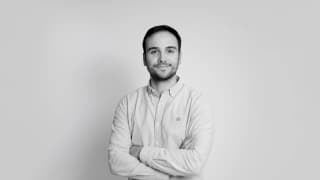
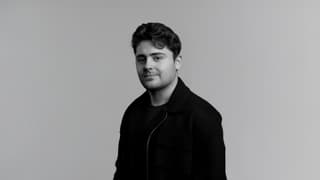
Abderzak Sifer is a partner at Impact Partners, an investment fund focused on social investment.
As part of the summer break, the teams at impact.info invite you to (re)listen to one of our episodes published this year.Abderzak Sifer, the partner at Impact Partners .
Enjoy listening!
Juliette Boulegon
impact.info journalist
Published on 12 August 2024
Transcript Audio in Français — text automatically translated· AI-generated transcript
0:00 Hello, it's Juliette and welcome to the podcast for those who want to make a difference 0:09 within their company. 0:11 Impact Partners is the first European impact investment fund that 0:17 has chosen to invest solely in social projects that are truly 0:22 impactful. 0:23 And today we have its associate director Abderzak Siffer with us. 0:28 My name is Abderzak Siffer, everyone calls me Zak, I'm 46 years old, I was born 0:35 in Étampes in the 91 in Estagne, France, and currently, I am the associate director 0:39 of a social investment fund called Impact Partners. 0:42 Zak, could you start by explaining what ESG is, please? 0:48 With pleasure. 0:49 ESG is an international acronym that is widely used by the financial community to analyze companies based on criteria related to the environment, 0:55 social issues, and governance. 1:01 So ESG is what we call the extra-financial analysis of a company. 1:03 These are topics within the classic environmental criteria that you will hear about regularly, such as recycling, electricity consumption, greenhouse gas emissions, and everything related to environmental risk prevention. 1:08 On the social side, it will be about accidents, social dialogue, and respect for employees' rights. 1:12 And on governance issues, it will be more about independence, the presence of independents, everything related to the transparency of executive compensation, and the fight against corruption. 1:16 To understand well, can all companies be ESG? 1:20 In fact, ESG is not a label, it is really an analysis. 1:24 Originally, it was more managed as a risk to be addressed, meaning governance risks or environmental risks. 1:25 And now, with evolution and even social risk, we are starting to shift to a topic that is becoming more than just a risk, it is becoming a market issue, 1:30 of interest for employees, etc. 1:34 So, more and more companies are going to be interested in these three criteria. 1:35 Yes, so that answers our question of the day, which is why the social S of 1:41 ESG is considered the poor relative of finance? 1:46 Yes, that's true, it's completely true. 1:51 And it's also increasingly a topic of the times that is becoming more of a market opportunity, because society is evolving towards more respect for social issues, but we must 1:53 acknowledge that it is much simpler to manage governance issues or environmental issues. 1:59 It's easier to control, whereas social issues are a more 2:04 difficult subject, which is even more challenging, especially in companies, let's say, larger. 2:06 2:09 2:16 2:20 2:22 2:26 2:31 2:35 2:36 2:41 2:45 young people, which is a bit distanced potentially from management. 2:48 These are things that are on the ground and there can be a distance because there 2:54 is not this experience when coming from management, when coming from a large group, 2:57 when coming from a business school, you don't necessarily have a very 3:01 strong affinity, a good knowledge of what happens on the ground, in stores, on 3:05 construction sites, etc. 3:06 And this is not a criterion that was initially identified as a tool for economic 3:10 performance. 3:11 For many, it's a cost center and we forget all the performance and all the importance 3:16 of having a functioning social aspect. 3:19 Yes, exactly, can you explain to us why it's important to focus on the S in ESG? 3:24 In fact, for me, I have two answers, at least the two elements that come 3:26 to mind quite quickly. 3:31 And to introduce the topic, it's to say that the company is an extremely 3:32 interesting lever for social impact. 3:37 It's not just about associations doing their work on this subject. 3:39 There is no economic performance, for me, without sustainable social performance. 3:43 There is no sustainable financial performance without respect for social aspects in the company. 3:47 And that's increasingly true, since even the generations, the people who graduate 3:53 from business schools, engineering schools, who are highly sought after by large 3:58 companies, want meaning. 4:00 So, it becomes increasingly complicated to recruit if the company doesn't have 4:02 an impact, either social or environmental. 4:06 And the social aspect is about things functioning correctly and if everyone 4:08 feels well treated, they return it to us indirectly because it works better. 4:12 You have to be good socially to be good financially. 4:18 Yes, it's a question of balance, ultimately. 4:20 And do you have examples to give us? 4:23 Well, a lot of examples. 4:26 We are fortunate, I have the chance to be an investor in capital with a focus on social vocation. 4:27 Our main philosophy is that there must be both financial and social performance. 4:34 We do not invest if there is no social performance and we would not invest if there was 4:38 no potential for economic performance. 4:40 For example, we are investors in a personal services company called Oxylife, which has a particularity, it is extremely committed to 4:43 people with disabilities or those who are very dependent. 4:45 So, in a company that provides services to individuals, it often involves caregivers 4:49 who go to clients' homes, who are either elderly people, or... 4:54 4:57 5:02 5:05 people with disabilities and who come to provide them with daily assistance. 5:09 We have other examples of this type with subjects where we are investors for example 5:14 in a company based in Toulouse that supports and recruits about 80% of 5:20 employees who have a disability. 5:22 They work for example with clients like Airbus Toulouse and other clients 5:26 and they work on technical subjects. 5:28 It's a company that is growing, that is profitable and has an incredible social impact because 5:34 people with disabilities also face unemployment. 5:41 The company, is it high-tech? 5:43 That's right, exactly. 5:44 Yes, I interviewed Catherine Huard a few days ago. 5:48 Oh okay, great, she's amazing. 5:50 And how do we reconcile social and profitability? Is it possible? 5:54 Oh yes, it's been a little over 15 years now that I've been an investor in capital, in 5:59 impact investing as we say, so in impact investment and at the time, 6:04 it didn't exist and it was something quite new and we were able during these 15 6:07 years to support several dozen companies that meet all these social and 6:12 economic criteria. 6:13 So yes, it's possible. 6:14 And how is it possible? I think it comes down to finding a balance. 6:18 We've all heard a bit about companies, listed nursing homes 6:23 and we discover that they had an ESG rating that wasn't so bad after all 6:28 and they end up with scandals. 6:30 Nursing homes are companies that can have a very significant social impact 6:35 since it affects a population. 6:37 It's a human job, it's a support job, it's a need, it all depends 6:41 on how it's done. 6:42 No magic there and of course we need to be in that balance. 6:45 If we are very very social and lose sight of financial balance, we risk 6:51 jeopardizing social impact. 6:52 We shouldn't be at the extreme opposite, we can't be too financial because it 6:56 deteriorates the social aspect. 6:57 We can be very social, but we must always maintain a financial balance that allows 7:01 for the sustainability of social impact. 7:03 Okay. 7:04 So with everything you've just explained, if I understand correctly, it's possible for 7:09 the social universe to stay close to the investment universe of financiers? 7:14 Yes, it's completely possible and that's why we set up an impact fund. 7:17 Our vision is that it's necessary. 7:20 Our vision is that it's through the economic that we will also have social impact, it's 7:26 It is through the economic that we will contribute to a better society, it is through the economic, 7:30 through the company, through entrepreneurship that we will have, for example, environmental, 7:34 environmental impact that is accessible to everyone and not just to those who are 7:38 the wealthiest. 7:40 We must fight against inequalities and fighting against inequalities also means 7:45 working on all these points. 7:46 Thank you. 7:47 Thank you, Zach, for your answers. 7:50 When I was 16, I didn't particularly dream of a specific job. 7:56 At one point, I had a desire to be in software development because I had 8:01 discovered computers and yet, despite all that, I became an entrepreneur and investor 8:09 in capital. 8:10 Clearly, I could not have imagined or anticipated this journey. 8:14 It's an entrepreneurial experience, it's the discovery of the joys of entrepreneurship, 8:20 from university, at one point, this common subject, and entrepreneurship, 8:26 and social impact in priority neighborhoods of urban policy, materialized 8:30 through this job as an investor, yet I didn't have the profile for it. 8:33 Thanks to Zach, who is the associate director at Impact Partners. 8:39 And this meeting, you can find it in our Entrepreneurship section, which brings together 8:44 all the episodes addressing the challenges faced by leaders 8:48 who want to undertake differently. Embed this interview on your site
Show this player directly on your site to share the interview with your audience.
Copy embed code View generated code
![[Rebroadcast] Why is the S in ESG the neglected child of finance?](/_next/image?url=%2Fuploads%2F2023%2F10%2FZak-Sifer-Nathalie-Oundjian-compressed.jpg&w=1920&q=75)