translate This article was automatically translated from its original Français version. Read the original
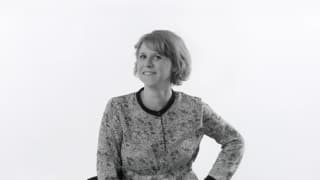
Investing yes, but investing better especially. Krisztina Tora, the head of development at GSG, explains how and why impact finance has become more than just a trend.
During the summer break, the teams at impact.info invite you to (re)listen to one of our episodes published this year.Krisztina Tora , the director in charge of development at the GSG, the Global Steering Group created in 2017 by Sir Ronald Cohen.
Enjoy listening!
Juliette Boulegon
impact.info journalist
Published on 13 August 2024
Transcript Audio in Français — text automatically translated· AI-generated transcript
0:00 Hello, it's Juliette, and welcome to the podcast for those who want to make a difference in their company. Impact investing is more than just a trend. It's a market that is structuring itself in France, but also around the world. And our guest, Christina Thora, who is the head of development at GSG, the Global Steering Group, which is an organization dedicated to this new way of linking finance with social and environmental performance. Christina will take the time to explain to us why there is such enthusiasm around Impact. Hello everyone, my name is Christina, I just turned 40, I was born in Budapest, so I am Hungarian. I came to France when I was 3 years old. I have spent most of my career in what we can call the Impact sector. And today, my role is to help countries transform into Impact economies, and I will tell you more about it. Thank you, Christina, for that introduction. To start, can you tell me the story of GSG? Of course. We were born, let's say, more or less in 2013, when the G7 presidency was held by the United Kingdom. And at that time, David Cameron and our president, whose name is Ronad Cohen, launched something called the Social Impact Investment Task Force, a working group really to look at what Impact investing is. And in fact, each of the G7 countries, plus Australia as an observer, created what we call advisory committees for Impact. So they brought together, each country gathered people from the government, practitioners, experts, investors, to look at and define what Impact investing was for each of their countries and to make recommendations to develop this Impact investing in each of their countries. So that's really the story, the early days of who we are. And today, we represent 41 countries, we just welcomed three more, who have, let's say, formed these advisory committees to ensure that more money goes towards social and environmental impact projects. So I think it's important to define what Impact investing precisely is. So, Impact investing is an investment where there is, let's say, first of all, intentionality, meaning that you want, from the outset, and you have a strategy that aims for the investment you make to create a positive social and/or environmental impact at the end of the investment. The second thing is a question of additionality or contribution, ensuring that what you do will really contribute to creating that positive social or environmental impact. And the third thing is about measurement, evaluation, being sure that in reality, we start from something that is a baseline and then we see if we have achieved the objectives we set in terms of impact, and if not, what do we learn from it? What do we change in the investment processes to ensure that next time it will be the case? Another dimension that seems quite essential to me is investing in projects, organizations that clearly, through their missions, through their activities, have contributed to solving social and environmental problems. And then, is there a need for a label? Are there regulations? Is there a specific set of requirements to follow? 0:08 0:13 0:18 0:23 0:28 0:33 0:38 0:44 0:50 0:57 1:03 1:10 1:17 1:26 1:33 1:40 1:46 1:52 1:58 2:04 2:10 2:17 2:23 2:26 2:31 2:36 2:41 2:48 2:54 3:00 3:06 3:14 3:20 3:24 3:28 3:34 3:39 3:44 3:49 3:51 There are different types of regulations, including European regulations 3:57 that are in place today. Europe is currently conducting a consultation on 4:02 the regulations by the end of December. There are also certifications. For example, 4:07 the UNDP is developing a certification for impact investments. 4:12 So, there are a whole bunch of new methods to create assurance or auditing and then 4:19 to ensure that we are indeed addressing impact issues, that we are creating 4:26 the social and environmental impact that we want to create and that is required by the strategy and 4:31 depending on the investment topics. I feel like we often draw this 4:35 parallel between environmental and social impact. Can you explain to us 4:39 the difference between these two types of investments? Yes, well, I don't know if I will explain 4:44 the difference, but what seems incredibly important to me and which is 4:48 neither understood nor applied today, is that much of what we call sustainable finance 4:53 is directed towards themes related to climate change. And in this grouping, 4:59 essentially towards renewable energies. That's good. However, it's important to remember that 5:05 every investment has an environmental impact and a social impact, positive or 5:11 negative. It's important to look at all aspects. So, I'll give you a very specific 5:16 example. There are a lot of people who invest, for example, in wind energy. We must not 5:22 forget that, for instance, the blades of wind turbines are primarily made of 5:27 wood. This wood comes from forests in the Amazon. So, this means that there are communities 5:34 living in the Amazon who are indigenous communities, who are impacted by the 5:39 deforestation of their forests and territories, because we have decided that 5:45 it is super important to invest in wind turbines. This is a very 5:50 specific and precise example, but it actually shows the social dimension of green investments. 5:57 We must always look at social issues, regardless of the types of investments we make. 6:02 Ultimately, this ties back to my previous question about this idea of regulation. 6:06 You look at this upstream, I imagine, and with precision? 6:12 Well, the question of regulations is extremely complex and complicated. It's 6:18 something that is currently being worked on, evolving, being developed. 6:23 There are a lot of people working on these topics. Having regulations, 6:27 is really important. It's really what makes the difference between people doing it out of goodwill 6:34 because they want to, and everyone doing it because it's mandatory. 6:38 So, it's important and it's an extremely important element of change and transformation. 6:43 Actually, I will conclude this interview with this main question. In your opinion, 6:48 why is there such a surge in interest for impact finance in recent years? 6:52 I think it means that all the work we've done over the past 10 years, over the past 20 years, 6:58 is starting to bear fruit. So that's already good news. I think people 7:04 are realizing that finance can be a driver of positive change. It can be a 7:10 tool that can be used to make things change and that we really need to use all 7:17 our skills and efforts to change how finance works and ensure that there is a lot, a lot more capital going towards projects that bring us. 7:23 7:28 the transformations we need. Very well, thank you Christina. At 16, 7:34 could you imagine already working for impact? At 16, I had this somewhat crazy dream of being the 7:44 first female Secretary-General of the UN. That's a great dream. It could still come true 7:50 since I won't hide from you that there has never been a female Secretary-General of the UN, 7:56 so you never know. Ultimately, that dream I had is not so far from what I do 8:02 today in that I work with 70 countries. And in each of those countries, I work 8:06 with absolutely incredible people, amazing leaders from the world of finance, businesses, 8:13 NGOs who, each in their own way and each in their country and for their country, want to 8:20 make a difference. And that's what, every day, makes me want to get up in the morning. 8:26 Thanks to Christina who is, I remind you, the head of GSG. And this interview, 8:33 well you can find it in our Entrepreneurship section which brings together all 8:37 the episodes on the challenges faced by leaders who want to 8:41 do business differently. This was impact.info, doing business differently. Embed this interview on your site
Show this player directly on your site to share the interview with your audience.
Copy embed code View generated code
![[Rebroadcast] Why is there such enthusiasm for impact finance?](/_next/image?url=%2Fuploads%2F2023%2F11%2FKrisztina-Tora.png&w=1920&q=75)