translate This article was automatically translated from its original Español version. Read the original
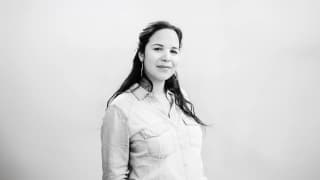
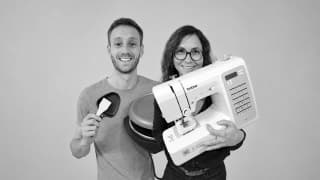
Marina Moya is the co-founder of Bolsalea, a company based in Alicante that manufactures recyclable bags and packaging with inclusive employment.
impact.info
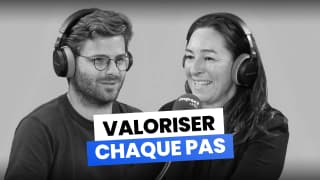
Listen to the testimony of Marina Moya, founder of Bolsalea.
Frequently asked questions What is Bolsalea and what is its main focus in packaging? Bolsalea is a company specialized in the manufacturing of recyclable and biodegradable bags and packaging, with a focus on social impact. Its production includes the participation of people with disabilities and women facing difficulties in finding employment, thus promoting labor inclusion.
How is packaging related to social and environmental impact? What challenges does Bolsalea face in a price-sensitive market? What is Bolsalea's production philosophy and how does it differ from other models? What changes in consumption habits are necessary to reduce environmental impact? María Díaz Valderrama
impact.info journalist
Published on 6 August 2026
Photo credit — Bolsalea
Transcript Audio in Español — text automatically translated· AI-generated transcript
0:00 When you tell a supplier you are supporting a way of producing, employing, managing 0:06 resources. 0:07 Impact.info, another way of entrepreneurship. 0:14 Good morning. 0:15 Welcome to the podcast for entrepreneurs who want to change things, starting with 0:20 their own companies. 0:22 Companies like Bolsalea, which works with people with disabilities to manufacture recyclable 0:28 and biodegradable bags. 0:29 My name is Marina Moya, I am 47 years old and I am the co-founder of Bolsalea, a company that was born 0:40 and is based in Alicante. 0:43 To start, Marina, what is Bolsalea? 0:45 Well, at Bolsalea we specialize in packaging with social impact. 0:53 Part of our production is made by people with different abilities and women 1:00 who have had a bit more difficulty finding employment. 1:05 Ultimately, our purpose is to lead brands to turn their packaging into a 1:12 tool that generates that positive impact. 1:16 When you talk about packaging, do you mean bags or are we going further? 1:20 Well, we started with bags, but over time we expanded to boxes, gift wraps, garment bags, etc. 1:28 Ultimately, everything that can wrap a product and that is mainly related 1:31 to brands, because we are a B2B company, we only target businesses. 1:37 Bolsalea was also born as an alternative to single-use plastic. 1:44 What led you to create this project? 1:48 What problem did you detect? 1:50 What made you think that things needed to change? 1:53 Well, when we started to ideate the project, which was around 2007-2008, at that time 1:56 single-use plastic was monopolized, it was the norm, it was normal. 2:03 There was no awareness about using and throwing away. 2:09 Most people would give you plastic bags just like that, oh, casually! 2:13 And I wasn't really an activist or anything like that, but I did feel that all 2:17 of that didn't make much sense and that something was off. 2:23 So what we wanted was to encourage companies to use reusable bags with materials 2:30 that were a bit more friendly. 2:37 But we also saw another detail, which is that small businesses had a hard time 2:40 if they wanted personalized bags, the minimum orders were huge, they had to order thousands of units, 2:46 advance money, have a lot of space to store. 2:54 So, we wanted to solve, well, on one hand the problem of single-use plastic 2:57 and also the problem that small businesses faced, because we are 3:04 super fans. 3:10 And how does your model work exactly? 3:11 3:13 Also for the issue of social impact, right? 3:15 Not only at an environmental level, but also the teams you work with. 3:20 Well, it's a model that advocates for manufacturing here in Spain and betting on rural employment 3:29 and also the creation of inclusive employment. 3:32 When we started, well, at that time it would have been normal to go to China to manufacture. 3:42 In fact, for price reasons, it would have been logical, but for us it was important 3:48 to know who made the product and under what conditions. 3:53 Moreover, in our model we also pursue working on demand. 4:01 We have products that we have in stock, but part of our production 4:07 is manufactured once the order is confirmed, so as not to generate excesses or 4:14 unnecessary waste. 4:16 We usually call it slow manufacturing, because we don't go with that sprint that usual companies have with that immediacy. 4:26 And as I mentioned before, that social impact is also important for us 4:31 the figure of small commerce, because we consider they are key because they contribute a lot to 4:37 society, to neighborhoods, to the local economy. 4:42 In a market like the current one, marked by price, immediacy, the problems you mention, what challenge does it pose to bet on a sustainable product with social impact? 4:45 The main challenge is accepting that this is not for everyone. 4:50 We do not compete to be the cheapest and it is true that we are in a market that 4:57 is very sensitive to price and to their purchasing decision. 5:02 Our customer appreciates the how, the who made it, and this is increasingly taken into account. 5:09 It's no longer just about the material, but also about traceability, coherence, the story 5:14 behind it. 5:21 But there is a part of the market that understands that the pacalli is not just a cost, that it is 5:22 a perception and it is a perception that helps you sell more and influences how 5:28 you value yourself. 5:30 And it also fits, if you have ideas of social impact, then ideally your pacalli 5:36 should align with your values to be coherent. 5:43 And in what you are telling me, what role does awareness, education 5:44 of the consumer play in your work? 5:53 Well, it is fundamental because the problem is not consuming, it is consuming without awareness. 5:57 Because every purchase is a vote. 6:03 When, as I said before, when you tell a supplier, you are supporting a way 6:06 of producing, of employing, of managing resources. 6:16 And part of our work is to explain this, but without moralizing. 6:18 We don't want to point fingers, but simply to make visible that there are alternatives, that each 6:22 business decision has an impact that goes beyond the price itself. 6:25 And, in your opinion, what changes are urgent in our consumption habits to reduce 6:31 6:40 6:45 6:52 the environmental impact? 6:54 Well, it's important to be clear that every purchase is a vote and to understand that not everything cheap is 7:01 really cheap if you look at the long-term impact. 7:05 Many times we get stuck in the micro, in the short term. 7:10 I don't believe in stopping consumption, what I do believe is important is to consume better. 7:17 By asking questions about where it comes from, who made it, do I really need it? 7:22 I think the problem is not consumption, but consumption without awareness. 7:29 We are talking with Marina Moya, CEO of Bolsalea. 7:32 Since you started until today, has your way of understanding the impact or the 7:38 project itself changed? 7:40 A lot, a lot. 7:42 At first this was more about instruction, then it became almost a challenge, a mission, I became obsessed 7:47 with the issue of social impact. 7:51 And then I understood well that impact needs structure and profitability to sustain itself 7:58 properly. 8:00 Because as I told you, there were moments when I focused so much on the social part that 8:06 I slightly neglected the business side. 8:09 But well, this has helped me learn that if the company is not solid, well, there is no impact that exists. 8:14 So today I understand impact in a broader way, what is called 8:17 the triple impact, the triple bottom line that encompasses the environmental, the social and, of course, also 8:24 the economic. 8:31 And there we are, seeking that balance, coherence and with healthy numbers. 8:32 Impact.info, another way of entrepreneurship. 8:39 In Spain, 18 years is the legal age to create your own company. 8:45 Where did you see yourself when you were 18, Marina? 8:49 Well, when I was 18 I was studying and I really didn't have anything specific in mind, 8:52 of course. 8:58 I wasn't one of those kids who knows exactly what they want to do from a young age. 8:59 I could have dedicated myself to many different things. 9:05 But I think what I have been clear about is consistency. 9:09 I have always been a person with a lot of consistency. 9:15 I find it hard to give up and when I commit to something I go all the way. 9:19 And I think the same has happened to me in the business, I didn't know exactly what I was going to build, 9:23 but despite the difficult moments I held on, I learned, I fell, 9:31 I got back up, I made a lot of mistakes and here we are with enthusiasm. 9:36 So I would tell that 18-year-old Marina that it's okay not to know what to do at 18 9:42 years old, not to have everything defined. 9:48 What's important is to know, to be consistent, consistency, that's what really counts. 9:51 Thanks to Marina Moya, CEO of Bolsalea. 10:00 10:03 You can listen to this interview on the website impact.info.