translate This article was automatically translated from its original Français version. Read the original
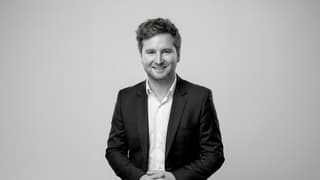
Hippolyte Le Bougnec is the former administrative and financial co-director of Le Talus in Marseille, a multi-activity third place focused on agroecology, sustainable food, environmental awareness, and sociocultural promotion.
During the summer break, the teams at impact.info invite you to (re)listen to one of our episodes published this year.
This episode highlights the testimony of Hippolyte Le Bougnec , former administrative and financial co-director of Le Talus in Marseille.
Enjoy listening!
Florence Jaillet
impact.info journalist
Published on 24 August 2026
Transcript Audio in Français — text automatically translated· AI-generated transcript
0:00 Hello and welcome to the podcast for those who want to make a difference 0:09 within their company. 0:11 In urban centers, we are sometimes too far removed from the land that feeds us and 0:15 from those who produce our food. 0:17 Some have then had the idea of bringing nature into the city, Hippolyte Le Bougnec. 0:21 My name is Hippolyte Le Bougnec, I was born in Paris on August 5, 1997, and I am the co-director 0:29 of administrative and financial affairs at Le Talus in Marseille. 0:32 So, Le Talus, we should present a bit about the activities, what's happening there, what is 0:36 it? 0:37 So, Le Talus is a multi-activity third place, which was set up a bit like an urban farm 0:42 but today has many activities, responding to numerous needs, and that's 0:47 why we qualify as a third place. We have activities and actions around 0:53 agroecology, so urban agriculture, growing a field in the city, around 0:58 sustainable food to show, once we've grown our vegetables, how to eat them, around 1:02 environmental awareness with a lot of children in the school context who come to get familiar with nature, 1:08 around the reuse of materials 1:13 with a fully equipped recycling workshop, and finally around socio-cultural promotion, 1:18 the fact that we welcome audiences, concerts, live performances, and we try 1:23 to indirectly raise awareness among the audiences who come to enjoy these moments 1:28 about the issues of ecological, social, and civic transition. 1:31 So, is it a bit of a challenge to set this up in the city? What are 1:34 the issues that will be encountered when embarking on an adventure 1:39 like this in an urban area? 1:40 I think there are constraints and opportunities both in rural and 1:46 urban areas. 1:47 In urban areas, the main opportunity is that there is a huge 1:52 population density and there is an attraction that will take us a bit out of 1:56 the city. 1:57 Marseille is a city that is not known for its garden parks either. 2:00 We have the calanques, we have the sea, we have plenty of things, but having a little 2:04 island of freshness, greenery in the heart of the 12th where there are quite few apart from a few 2:09 community gardens, allows Le Talus to stand out a bit and be favored 2:14 by the local residents who can come just to enjoy a garden 2:19 or participate in a community project with us, come enjoy a concert or have a 2:23 meal. 2:24 In rural areas, maybe there are a bit more connections already between people, 2:29 so the place will be better known and may have a wider impact on a larger territory. 2:33 We are really very local, we address the Marseille public, particularly 2:37 the residents of the 11th and 12th arrondissements of Marseille and even more particularly 2:42 the residents of the Herbel neighborhood which is right next door, which is a political neighborhood. 2:45 from the city where there are 7000 inhabitants. 2:48 And then the challenge is that there is also a great diversity of populations in 2:52 the city, so we need to try to reach all audiences and develop actions 2:56 that will appeal to a certain type of audience and try to do all these activities 3:00 during common times to actually try to generate intergenerational diversity 3:04 or social diversity. 3:05 How will Le Talus be organized? Is it solely associative? Are there 3:09 various statuses? How was the project set up to ensure its sustainability? 3:14 So, Le Talus is a project of the Ecofarm association created in 2016 and originally, it 3:15 experimented with awareness-raising actions for the environment through the development 3:21 of vegetable beds at the foot of buildings, in neighborhoods, or in schoolyards. 3:26 In fact, in 2018, the two co-founders, Karl and Valentin, had the opportunity to take over 3:30 the current plot of Le Talus which belongs to the State, managed by SRL2, 3:37 the company that built and currently operates the L2 in Marseille, and this opportunity 3:43 to take over the site to make it a place for demonstration and experimentation 3:48 around urban agriculture and all the activities we just mentioned, to 3:53 promote ecological, social, and civic transition. 3:56 So today, Le Talus is the only and unique project of the Ecofarm association. 3:59 And it's true that the associative status is relevant in our case, there are quite 4:02 a few legal structures that could be considered like SIC, SCOP, with perhaps 4:08 a bit more commercial components, while still maintaining a cooperative logic. 4:14 But in our case, the associative status is really the best legal form possible, 4:18 because it allows us to do pretty much everything we want, and to welcome 4:23 volunteers, to have public opening moments that are focused 4:27 more on social and environmental impacts, and to raise grants to be able to carry out 4:33 these actions for free, aimed at everyone, and to be as inclusive as possible. 4:38 So we are under associative status, and we have an economic model in the end, because 4:41 we do have 9 employees, we are an association that is quite professionalized 4:42 today, which is 7 years old, but is structuring quite quickly, and we have an economic model 4:46 that relies mainly on external funding, whether public or private, 4:50 and the associative status allows us to raise private sponsorship with the logic 4:54 of tax exemption. 4:59 And we also have, through the sale of organic, local, vegetarian, and seasonal meals, 5:04 and an associative bar during our events, a small way to generate operating income 5:05 through the sale of vegetables as well, through educational workshops to a lesser extent, and 5:11 recently, the availability or privatization of the space for corporate seminars, 5:16 team building moments, federation, or others. 5:21 How will the people who come to see you be able to get involved? How? 5:27 5:30 5:34 They arrive and how does it grow within them? How do they come out? Well, how 5:38 do they come out, do they stay? It's good that they continue to participate, but 5:41 in any case, what does it bring them? 5:43 I like to say that the goal is to bring joy to people, to manage 5:49 to make them step out of their daily routine a bit, and to have a pleasant moment, 5:54 almost not in the city, for us to escape, since we too, workers of the third place and 5:58 workers, can escape. 6:00 The entry points of TALU, we try to have as many as possible to bring 6:04 in as many people as possible to our place, and indeed, after that, for them to stay and 6:09 enjoy the activities. 6:10 A big entry point is definitely the participatory workshops on Wednesday, 6:14 where the idea is that everyone comes and does what they want, like the workshop 6:18 we've identified, can eat with us, and even in the summer can stay, enjoy the 6:23 afternoon and then in the evening, enjoy a concert. 6:26 The second entry point is precisely the concerts and cultural offerings 6:30 in the evening, where we attract people who will know this or that artist who 6:35 comes to perform at TALU and who will discover that it's a garden, will discover that there 6:40 are plenty of activities alongside, educational, agricultural and others, and who will, we hope, 6:44 come back for moments of volunteering. 6:46 The third entry point will be our weekend events, where we organize 6:50 association offices and we will try to welcome as many local residents as possible and we will offer them a space so they can propose activities. 6:56 So we call this a bit of association offices, where we are there, we welcome 7:02 people and we wait to see if there would be any possibilities or desires to 7:07 create something at TALU during those moments. 7:12 And finally, the last entry point, not the least, is the activities. 7:16 In fact, we bring in a lot of children because children are a great entry point 7:20 for their families, for their parents. 7:24 And so, we have almost a thousand children who come, parents at TALU, mainly 7:26 from Herbel school, but also from other schools in the area and who come to discover 7:31 the field, discover the link between agriculture and sustainable food, who come to learn 7:36 the role of composters, auxiliary crops or others and who, in turn, ask 7:41 their parents to come back to TALU. 7:46 And that's how we manage to, we hope, reach as many people as possible. 7:48 In what way, in your opinion, does what you do change the game, change things, bring 7:53 something additional, an extra stone to the building in the transition, 7:56 in raising awareness on these topics? 8:02 I think that in fact, TALU brings something in the sense that it will increase the 8:05 power to act of each individual. It's really a place of experimentation, a place of demonstration too, a place of 8:10 8:12 , 8:18 possibilities where, when you enter the TALU, you are faced with activities, people, 8:23 etc., that are being created, but there are always gaps where you can come and discover 8:28 something, experiment, propose. 8:31 And that's where I think the main strength of the TALU lies, it's this unconditional welcome 8:35 of the public and this opportunity to experiment at every moment. 8:38 So, it's with ambition, but also with humility. 8:42 We know that we are a place, so we have a strong territorial anchorage. 8:46 We are not going to radiate at the national, regional or other levels. 8:49 We really have an anchorage at the city level, even at the neighborhood level. 8:53 But I think that's where it also demonstrates that it's possible, 8:57 after all, to experiment with things like that, to have a little piece of urban wasteland 9:01 here and there, that is 8000 m2, which is quite large, but that we can, in fact, in 9:07 a few years, just with a lot of human energy, redevelop it, make it 9:12 a refuge for biodiversity, a calm and soothing place to come and enjoy a moment. 9:19 So, I think that's really what the TALU brings, it's this 9:22 humble realization of an utopia, after all. 9:27 Impact.info, doing business differently. 9:31 Hippolyte Leboniec, you are the administrative and financial co-director of the TALU in Marseille. 9:36 16 years old, that's the age in France to start your own business. 9:39 So, at 16, what were you doing? 9:41 Were you already close to nature? 9:43 Did it attract you, at least? 9:44 Was there already a sensitivity around these topics? 9:48 It's true that at 16, I was a young Parisian high school student who knew 9:53 nature from a few vacation experiences and parks and gardens, actually. 9:58 I was quite distant. 9:59 I didn't necessarily think that I would, tomorrow, participate in the management of a 10:03 restaurant that takes place. But I remember that with friends, we wanted to 10:08 open the first vegetarian kebab restaurant in France. 10:12 So, in the end, there was still a little something around sustainable food, 10:16 the ecological transition. 10:18 So, there you go, maybe tomorrow. 10:19 We will have vegetarian kebab at the TALU to complete the circle. 10:24 Thanks to Hippolyte Leboniec, administrative and financial co-director of the TALU in 10:28 Marseille. You can find this podcast on our website impact.info. 10:33 This was Impact.info, doing business differently. 
![[Rebroadcast] Why raise awareness about ecological transition in the heart of the city?](/_next/image?url=%2Fuploads%2Fimages%2F2026%2F07%2F00c5fe1b-10c3-48e2-a9c5-0b929aed5a3c.webp&w=1920&q=75)