translate This article was automatically translated from its original Français version. Read the original
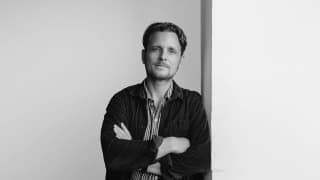
In a constantly changing world, growing a business is a real challenge. Fariha Shah has decided to support business leaders with the various issues they may face daily by creating Cominty, a virtual assistant dedicated to entrepreneurs to enhance their efficiency.
On the occasion of the summer break, the teams at impact.info invite you to (re)listen to one of our episodes published this year.Fariha Shah , founder of Cominty.
Enjoy listening!
Juliette Boulegon
impact.info journalist
Published on 16 August 2024
Transcript Audio in Français — text automatically translated· AI-generated transcript
0:00 Hello, it's Juliette and welcome to the podcast for those who want to make things happen 0:08 within their company. 0:11 Like more than a million entrepreneurs in France, you might have also wanted 0:16 to start your own business. 0:18 But just having an idea isn't enough to develop and especially to sustain your project. 0:23 So Fariha Shah has looked into this issue and is now 0:27 working to provide companies with the best advice for better performance, and if possible, 0:34 on the ground. 0:35 Hello Juliette, my name is Fariha Shah, I'm 38 years old, I was born in Aubervilliers 0:41 in the 93, and currently I'm the CEO and co-founder of a solution called 0:46 Cominty, which is a virtual assistant for decision-makers that helps them get 0:53 answers to everyday questions thanks to the intervention of seasoned advisers on the subject. 1:00 To start with, can you clarify what Cominty is for and how it works? 1:05 Actually, my idea is to create an agent. 1:07 It's really the agent you contact, the one you connect with to get 1:12 advice at the right moment on all the entrepreneurial issues you might have. 1:16 It can be, I'm starting my business, what are the legal aspects I need to pay attention to, 1:21 how do I recruit someone, how do I attract my talent, you know, all the daily problems. 1:25 And to do this, it's a technology that really allows you to ask 1:31 a question just like on Tchai LGBT, to match you with three advisors who 1:36 are capable of answering these issues. 1:38 The whole stack from booking the call to video conferencing happens within 1:43 the platform, and then there's a narrative line that gives you a summary with 1:48 recommendations on actions to take. 1:50 Did the idea also come to you with the goal of creating companies 1:54 more in line with current salary expectations? 1:58 Absolutely, to tell you the truth, the core of the project was born from the awareness 2:05 of what an entrepreneur is. 2:06 Today, I am convinced that the entrepreneur is the one who can have an impact in the 2:12 world at all levels. 2:13 They have an impact by nature when they create something for their market, for their employees, 2:19 for their collaborators, etc., for the entire ecosystem that surrounds them directly 2:24 but also indirectly. 2:25 And I believe that this impact must be necessarily positive. 2:28 So for you, what does a good leader look like today? 2:31 For me, a good leader is someone who is aware of their responsibility as a leader, 2:35 of their responsibility towards the market they serve, 2:40 towards their employees, towards the mission they carry. 2:43 On one hand, it can be terrible not to be aware of this and therefore not to 2:47 work for the common good. 2:49 And in the other direction, the impact can be enormous, even on a small scale. 2:54 So how can a leader succeed 2:58 in taking their teams as far as possible in their project? 3:00 Today, if you want your company to be a company that has impact 3:06 on several levels, no matter what topic of impact you address, actually, 3:10 you have to embody it yourself. 3:11 When you look at the employees of a company, it really reflects 3:14 the leader who carries the subject. 3:16 And the leader is not someone who just directs, it's really someone who inspires 3:20 in that sense and who manages to inspire enough for people to want 3:25 to follow that path and start working individually on their own. 3:30 That's what a successful company is, and a leader, a true leader for me. 3:34 And for you, have you been able to observe and give us some examples 3:39 on this subject? 3:40 What are the most recurring problems in companies or for an entrepreneur that 3:44 hinder performance? 3:46 I think that the human aspect is the main issue. 3:49 Contrary to what we think, it can be a key factor for success, the odds 3:53 of success are significant. 3:55 And on the contrary, when we can't do it, when we can't engage, 3:58 when we can't get people on board with our vision, when we can't lead them towards our 4:03 goal, it's a failure. 4:05 And you can have the best product in the world, if people don't follow, it won't 4:08 work. 4:09 So, this ability to really get people on board also comes from being 4:14 super authentic, not being misaligned, because that's where we create dysfunctions. 4:20 From what I've observed in my participations and in my entrepreneurship, for me, it's 4:25 really the factor that can drive success or kill a company. 4:29 Is it possible to give us examples on this subject? 4:32 Golden Bees, the first company I created, was naturally and by 4:37 nature focused on diversity and inclusion because we recruited based on the ability of 4:41 the person to perform, on their ability to bring value, but 4:46 really in terms of skills and nothing else. 4:48 And so, as a result, many biases fell away. 4:50 I think the only time, the only time we didn't think like that and were rather 4:55 focused on very objective, very pragmatic things like a prestigious diploma, 5:00 which happens a lot in our startups today, it was a bad experience because 5:05 the person was not aligned with the core values of the company and 5:08 they could be performing, but they couldn't fit in with the company. 5:11 So, it became toxic and ultimately, it was a failure in terms of recruitment. 5:14 And not to mention the lost costs that it represents. 5:18 Today, have the recruitment codes changed? I'm thinking particularly about the CV. 5:23 Is it still as important when applying? 5:27 I'm convinced that today, if you disregard the human value part, 5:33 emotional intelligence and a lot of things that can't be written on a CV, it's a failure. 5:38 I'm sure of it. 5:39 However, I think that for certain jobs, the skills and knowledge backed by certain training, 5:46 they are very important for success. 5:48 It's just that, in fact, it's a choice of the company. 5:50 Do we want to move very quickly? 5:52 And in that case, do we want to have skills that are operational 5:55 and that can guarantee us to bring that skill and performance? 5:58 Or are we okay with training the person? 6:01 Because precisely, we've detected a learning ability, a learning intelligence, etc. 6:06 And so, we're going to invest in that person 6:09 to make them that key element in the company. 6:12 These are two different life choices. 6:13 What would be the main keys to start your business 6:17 and to make it work well from the beginning? 6:19 I think that first of all, you shouldn't just have an idea, you need to have a conviction. 6:24 So, it can be big phrases like that heard casually, 6:28 but really, if you don't have a conviction, nothing will follow. 6:31 As I said, if you don't have a conviction, 6:33 it won't reflect in what you're going to produce. 6:35 And the conviction must necessarily, at some point, bring a very strong impact 6:41 on society, on the environment, no matter what. 6:43 And then, by default, if you have strong convictions, if you carry them, 6:47 you will manage to convince the right people to start the project with you from the beginning. 6:52 And that's fundamental too. 6:54 Without proper support, the chances of success are very low. 6:57 With good support, you multiply your chances of success, even if it may take time. 7:06 To conclude this interview, I would like to ask you, I think you know this, 7:10 but today, the legal age in France is 16 to open your first business. 7:14 And you, at 16, what did you dream of doing? 7:17 So, if we talk about a job, honestly, I never dreamed of having a job. 7:23 It's paradoxical. 7:24 However, there is a dream, a physical one, that I've always had since I was a child, 7:31 at 16, but also after 16, which was to fly. 7:34 And for a long time, I asked myself the question, why do I have this incredible dream? 7:39 But in reality, I realized that there were quite a few parallels. 7:42 with what I do today, what I do today. 7:44 It's seeing things from a different perspective. 7:47 It's facing a feeling we all experience as entrepreneurs, which is fear. 7:52 The fear of emptiness, actually, the fear of jumping. 7:55 Where everyone is going to take the plane and the boat, 7:58 you, actually, find yourself at the edge of a cliff and you have to go for it. 8:01 And you don't know where you're going to land. 8:04 And there are a lot of negative feelings that come with that, 8:06 but at the same time, you have a lot of positive feelings. 8:08 The adrenaline, seeing things differently 8:12 and especially pushing past boundaries. 8:14 And this dream, really, is something I've had for a long time, 8:18 that has cradled me. 8:21 And today, I can draw a parallel with my life. 8:24 Right now, I'm in the process of relaunching a business. 8:26 I have exactly the same feelings. 8:28 Thanks to Fariha Shah, who is the founder, among others, of Cominty, 8:33 a consulting company that uses artificial intelligence 8:36 to make the best decisions for its business. 8:39 And you can of course find this interview on our website 8:43 impact.info, in the HR section, which gathers all the episodes 8:47 focused on concrete solutions for more engaged teams. 8:52 This was Impact.info, doing business differently. 8:58 Subtitles ST' 501 Embed this interview on your site
Show this player directly on your site to share the interview with your audience.
Copy embed code View generated code
![[Rebroadcast] Why Should We Start Businesses Differently?](/_next/image?url=%2Fuploads%2F2024%2F01%2FFariha-Shah.png&w=1920&q=75)