
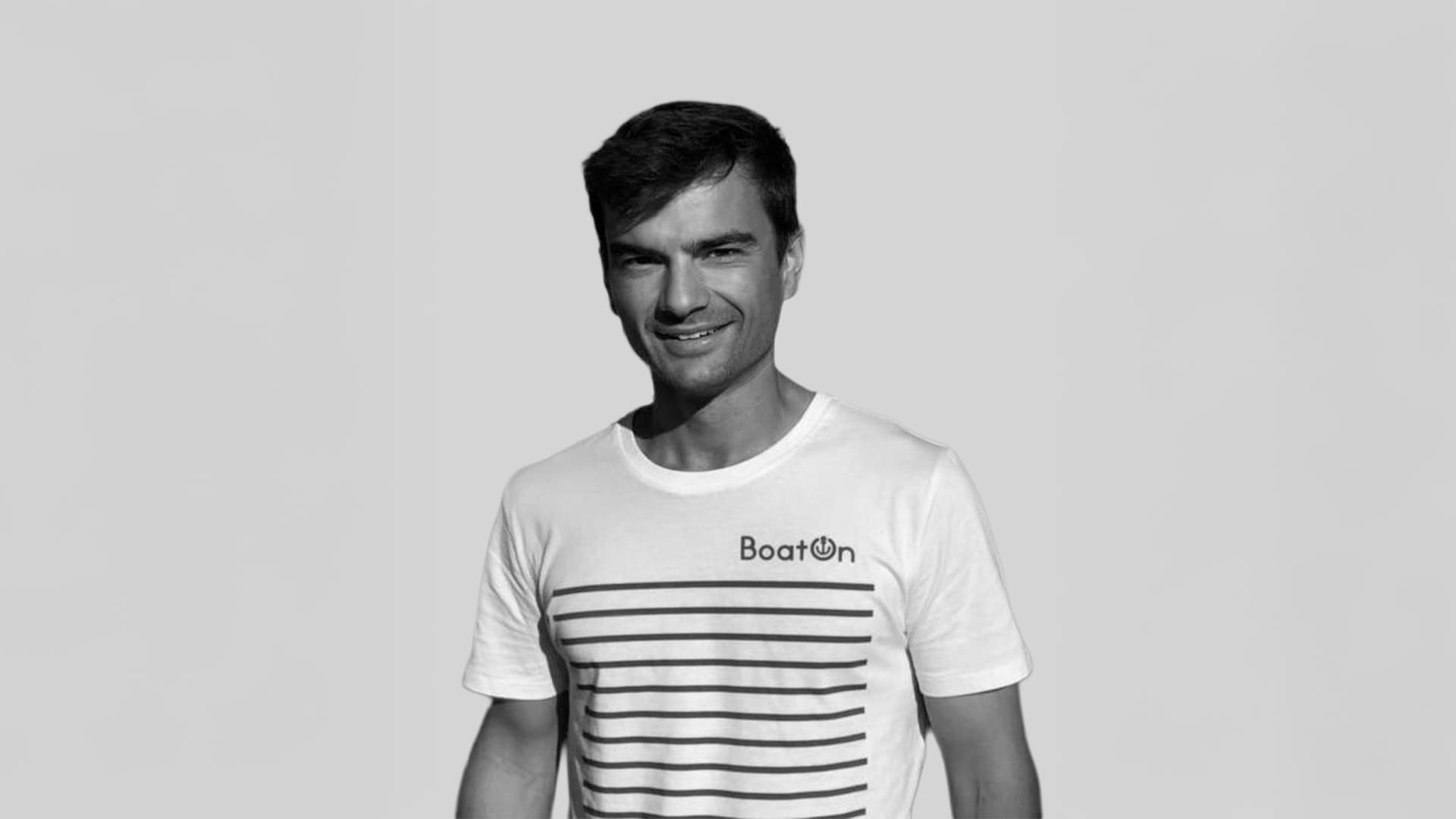
BoatOn is a software that optimizes the technical, ecological, and economic performance of companies and fleets of boats, explains Bertrand Gerbaud-Morlaës.
Starting from a personal experience of various hassles related to storing and maintaining his small boat on Lake Geneva in Switzerland, and finding no assistance, the entrepreneur came up with the idea of creating his own solution for leisure boats. Following a meeting, he then accelerated his project, adding a B2B aspect with more features for professional use.
BoatOn now also targets the commercial marine sector, including oil tankers, cruise ships, transport vessels, freight carriers, and boat rental companies, such as the 80% of Parisian Bateaux Mouches that use its software.
In the BoatOn Book, the management of maintenance, spare parts inventory, orders, and finances of the vessel; personnel management; and the digitalization of the logbook, a mandatory regulatory document, are covered.
Another feature is the automated dashboards, which are automatic graphs created from all the data collected by the software.
Finally, a decarbonization dashboard, co-created with ADEME, which instructs on the key indicators to prioritize for professionals, who are increasingly required to report on CSR, whether requested by public authorities in the context of tenders or mandated by regulations.
Professionals and individuals will thus be able to gain visibility on their carbon dioxide emissions and know where to take action. One of the first actions is often to limit speed to reduce consumption. Another option is to change the engine or mode of propulsion, switching to a hybrid, gas, or electric system.
"But that's not enough!" says Bertrand Gerbaud-Morlaës. “The next step is to create an AI that will automatically analyze this data and propose a decarbonization plan to the shipowner.”
Today, 80% of the goods we buy and consume are transported by ship. Maritime transport accounts for about 3% of global greenhouse gas emissions. "Attention often turns to new technologies, innovations, new modes of propulsion, and new hull designs. But ultimately, that's not enough because today there are about 110,000 merchant vessels operating worldwide, and 900 new ships are built each year".
"If we want to completely renew the fleets with new modes of propulsion, it would take more than 120 years. So we started from the observation that we should not, in some hypothetical future, change the boats to greener propulsion modes but decarbonize the existing ones right now,” concludes Bertrand Gerbaud-Morlaës.