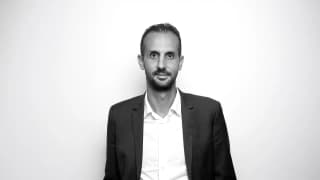

"Children of workers are four times less likely than children of executives to go to university," emphasizes Régis Thibault, relying on data from the Observatory of Inequalities.
Thus, Article 1 has made it its mission to break this social determinism by supporting thousands of young high school and university students from underprivileged backgrounds each year around three major issues: guidance, success in higher education, and professional integration.
Lack of information often constitutes the first obstacle. Some are unaware of the training, professions, or opportunities that could be available to them. This is compounded by practical difficulties, such as travel costs, as well as more invisible barriers related to social and professional codes.
Article 1 relies on a network of over 170 employees spread across 11 regional branches, as well as the commitment of 26,000 volunteers and more than 170 educational, institutional, and economic partners.
The organization develops several forms of support: workshops in schools, meetings with professionals, and especially mentoring. Thousands of volunteers thus provide individual support to young people over time to help them with their guidance choices, studies, or entry into professional life.
Article 1 has also developed two digital platforms: Inspire Orientation, aimed at high school students to facilitate access to information, and Dema1n, which connects students and mentors while offering resources on professional codes and soft skills.
"The challenge is to make young people understand that beyond their neighborhood or social background, they have a place in all environments," highlights Régis Thibault.
Article 1 also works with companies to promote true inclusion. "The battle is won when there is no longer a difference between an employee from a privileged background and one we have supported. Everyone should be valued according to their skills and performance," concludes Régis Thibault.