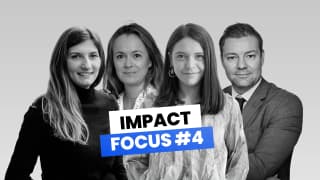
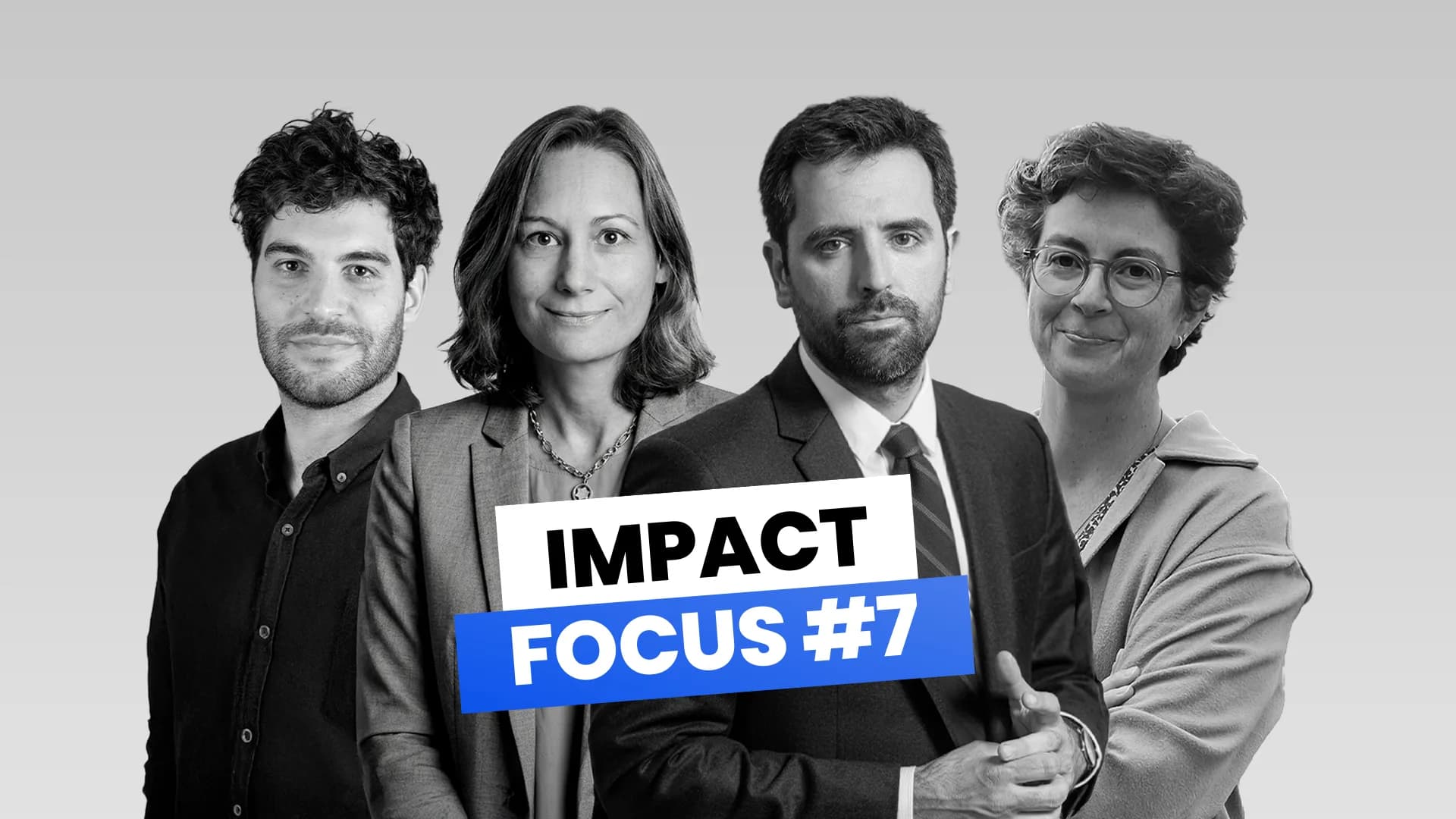
Across Europe, researchers, investors, companies and citizens are testing new ways to answer these questions.
Europe faces several major social and environmental challenges. These include poverty, social exclusion, high housing costs, climate change, labour shortages and unequal access to economic opportunities. According to Eurostat, 92.7 million people in the European Union, or 20.9% of the population, were at risk of poverty or social exclusion in 2025.
At the same time, Europe needs large amounts of investment to change its economy and reduce its environmental impact. This creates an important question: how can Europe direct money towards projects that produce real results?
Impact measurement can help answer this question. Investors need reliable information before they invest. Social organisations need to understand what changes because of their work. Companies need to measure their social and environmental performance. Public authorities need to know which solutions deserve public support.
The challenge is therefore not only to find more money. It is also to understand what works, direct funding towards effective solutions and make funding easier to access for organisations that create social and environmental value.
Here are twelve approaches to measuring impact and directing money towards Europe's social and environmental challenges.

1. Measure impact to go beyond intuition
Tony Bernard is the managing director of the IMPACT TANK. The organisation studies ways to measure social and environmental impact.
For Bernard, good intentions do not guarantee good results. An organisation can invest time and money in a project without creating the expected change.
Impact evaluation helps organisations compare two situations: what happens when a programme is implemented and what would happen without the programme. This can show whether the programme creates a real difference.
Measurement can also help public authorities make decisions. It can show which programmes produce results and which programmes need to change.
Key idea: Impact measurement helps organisations move from good intentions to evidence about what works.

2. Apply scientific methods to social projects
EVAL-LAB connects academic research with associations, public institutions and other organisations. Thomas Escande, its deputy director, works on impact evaluation.
His starting point is simple: impact is not automatic. A programme can fail because its design is not suitable, because it is not implemented correctly or because it does not respond to the needs of its target group.
EVAL-LAB tests different approaches and compares their results. The organisation also helps associations use the data they already collect.
A large scientific study is not always necessary. The right method depends on the size and stage of the project.
Key idea: Testing solutions and comparing results can help organisations understand what works and what needs to change.

3. Measure change across the whole system
Sophie Robin is a co-founder of Stone Soup in Spain. The organisation helps social organisations develop programmes, strategies and methods for measuring impact.
Robin makes an important distinction between activities and impact. Producing 20 podcasts is an activity. If the podcasts help people learn something new, that is an impact.
She also believes that organisations should look beyond their own work. Social problems are usually connected to many organisations, public institutions and communities.
Organisations working on the same problem can therefore learn from each other and share their results.
Key idea: Impact measurement should focus on real changes and should consider the contribution of different organisations.

4. Build shared indicators between funders
Leïla Bordie-Randera works with the opération milliard on measuring social value.
Funders often ask organisations to provide different indicators. This can create a large amount of administrative work. It can also make it difficult to compare results.
The opération milliard is developing common indicators for the organisations it supports. These indicators cover areas such as social value, the just transition and participative governance.
The organisation also wants to develop specific indicators with each organisation. This allows the measurement system to reflect the organisation's own activities and objectives.
Key idea: Shared indicators can make impact measurement simpler and more useful for both funders and organisations.

5. Turn sustainability reporting into action
Companies in Europe increasingly need to report information about their environmental and social performance. This includes information about climate change, resources, workers and governance.
Patrice Hiddinga, president of Ascend Tech, believes that reporting should not become a simple administrative task.
Companies should use the information they collect to identify risks, set priorities and change their practices. The next report should then show what has changed.
European sustainability reporting rules are also changing. The European Union is working to make reporting requirements simpler while keeping useful information for investors and other stakeholders.
Key idea: Sustainability reporting is useful when companies use the information to make decisions and take action.
6. Use investment to support local change
Jari Moate is investment director at Bristol & Bath Regional Capital in south-west England. The organisation invests in projects that respond to local economic, social and environmental needs.
Its investments include renewable energy, affordable housing, community facilities and businesses working in the circular economy.
This approach is important because European regions face different problems. Some regions have fewer jobs, weaker infrastructure or difficulties attracting investment.
Local investment can connect financial resources with the needs of a specific area.
Key idea: Investment can support local economic development while also responding to social and environmental needs.

7. Make responsible savings easier to understand
Aurore Pinon-Jacques is a co-founder of Goodvest in France. The company helps individuals invest their savings in financial products with social or environmental objectives.
Many investment products use terms such as "green", "sustainable" or "responsible". These terms can be difficult for individual investors to understand.
Goodvest uses environmental and financial criteria to select investment products. The company looks at issues such as fossil fuels, carbon emissions and biodiversity.
European rules are also changing to improve information about sustainable financial products and reduce misleading sustainability claims.
Key idea: Clear information can help people understand what their savings finance and what environmental and social effects their investments may have.

8. Help citizens invest in impact companies
Lita is a French crowdfunding platform. It allows citizens to invest directly in companies and projects with social or environmental objectives.
Citizen investment can provide additional funding for social enterprises, renewable energy projects and local businesses.
It can also give citizens a more direct connection with the projects they finance. People can see where their money goes and what the funded organisations are trying to achieve.
Improving access to finance is also an important issue for the European social economy.
Key idea: Citizens can contribute directly to social and environmental projects through their savings and investments.
9. Reduce the gender gap in investment
Lena Perepelova founded Women Investors Club. The organisation helps women learn about investment and make financial decisions.
Women remain less represented than men among investors. Several factors can contribute to this difference, including financial knowledge, confidence and access to investment networks.
Women Investors Club uses financial education, role models and peer support to help women become more familiar with investment.
Financial education can also help people make decisions about saving and investing earlier in life.
Key idea: Financial education and peer support can help reduce unequal access to investment.

10. Build trust between people who finance impact
Davina MacPhail is the founder and CEO of Naturally Connected. She works with investors, founders, researchers and non-profit organisations.
She has identified a problem in the impact investment sector: different groups often work separately. Investors may not know the organisations working on the problems they want to address. Researchers and social organisations may also have limited contact with investors.
MacPhail creates opportunities for these groups to meet and visit projects together. These experiences can help investors understand the problems they want to finance.
They can also create relationships between organisations that could work together in the future.
Key idea: Impact finance needs capital, but it also needs cooperation, shared knowledge and trust.

11. Combine public and private funding
The Welcome Alliance Fund was created in Germany after Russia's full-scale invasion of Ukraine in 2022. The fund supported organisations helping migrants and refugees.
The fund combined money from public institutions, foundations and companies. This allowed different types of organisations to receive funding.
Public and private funding often have different rules and conditions. Combining both types of funding can provide more flexibility while maintaining public oversight.
This approach can be useful during crises, but also for longer-term social challenges.
Key idea: Combining public and private funding can give organisations more flexible resources to respond to social problems.

12. Ask for evidence and plan for scale
Patrick Hoffmann is Head of Public Affairs and Social Responsibility at Generali Deutschland. In Germany, he also leads The Human Safety Net, the foundation created by Generali. The foundation supports programmes for disadvantaged families and for the integration of migrants and refugees.
Before supporting a programme, the foundation looks at the available evidence. It asks whether the programme has already produced results and whether these results can be reproduced in other places.
The foundation also considers what will happen after its own funding ends. A programme should be able to connect with public services or other sources of long-term funding.
The objective is therefore not only to finance one successful project. It is also to understand how a useful solution can reach more people.
Key idea: Funding decisions should consider evidence, long-term sustainability and the possibility of reaching more people.
Twelve approaches, one European challenge
These twelve approaches address different parts of the same problem: Europe needs to direct limited resources towards solutions that create real social and environmental results.
The IMPACT TANK, EVAL-LAB and Stone Soup focus on understanding what works. The opération milliard works on shared indicators for measuring social value. Ascend Tech helps companies use sustainability information to improve their decisions.
Bristol & Bath Regional Capital, Goodvest and Lita focus on directing capital and savings towards social and environmental projects. Women Investors Club works on financial inclusion. Naturally Connected focuses on cooperation between investors and organisations. The Welcome Alliance Fund combines public and private funding. The Human Safety Net focuses on evidence and long-term impact.
These approaches respond to major European challenges. They include poverty, social exclusion, housing, climate change, labour shortages, unequal access to finance and the development of the social economy.
The European challenge is not simply to spend more money. It is to measure results, improve funding decisions and help effective solutions reach more people and places.
Europe already has many organisations working on these issues. The next step is to connect their knowledge, funding and experience.
The goal is simple: understand what works, finance it and make it available to more people across Europe.