Active Ageing
Inclusion

Active Ageing

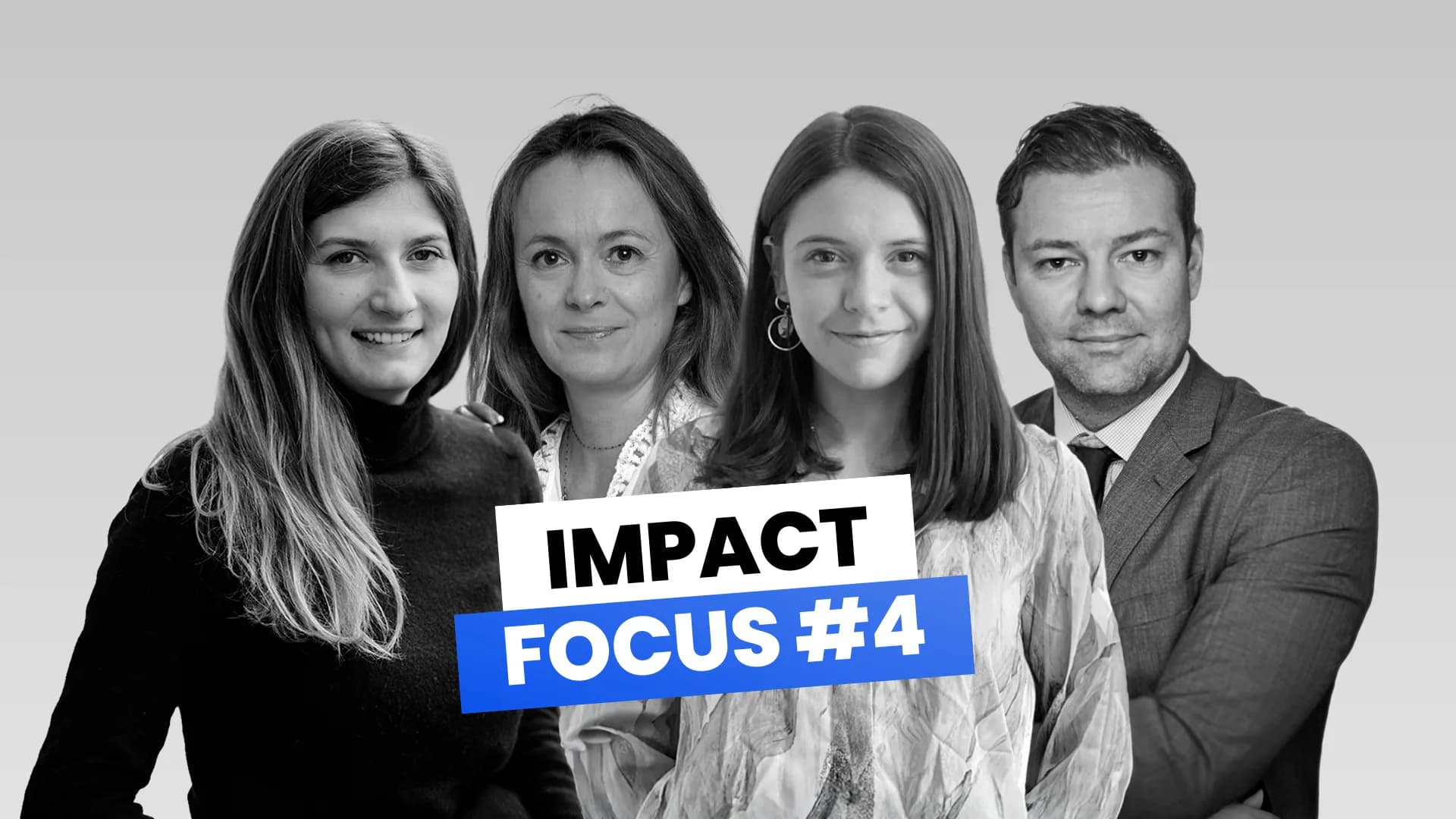
Impact Focus #04

How Europe Can Turn a Longer Life Into an Opportunity, Not a Burden?

12 audios1 h 54 min

How can Europe turn a longer life into an opportunity rather than a burden, when an ageing population is straining pension systems and care services, and when millions of older people say they feel lonely, excluded from work, or unable to use the tools built for everyone else?

Across Europe, entrepreneurs, associations and local governments are experimenting with new ways of addressing these challenges.

Europe's population is ageing faster than almost any other region in the world.

People are living longer, which is good news. But longer lives also put pressure on pension systems, on health and care services, and on labour markets that were not designed for workers in their sixties. At the same time, many older people face a narrower, quieter problem: the risk of becoming invisible. Cut off from family by tools they were never given the chance to use. Excluded from a job market that sees their age before their experience. Left in homes that no longer suit their needs, or in institutions that ask them to give up their independence altogether.

These challenges are closely connected.

A retiree who loses touch with family because of an app they cannot use is more likely to become isolated. A woman who interrupted her career to raise children will often draw a smaller pension, and face old age with fewer resources. A homeowner sitting on a valuable property but a thin income may be forced into a nursing home simply for lack of cash. An employer who overlooks a candidate for their age loses access to decades of experience. Ageing well, in other words, is not only a medical question. It is a question of housing, money, technology, work and connection, all at once.

Yet solutions already exist.

In France, Spain, the United Kingdom and Denmark, entrepreneurs, associations and public authorities are testing new ways to help older people stay active, stay housed, stay connected and stay economically included.

Here are twelve approaches showing how Europe can rethink active ageing.


1. Keep people active, not just cared for

Care for older people has long focused on medical needs first, activity second.

LiveArts is trying to reverse that order.

The company started by connecting cultural venues and adapted-sport professionals with a general audience. Everything changed with the pandemic. "I was refining my project when Covid hit," recalls founder Amanda Blyau. "I was wondering how to distribute my product and to whom. And I got my answer when lockdown put a spotlight on older people, who needed regular activity."

LiveArts adapted its catalogue to nursing homes, autonomy residences and assisted-living facilities, offering live performances, semi-therapeutic sessions and adapted sports, alongside tools that let care homes manage budgets, schedules and communication between sites.

What matters most, Blyau says, is time. "The common thread in caring for an older person is taking the time. That's what's missing, especially in home care, which is often measured to the minute. Here, we can sing a song a second or third time, or let someone take their time with a painting class."

The impact is measurable. According to Blyau, regular cognitive and physical activity can delay the onset of chronic diseases such as Alzheimer's or Parkinson's by up to five years. Eighty percent of seniors who regularly play memory or reasoning games report a better quality of life, with an estimated 20% reduction in stress. Independence itself can be extended by three to five years, with a reduction in decline of up to 50%.

Key idea: Keeping older people active is not simply about entertainment. It can measurably delay the onset of chronic disease and prolong independence.

Pourquoi rester actifs et curieux permet de mieux vieillir ? 
Amanda Blyau · Fondatrice10:49

2. Turn empty rooms into shared lives

Two housing problems can sometimes solve each other.

"We wanted to answer a double problem: young people struggling to find housing in big cities, and the isolation of older people," explains Coline Guénel, co-founder of Colette. In Paris alone, she notes, 100,000 rooms sit empty in the homes of people over 60.

Colette matches younger people looking for housing with older homeowners with a spare room, screening every pairing and staying involved as a mediator throughout the cohabitation. "I don't want to place just anyone with my uncle and aunt, and I don't want to place my cousin or little brother with just anyone," Guénel says.

The model has since grown into Colette Club, a network of meet-ups and activities for people over 50, created after members themselves asked to be introduced to others in their neighbourhood. For Guénel, ageing well rests on three pillars: purchasing power, social relationships and a sense of usefulness. So far, Colette has paired 2,500 young people with 2,500 older hosts.
Key idea: Pairing generations under one roof can ease a housing shortage for the young and isolation for the old, at the same time.

Pourquoi la cohabitation intergénérationnelle séduit-elle ?
Coline Guénel · Cofondatrice10:47

3. Make inclusive housing a public policy

Not every solution comes from a start-up. Some come from local government.

In the Gironde département, in south-west France, the municipality of Saint-Seurin-sur-Cadourne has built two small residences for people who previously had no local option beyond leaving their community. "This is the result of a determination by the local authority to provide an answer for older people in an area that, until now, had none," says Alban Lachiver, who oversees the department's autonomy policy.

Each resident has an individual unit, but the buildings also include a shared space designed to build a collective life and fight isolation. Crucially, the model keeps residents' legal rights intact. "Inclusive housing is ordinary housing under the law," Lachiver explains. "Even as a person grows older, even if they lose some of their independence, they can still exercise their rights, their choices, their will to act, and even their right to refuse things."

Rents are kept low through a partnership with a social landlord, at around 250 to 300 euros a month. Gironde now counts 62 inclusive housing projects, existing or planned, that will eventually house 400 people, including 130 older residents; a large share of the remaining places serve people with disabilities.

Key idea: Inclusive housing shows how local government can offer an affordable alternative to institutional care, without asking older residents to give up their independence.

Pourquoi proposer des logements abordables et inclusifs aux seniors ?
Alban Lachiver · Directeur adjoint des actions pour l'autonomie10:42

4. Rethink what comes after living alone

For people who can no longer manage independently, the usual choice has long been binary: stay at home, or move into an institution.

Cosima was born from a third option. Founder Maxence Petit had watched his own grandmother live through the limits of the EHPAD system, France's traditional nursing homes. "If you go away for a week, you don't lock yourself in your room for the last three days waiting for the flight home," he says. "Life is the same."

Cosima sets up large shared apartments inside ordinary residential buildings, each hosting several retirees who can no longer live alone because of a loss of independence. "It's co-living for older people losing their autonomy," Petit explains. "We work with people who can no longer stay in their own home because they need daily or several-times-daily support." Residents keep large private spaces and share communal areas, in a model closer to a family home than a care facility.

Three Cosima residences now operate, in Lourdes, Saint-Cloud and Enghien, with rents of between 2,000 and 4,000 euros a month, including care. After four years, Petit's biggest satisfaction is watching residents "put weight back on, and regain more independent mobility. They feel alive again."

Key idea: Between staying at home and moving into an institution, new co-living models can offer companionship without asking older people to give up their independence.

Pourquoi l’inclusion sociale est-elle indispensable au bien vieillir ?
Maxence Petit · Fondateur9:00

5. Unlock the wealth trapped in bricks and mortar

France counts 18 million people over 60. Two out of three struggle to make ends meet, even though they own 70% of their real estate wealth.

"That represents colossal savings, locked into stone. We wanted to address that absurdity," says Thibault Corvaisier, founder of Merci Prosper.

The company lets older homeowners sell a share of their property, sized to their needs, through a co-ownership mechanism, freeing up cash today while still being able to pass the property on to their children. Nothing changes in their daily life: owners keep living at home, a wish shared by 94% of them, and can use the funds to adapt their home, install a stair lift, or cover the cost of a medicalised residence for a partner while they themselves stay put.

Merci Prosper also runs an investment vehicle carrying France's ESUS solidarity-enterprise status, which grants investors a 25% tax reduction. "It's a bit like the Livret A savings account, created to finance social housing," Corvaisier says. "We created this vehicle so the young help finance the old, a virtuous mechanism for seniors, for the economy, and for all of us."

Key idea: Home ownership can become a source of choice and dignity in old age, rather than an asset frozen until death.

Pourquoi aider les anciens à rester à leur domicile ? 
Thibault Corvaisier · Cofondateur10:31

6. Bring back the letter, not the smartphone

Not every solution to loneliness is digital. Some work precisely because they are not.

Famileo grew out of a family story. Co-founder Tanguy de Gélis's family relied on a WhatsApp group for everyday conversation, but his grandmother struggled with it. "What she loved were the letters and postcards she used to receive," explains co-founder Armel de Lesquen. "She'd kept every one the children sent her on holiday, until everyone switched to digital and they stopped coming."

The app lets family members send photos and short messages that are automatically compiled into a printed gazette and posted to a grandparent's home or care facility. Famileo now counts 320,000 families among its users, 270,000 individuals and 50,000 through some 2,500 partner care homes in France, as well as in Spain, the UK, the US and Canada, with Germany and Belgium next.

"The main benefit is simply staying close to someone you love. We call it proof of love," de Lesquen says. He cites an estimate that more than five million people in France live in a state of "social death". "We don't realise how deeply loneliness eats away at people, even those who are perfectly comfortable with digital tools."

Key idea: Older people are not disconnected from their families by choice, but by tools that were never built for them. Simple formats, like a printed newsletter, can restore that link.

Pourquoi écrire à ses proches permet de rompre l’isolement ?
Armel de Lesquen · Cofondateur

7. Turn a cafe table into an antidote to loneliness

Sometimes the fix does not require an app at all.

The Chatty Café Scheme began in the UK in 2017, when founder Alex, a new mother and former social worker, noticed people sitting alone in cafes. "She thought, wouldn't it be incredible if places like cafes could be used to facilitate people getting together?" recalls Abi Murray, the scheme's operations manager. "That started the idea of what we call a Chatter and Natter table."

The concept could not be simpler: a cafe designates a table where anyone who wants to talk can sit down. Registered as a non-profit in 2019, the scheme moved online during Covid, launching virtual Chatty Cafe groups and a telephone friendship service for people who struggle to leave home. A national volunteer programme now trains people to host tables, run online groups or make calls. "The volunteer shows up every week for twelve weeks, and after that, quite often, the group starts to run itself," Murray says.

Around 700 hospitality venues now take part, including a partnership with Costa Coffee. People have spent Christmas together, made lasting friendships, even married. "The government is starting to realise more funding needs to go into initiatives that connect people," Murray notes, "because these things have real, positive impacts on physical and mental health."

Key idea: Fighting loneliness does not always require new technology or infrastructure. Sometimes it just takes a table and a willing host.

How did a simple but brilliant idea tackle loneliness and isolation in the UK?
Abi Murray · Operations Manager10:20

8. Design technology for the hands that need it most

During the 2020 lockdown, a group of young people in Barcelona began refurbishing old tablets and phones so isolated older people could reach their families. That project became Bleta.

"We want technology to serve people, not the other way around," says co-founder Gerard Pinar. Bleta now designs a tablet built specifically for older users, with large icons, intuitive menus, readable text and accessories such as ergonomic cases and stylus pens, alongside a free app that turns any Android phone into an accessible device.

More than 200,000 people have used Bleta's tools so far to make video calls, check information, or simply stay in touch with their families without frustration.

Key idea: Closing the digital divide for older people is not about teaching them to adapt to existing technology. It is about designing technology that adapts to them.

¿Por qué adaptar una tableta puede reducir la brecha digital entre generaciones?
Gerard Pinar · Cofundador9:56

9. Make the case for hiring older workers

In France, 580,000 retirees now combine a pension with paid work, 65% more than a decade ago. Yet the employment rate among 55 to 64 year-olds remains low, at 58%, against an EU average of 67%. Jobseekers over 50 registered with France's public employment service stay unemployed for more than 480 days on average, compared with 336 days for 25 to 49 year-olds.

Sixteen years ago, looking for meaningful work, Valérie Gruau discovered this gap and found nothing built to close it. She created a platform connecting candidates over 45, whether looking for supplementary income or social connection, with businesses and individuals hiring for personal services.

The platform now counts more than 430,000 registered members across France, 40,000 live listings, and 3,000 matches every month. Employers, Gruau says, increasingly recognise the value older candidates bring: life experience beyond their professional record, reliability, autonomy and the ability to stay calm under pressure. "Companies are realising that intergenerational teams make them more effective."

Key idea: Employing older workers is not charity. It can directly improve how a team or a household functions, once employers look past age.

Pourquoi favoriser le recrutement des profils seniors et retraités ?
Valérie Gruau · Fondatrice10:49

10. Count the true cost of a career interruption

Pension inequality between women and men is rarely explained by a single cause.

It starts with pay: women earn 24% less than men on average worldwide, according to the United Nations, a gap that flows directly into smaller pensions. QualiRetraite, led by Angélique Perroux, works to make sure retirees' rights are calculated correctly, despite how uneven a working life can be.

Career breaks, still far more common among women because of childcare, reduce social security contributions and the pension rights built up over a career. Women are also more likely to reduce their hours or work part time, further lowering their contributions. And because women tend to live longer, they need more retirement savings even as pension systems based on individual contributions can widen, rather than close, this gap.

Key idea: Because pension systems mirror the inequalities of a working life, closing the gender pay gap today is also a way of closing the gender pension gap tomorrow.

Pourquoi la retraite impacte les inégalités femmes-hommes ?
Angélique Perroux · Présidente10:06

11. Give older women a second professional chapter

The medical journal The Lancet recently noted that many of the issues facing older women fall outside the scope of major public health and care policy. Women, it observed, increasingly grow old alone and in poverty.

Arcé-Avenir femmes was created to respond to exactly that gap. The association supports women over 45 through a network of experts, coaches and HR professionals, helping them rebuild confidence and professional standing. Three-quarters of the women it supports, whose average age is 55, report a positive outcome. The association also works with the most vulnerable, including women in shelters and women who have migrated to France, through digital training and responsible cooking workshops.

"We look after the vulnerability of women, both professionally and socially, to reconnect them to society," says founder Esther Malka. "We start from the idea that the women we work with are already experts in life. They have natural skills that just need to become professional, that just need to be put to use."

Key idea: Supporting older women is not only about finding them a job. It is about recognising the expertise they already carry, and reconnecting them to a role in society.

Pourquoi les femmes seniors sont une richesse pour la société ? 
Esther Malka · Fondatrice et présidente10:44

12. Look beyond national borders for new welfare models

State-run health and welfare systems across Europe are running into similar difficulties at similar times: ageing populations, rising costs, and workforces stretched thin.

In Denmark, since 2023, part of the answer has been what Carelink Group calls "a third way": a collaboration between the public and private sectors to deliver care. "Denmark's six million citizens get the care and support they need" through this partnership, explains Søren Dinesen, the company's CEO, describing a model built to keep pace with growing demand rather than ration it. David Dietz, who joined Carelink after a career in finance, describes the appeal in more personal terms: a way to put financial expertise directly to work for vulnerable people, rather than choosing between the two.

Key idea: As ageing societies put growing pressure on public welfare budgets, some European countries are testing new partnerships between public and private actors, rather than choosing between them.

Why should public welfare be supplied by a private company?
Søren Dinesen · Managing Director10:09

Twelve approaches, one European challenge

These twelve initiatives operate at different points in the ageing journey.

LiveArts keeps residents of care homes and residences engaged through tailored activity. Colette and Gironde's inclusive housing programme offer two different ways to keep older people housed, connected and independent for longer, while Cosima rethinks what comes after living alone stops being possible. Merci Prosper unlocks the wealth held in property to help people age at home on their own terms. Famileo and the Chatty Café Scheme fight loneliness through very different tools: a printed gazette, and a table at a cafe. Bleta redesigns technology to make it usable by older hands. Seniors à votre Service challenges assumptions about the value of older workers, while QualiRetraite and Arcé-Avenir femmes focus on the particular vulnerability women face as they age. Carelink Group shows how an entire country can rethink the partnership between public and private welfare.

These approaches do not represent a single model for European ageing.

Instead, they show that a longer life can be reshaped at many different points.

It starts with staying active and useful, whether through a stage performance, a shared table, or a shared home.

It depends on housing that adapts to a person's needs, without forcing them to give up their independence.

It requires technology, financial tools and pension systems designed with older people in mind, rather than built for younger users and adapted afterwards.

And it depends on an economy and a welfare system willing to see older people, and older women in particular, as an asset rather than a cost.

The initiatives presented here come from France, Spain, the United Kingdom and Denmark.

They rely on very different tools, from a mobile app to inclusive housing policy to a national welfare partnership.

But they share a common belief: a longer life is not, in itself, a burden. What determines whether it becomes one is whether societies build the housing, the connections, the income and the recognition that ageing well requires.

Europe does not need to invent every solution from scratch.

Some of those solutions already exist.

The challenge now is to make them better known, connect them, and help more people benefit from them.

Killian Flagey
impact.info director
Published on 9 September 2026
Photo credit — impact.info