translate This article was automatically translated from its original Français version. Read the original
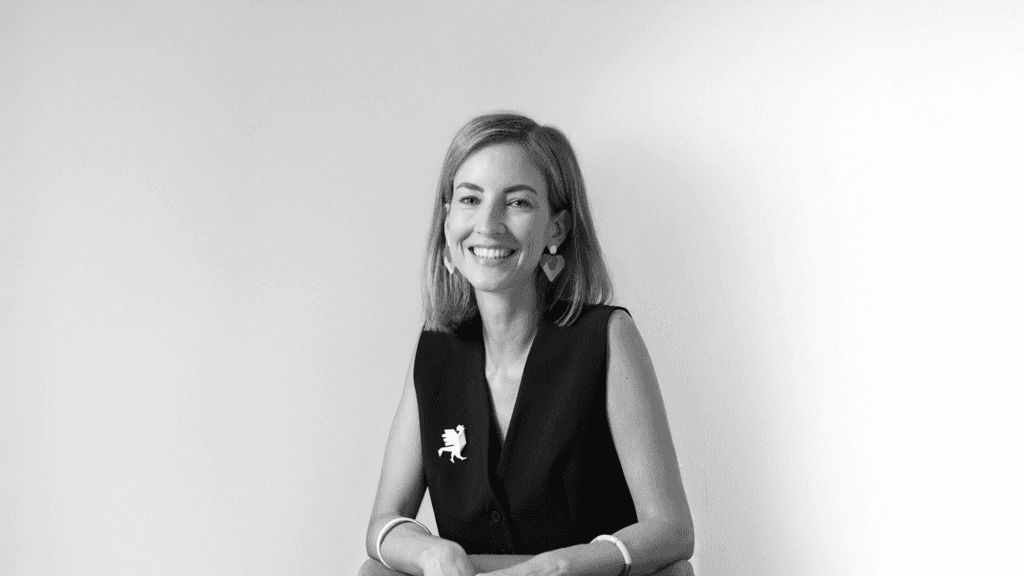
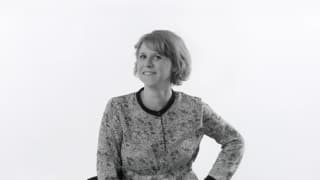
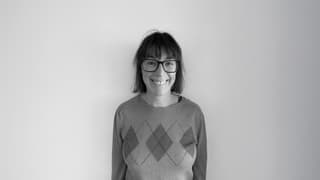
Dr. Charlotte Berthaut is an anesthesiologist and intensivist, a specialist in cancer treatment centers and the founder of Dépist&vous in Bordeaux, a solution for cancer prevention and screening.
During the summer break, the teams at impact.info invite you to (re)listen to one of our episodes published this year.
This episode highlights the testimony of Dr. Charlotte Berthaut , founder of Dépist&vous .
Enjoy listening!
Florence Jaillet
impact.info journalist
Published on 4 August 2025
Transcript Audio in Français — text automatically translated· AI-generated transcript
0:00 Hello and welcome to the podcast for those who want to make a difference 0:10 within their company. Almost one in two cancers could be prevented in France 0:16 thanks to prevention and screening, which could be amplified in particular 0:20 thanks to the solution implemented by Charlotte Berthaut. 0:23 My name is Charlotte Berthaut, I am an anesthesiologist and intensivist, a specialist 0:29 in cancer treatment centers and I am also the founder of Dépistez-Vous. 0:33 Dépistez-Vous, can you tell us a little more about what it is? 0:36 Dépistez-Vous is actually a solution for the prevention and screening of cancers. 0:41 Initially, I created a start-up with the goal of getting involved to democratize 0:47 the issue of cancer screening in France. The idea came from personal experience. As often, 0:52 my dad had a melanoma quite young at a fairly advanced stage and at the same time, my 0:58 experience in a cancer treatment center at the Institut Bergogny in Bordeaux 1:01 opened my eyes to the gaps in prevention and cancer screening, 1:05 notably the identified barriers were often the lack of information. How 1:09 to provide the right info at the right time? How to remember what we need to do? When, 1:13 how and why? Today, there are about 1,200 new cancer cases detected each day. 1:18 400 of them involve people in the workforce. So, 1:23 that makes about 400,000 cancers per year. We could almost prevent one in two cancers 1:28 thanks to prevention and screening. And unfortunately, as of today and 1:32 for many years now, screening participation rates have stagnated, 1:36 or even decrease for some, with less than one in two people overall getting screened right now. We're not really informed about why we should get screened, how to do it? Yes, indeed. Currently, there are national screening campaigns organized. It's mass screening that targets a certain volume and a specific segment of the population. So, for breast and colorectal cancer, it's between 50 and 74 years old every two years. You do receive an invitation from health insurance now. And for cervical cancer, it's from 25 to 65 years old. Unfortunately, these campaigns are already not enough to engage the entire target population to get screened. Moreover, we've noticed over the last 30 years an increase of more than 80% in cancer cases among young adults. So, that's ages 14 to 49. And this increase... 1:40 1:46 1:50 1:56 2:01 2:05 2:10 2:14 2:19 2:24 continue since we are seeing more than a 30% increase in cancer cases in the next five years among this same 2:29 population of young adults. So, the idea is how do we reach these young adults who are therefore 2:34 under 50 and who are not the target of certain national screening campaigns? Well, we reach them both through their professional environment, so through their 2:39 employer or their mutual insurance or their health insurance. And we also reach them through digital means. Hence 2:44 the interest in offering a solution like 'Dépist&vous' to this population? Because 2:50 actually, when you are in your twenties, thirties, or forties and you appear to be 2:55 in good health, meaning that's when screening should be done, because screening, 2:59 just to remind you, is done when you are in good health, well, ultimately, 3:02 you don't go to your doctor. We don't have a culture of prevention and we don't think 'hey, 3:05 3:08 "if I were to see my doctor when everything is fine" to actually keep feeling fine. 3:12 So, the idea is to reach out to those people through digital means, in particular. 3:18 How do we screen for cancer? I imagine there are differences, but how does it work? 3:23 We, with "dépistez-vous", what we offer is three things. The first, 3:26 is a digital platform to support and guide users based on their 3:31 risk profile towards personalized screening pathways. So, we strictly follow the 3:35 recommendations of the Haute Autorité de Santé and depending on the users' risk profile, 3:40 they may or may not need to undergo screening, within a certain timeframe, at all times, etc. So, we send them 3:45 reminders, SMS, emails to remind them to do their screening, to update their 3:48 questionnaire, we send them personalized prevention advice, we connect with 3:52 teleconsultation platforms and appointment platforms, we reference all the 3:56 approved mammography centers for mammograms, all the midwives and gynecologists for the 4:01 physiological follow-up of women and the smear test, all the pharmacies that provide the screening kit for the colorectal test. So, all this information can be found on the 4:06 platform. Then, the second solution is the prevention workshops we call "prevention 4:09 at work" because we offer them in companies, in a "webinar" format, we have three speakers, 4:14 one from dépistez-vous, a healthcare professional, and a patient who shares their journey. 4:18 So, it's a very fun, interactive, and engaging format with, of course, interaction 4:22 with the participants. And the last solution is that for all the profiles identified as at risk by the platform for skin cancer, we offer the company 4:27 to bring in a healthcare professional on-site to enable early screening for skin cancers through 4:31 tele-expertise with a network of dermatologists because we know that it is often difficult to access a 4:36 dermatologist within a reasonable timeframe. So, that's what we offer with Dépistez-vous. And 4:41 we direct based on the screenings to be done. So, indeed, it could be a 4:46 mammogram, it could be a smear test, it could be a stool sample, but it could also be 4:51 other types of screenings that require seeing specialists, particularly oncogeneticists, when you have a risk profile due to your heredity. 4:54 So, there is a very important entry point at the company level. There are also mutuals, 4:58 as you mentioned. 5:02 Yes, exactly. The idea is that citizens can access the tool for free and 5:05 that it is offered, covered by their employer or by their mutual. Our current operation, our economic model, is to go through these actors who, 5:10 for me, have a key role to play since we know that it is part of citizens' expectations 5:11 to have prevention plans in companies. It is also, of course, very rewarding 5:15 for a company to be able to take care of its employees. And it is also something that allows for differentiation for mutuals, which also helps in retaining 5:21 members as well as employees. They are our main clients at the moment. But you can also 5:24 join and register on the platform. If you are an average user and do not have the 5:29 opportunity to access Dépistez-vous through your mutual or through your company, you can absolutely subscribe directly on our site. You talk about young people who are already doing well. 5:34 5:38 5:43 5:47 5:53 5:56 6:00 connected, well aware of this type of application. It's also a way to get in touch more 6:07 easily? Yes, indeed, our goal with digital is to reach the 6:11 population that has access to digital. So for us, it can be on a smartphone, PC, or 6:15 tablet, and we are targeting 18-75 year olds. But it's true that we can reach young people more easily 6:20 through this tool, and they can also be good ambassadors and good prescribers for 6:26 their parents or grandparents. What you are implementing, how does it change the 6:30 game? How does it change things? How is it innovative? So actually, at the moment, 6:34 there is no tool for personalizing cancer prevention, and we noticed when 6:41 we conducted our market study that people do not feel concerned about screening or 6:45 are not aware of the existence of screening and are waiting for more personalization and pedagogy 6:49 ultimately. There are many preconceived ideas and false beliefs, and that's exactly what we 6:53 try to demystify when we conduct our prevention workshops. So the idea is to provide this 6:57 information with as much pedagogy as possible so that it is understandable and that, as a result, 7:00 screening becomes simple and accessible and ultimately, we can make it a reflex 7:04 in our everyday lives. In fact, we noticed that since a year of 7:10 commercialization, we have managed to engage more than one user out of two to go to their 7:15 doctor after going through a pathway on the platform, that we have enabled early screening of 7:20 lesions that are said to be precancerous, which is the stage before cancer in 11% of our users, 7:25 which means we have prevented a cancer. We also noticed that we have quite young 7:30 profiles using our platform since nearly 60% of our users are under 50 years old, 7:34 and among this young population, we see that 48% of those under 50 have been identified 7:40 as at risk by the platform, and so these young at-risk profiles, maybe if they hadn't had 7:45 Dépistez-vous, they wouldn't have been aware of their risks and they wouldn't have 7:49 engaged in a proactive prevention approach. So we can clearly see the impact 7:52 we can have and quickly. Impact.info, doing business differently. 7:58 Charlotte Berthaut, you are an anesthesiologist and intensivist specializing in 8:02 cancer centers and founder of Dépistez-vous in Bordeaux. 16 years, 8:07 that's the age to start a business in France. At 16, what were you drawing? Did you 8:12 imagine creating a company like this? Absolutely not, 8:16 at 16 I wanted to be useful, to serve, I really wanted to have an impact on 8:23 people's lives, so I chose to go into medicine. So I studied medicine for 13 8:29 years and ultimately I felt out of place. After completing all this study, 8:34 I realized that I wanted to be a doctor who prevents, so a preventive doctor rather than a doctor who heals or treats. I wanted people to be in 8:38 good health and the rest, and I really felt a lack in that area. In addition to that, 8:44 during all our studies, we don't really talk about prevention, we are really focused on 8:50 treatment and curative care, and it's a shame because it's not a sustainable approach for me. So I decided to realign with why I chose medicine and 8:54 try to work to give people the keys to stay healthy and to better 9:01 understand the importance of good health and the impact of our environment, our way of life. 9:07 9:11 9:15 about life and our health. So I never would have imagined starting a business after all 9:20 these years of studying because I really wanted to be a doctor, but in the end it's very 9:26 enriching, very stimulating, it's fascinating. I learn every day, I meet amazing people 9:31 every day too, whether they are associations, partners, 9:36 even companies that want to get involved, to make a difference. It's very rich because 9:41 the ecosystem is very rich and touches on both academia, scientists, 9:44 researchers, associations, patients, caregivers, but also other start-ups, 9:49 institutions. So it's really very, very rewarding and it's a pleasure to do this on a 9:54 daily basis, even if, let's face it, entrepreneurship is difficult, especially when you 9:58 are a doctor and you don't have a background to start with to be able to do this, so you learn on the 10:03 job as they say. Thanks to Charlotte Berthaut, anesthesiologist and intensivist, specialist 10:08 in cancer treatment centers and founder of Dépist&vous in Bordeaux. You can find 10:13 this podcast on our site impact.info. This was impact.info, doing business differently. Embed this interview on your site
Show this player directly on your site to share the interview with your audience.
Copy embed code View generated code