translate This article was automatically translated from its original Français version. Read the original
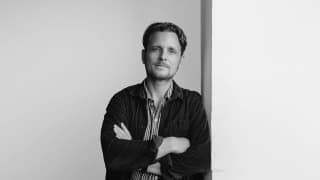
Guilhem Ménard is the co-founder of Share it, an organization that equips other associations in the digital realm to help them scale and enhance their impact.
During the summer break, the teams at impact.info invite you to (re)listen to one of our episodes published this year.
This episode highlights the testimony of Guilhem Ménard , co-founder of Share it .
Enjoy listening!
Florence Jaillet
impact.info journalist
Published on 21 August 2026
Transcript Audio in Français — text automatically translated· AI-generated transcript
0:00 Hello and welcome to the podcast for those who want to make a difference in their organization. 0:10 Digital is often the missing link, or at least improvable, for associations, 0:11 due to lack of time or budget. 0:16 This is where some, armed with the skills they can bring, get involved, Guilhem 0:18 Ménard. 0:23 Guilhem Ménard, I'm a co-founder of Share it, I was born in Rennes on September 11, 1991 0:24 and I currently co-manage Share it. 0:32 So what is Share it? 0:34 Well, Share it is an association serving other associations. 0:36 We were born from a pretty simple observation that associations often struggle 0:39 with digital, yet they address significant social and environmental issues. 0:45 They are grassroots actors tackling issues like extreme poverty, 0:50 violence against women, ecological engagement, and they need the right 0:51 tools to address these social and environmental challenges at their roots. 0:55 So what we do with Share it is equip them on the digital side to 1:01 enable them to scale up and increase their impact. 1:05 So concretely, we support associations either through intensive support where we 1:09 develop digital tools for them, whether applications, platforms 1:15 for external beneficiaries, or rather internal tools that will 1:18 help them better organize their activities, work more efficiently, 1:25 and take a step forward in their growth and development. 1:30 To give a few examples, we have supported over a hundred associations through this 1:34 long-term support that lasts on average nine months. 1:38 For instance, we supported the association Staying Alive which allows volunteers 1:41 to intervene when someone is in a life-threatening emergency 1:46 before help arrives, performing first aid actions. 1:49 It's a community of nearly 400,000 rescue volunteers registered on 1:55 an app called Staying Alive that helps save lives simply by reducing the waiting time for people in 2:00 life-threatening emergencies before help arrives. 2:04 For them, we developed the second version of the app. 2:08 They already had a great community, but faced many challenges with this app 2:12 to ensure that people really use it, that it truly serves 2:16 those in life-threatening distress, so we developed this app 2:18 notably last year and we have supported projects on many different themes, 2:21 on issues related to disability, health, education, 2:25 returning to work, environmental issues, we act in all types of fields to develop. 2:29 2:32 2:37 2:43 2:49 ambitious projects for associations. 2:50 So do you teach? Do you work with them? Do you provide 2:54 the keys for autonomy afterwards? 2:56 Yes, so we always work with the associations. 3:00 We have associations that come to us, which we can support for free 3:05 and that's the strength of our model since we seek teams from consulting firms 3:09 that are loaned to us for free to support these projects and these teams 3:14 they come from major consulting firms like Accenture, like Western, like Octo 3:19 who will dedicate project managers, developers, web designers to us for 3:25 a long period and full-time. 3:26 And that's the strength of our model, we have teams that are involved 3:31 for the long haul, who are not all juniors and not too senior to be well in the thick 3:36 of the technologies that we can implement in the associations and who are with us 3:41 full-time and for a long duration. 3:42 So that makes all the difference, it means that the associations are well supported 3:46 to develop projects that matter and that are really at the center of their impact. 3:50 And so our role in all this is to support them well, so we will frame 3:53 the project, develop it, deploy it with internal teams at RIT. 3:57 So that's more about our original, classic programs for supporting 4:01 associations where we have supported an average of 20 associations per year and we also have 4:07 broader, more extensive programs to raise awareness about tech issues in associations 4:12 specifically, notably a program called IA for Good which focuses on the issues 4:16 of artificial intelligence and then another program called Cyber for Good on 4:20 issues more related to cybersecurity and more basically to GDPR, data management 4:25 for associations and on that we will have support formats that range 4:30 from webinars to tailored support, it depends a bit on the modes of intervention 4:34 we have. 4:35 You mentioned earlier the consulting firms, the web designers, what are 4:39 the levers for them to get interested, is it sponsorship? 4:43 Support from consulting firms is indeed skills sponsorship, so 4:46 we have two types of partners for ShareIT, we have financial partners who are 4:50 foundations that fund us for our impact and then we have consulting firms 4:56 that decide as part of their CSR policy and their teams' commitment to dedicate 5:01 part of their employees' time to impactful projects and our role 5:06 is to convince them to lend us, dedicate these teams for a long duration to 5:11 ensure that they can really serve the associations we support. 5:15 I imagine today that when you start an association there are a whole bunch of things 5:20 to manage and there is no training for that, it doesn't fit into the training for 5:26 association founders today, is it something we leave aside? 5:29 Yes, completely. Among the barriers we have identified on digital issues in 5:32 Associations, the initial observation is that there are funding issues. When you're an association and want to develop digital projects, it can be hard to find the money 5:37 to hire the right people or pay external service providers. The second issue is 5:42 a cultural one. There has been little digital culture among the founders of associations 5:46 because we have people who are very strong in their social issues, in field action, 5:52 and who will gradually develop their projects and are less culturally equipped 5:57 than in the commercial sector to launch digital projects and develop them on a larger scale. 6:04 The third point is more of a human issue. Once we have service providers 6:09 or tech teams in our organizations, how are we going to manage these teams? What people should we hire? How 6:16 do we learn to handle all these technical languages and project management? Indeed, 6:21 with social entrepreneurs who already have a lot on their plate or people from associations who 6:26 manage many issues, this is often a topic that comes a bit too late in the development. 6:30 Unfortunately, when it comes too late, it becomes a problem for developing the project in the 6:34 long term or it is often managed in urgency, which inevitably creates friction when we 6:37 have to deal with the problem and it comes a bit late in the development. What does the 6:41 development of digital for these associations bring them? What is the impact? What 6:45 will change? How are you making a difference? We distinguish two 6:49 types of things that digital can bring. The first thing is simply having 6:55 the basic tools, having good tools to work with. This allows for increased efficiency, 6:59 simplifying life. We see many associations still operating with methods, 7:03 tools that are too slow and not suited to their needs, which greatly slows down 7:08 their operational processes and prevents them from spending time in the field. 7:13 The second point is more broadly about innovation 7:19 and how tech can enable a positive impact on the lives of the people who 7:24 are supported by the association. And here we often have projects that are 7:30 innovation projects where an association is doing very well on a particular issue but wants to develop 7:34 in other areas or act more effectively. To give you an example, we developed the platform 7:39 Entourage Pro which was called LinkedOut before. And it's because Entourage sees us saying, 7:43 we support people who are homeless or distanced from employment by reconnecting 7:48 citizens with these individuals through an application to create daily connections. 7:53 But we want to go further, we want to help them find jobs and thus connect these people who are distanced from the job market with employers, 7:58 associations that help them reintegrate. And that's how we developed 8:01 the Entourage Pro platform, LinkedOut with them, which has helped over 300 people find 8:06 jobs more easily by connecting coaches, companies, and these individuals who are a bit distanced 8:10 from employment to help them reintegrate professionally. 8:15 Impact.info, doing business differently. 8:19 Guilhem Ménard, you are the co-founder of Share it, 8:22 an association that equips other associations in the digital field. These years, 8:26 it's the agent France to create your business. Your 16 years, what were you doing, 8:30 8:35 8:39 What do you envision for the future? Are you leaning more towards the associative side or the digital side? Did you imagine connecting the two? 8:43 At 16, I was quite interested in fair trade professionally. It doesn't necessarily have much to do with similar aspects of my current path, 8:46 but I was interested in understanding the consumption aspects of everyday products, 8:54 how we can consume with values and why a consumer would pay more for a product that is produced under good conditions. I was engaged 9:00 in social entrepreneurship circles, but I was also a bit young and in high school, 9:06 so it was just starting. My path is that I studied at a business school, 9:11 I was guided, quite fascinated by the journeys of certain social entrepreneurs I saw 9:16 emerging throughout my studies, notably the founder of Make Sense, other social entrepreneurs 9:21 more internationally like Rob Hopkins, Tristan Lecomte always on the subject of fair trade. I think that guided me and directed me in my path to want 9:26 to start my own ventures with values. I first worked in a start-up to really 9:32 understand the internal workings of a small venture that is growing, and then, 9:38 I developed my own projects until I joined Sherid, which was a very 9:43 nascent project when I joined, and took over the direction and became co-founder of the project that 9:48 I've been managing now for six years. And it's a joy, it's a joy to support 9:53 social entrepreneurs on very varied issues, to feel useful every day to really develop projects that change the game for society. 9:57 I'm very lucky to manage this project. Thanks to Guilhem Ménard, co-founder of Sherid. 10:03 You can find this podcast on our site impact.info. This was Impact.info, 10:08 entrepreneurship differently. 10:13 10:17 10:23 10:28 10:34 Embed this interview on your site
Show this player directly on your site to share the interview with your audience.
Copy embed code View generated code
![[Rebroadcast] Why Digital Must Be a Key Skill for Associations?](/_next/image?url=%2Fuploads%2Fimages%2F2026%2F07%2F0551f99c-7f1a-4f90-b95a-f11646b3d93e.webp&w=1920&q=75)