translate This article was automatically translated from its original Français version. Read the original
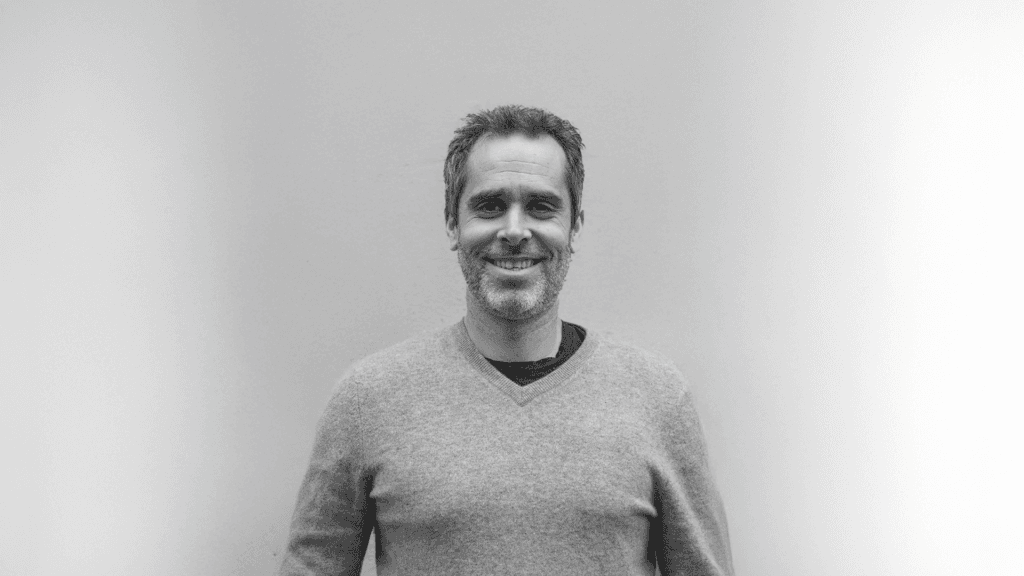
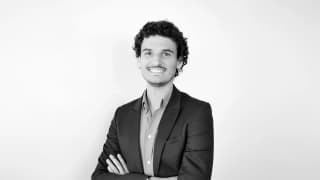
Vincent Kraus is the co-founder and CEO of FEVE, a real estate company that enables farmers to establish themselves in agroecology by purchasing farms that are made available for lease with an option to buy. This real estate company is primarily financed through citizen savings, with individuals investing in socially and environmentally virtuous projects.
During the summer break, the teams at impact.info invite you to (re)listen to one of our episodes published this year.
This episode highlights the testimony of Vincent Kraus , co-founder and CEO of FEVE, Fermes En Vie.
Enjoy listening!
Florence Jaillet
impact.info journalist
Published on 25 August 2025
Transcript Audio in Français — text automatically translated· AI-generated transcript
0:00 Hello and welcome to the podcast for those who want to make a difference 0:09 within their company. 0:11 There are now 60,000 organic farms in France, with increasingly significant proposals 0:15 for better food for everyone, driven by ideological but also financial and civic engagement. 0:21 Vincent Croce. 0:24 My name is Vincent Croce, I was born on February 10, 1984, in Bayonne, and I am the co-founder 0:26 and general director of FEV. 0:32 So FEV, Ferme en Vie, what is it? 0:34 It's a real estate company that allows farmers to settle in agroecology. 0:37 This company operates quite simply as it buys farms 0:44 and then makes them available for rent with an option to buy. 0:47 This company is mainly financed by citizen savings, meaning 0:51 that individuals can invest in the company so that 0:55 their money is used for socially and environmentally virtuous projects. 1:00 To be part of this system, to be able to work with employee savings, what 1:06 do you need to do, for example? How do you set that up? 1:11 We have two roles ultimately, the first is to find people who are interested 1:13 in investing in this type of project, we try to raise awareness about the solution and find 1:18 individuals who will invest varying amounts since we have people investing 1:24 from 500 euros up to several tens of thousands or even hundreds of thousands 1:28 of euros for some investors, and today we have a little over 2500 people who have 1:33 invested. On the other side, we have the role of carefully selecting the farmers who want 1:37 to settle; they need to have a serious economic project that complies 1:43 with the agroecological charter we have established because the idea is to support 1:47 projects that are environmentally virtuous, so we focus on carefully choosing these people and also verifying that the farms we buy 1:51 are purchased at a fair price, at market price. We act as a sort of trusted third party 1:56 between people who entrust us with their money and who know nothing about agriculture, 2:00 who just want to help and make their money grow in the process, 2:05 and farmers who need it to settle. So we have to verify all of that a bit, and the idea is also to support these people who are settling 2:09 with various mechanisms to ensure they do well financially. How many farmers can this type of system allow to settle without 2:13 which they wouldn't have been able to start? We started in 2021 and we have enabled about sixty 2:16 farmers to settle on around forty farms 2:20 in different locations across France. We have a growth curve with more and more 2:24 settlements; we aim for about forty settlements this year, and our goal 2:30 would be to reach around a hundred settlements per year within a year or two. 2:35 You mentioned criteria to be met earlier, what are these criteria? 2:40 2:45 2:51 2:55 2:58 The agroecological charter we have implemented is based on the organic farming label, 3:03 because we consider it to be the serious label from an environmental perspective, 3:09 and it is also recognized by consumers. We go a little further, meaning 3:15 that we also have things related to the conservation of ecological infrastructures, 3:19 whether it's hedges, water points, or woods, with the obligation to conserve them or even 3:24 to create them if there aren't enough on the farms. There's also a strong issue of diversification, because 3:29 we are convinced that diversification within a farm is important both from an 3:33 economic and agronomic point of view, so we require a certain 3:37 diversification in each of the projects. Today we can see that, as we have on 3:41 average 2.5 production workshops on each of the farms. A production workshop could mean, for example, a vegetable growing workshop and then 3:46 fruit growing next to it. Solidarity savings have existed since the 80s; is it 3:50 accelerating at the moment? Yes, it is slowly accelerating, but it is progressing every year. The association 3:55 ferre financière releases figures every year showing a fairly regular progression of solidarity savings over the past 20-30 years. It still represents a tiny portion of savings, 4:02 but I believe it accounts for less than 1% of investments in France. Nevertheless, there is 4:06 still a nice progression happening, largely thanks to employee savings, since 4:12 in employee savings there is an obligation to offer a solidarity savings product, but there 4:18 are also more and more projects in which people can invest directly, and this is 4:23 the case with solidarity real estate companies, including ours in particular. With tax incentives that 4:30 make investing in these structures interesting, particularly investing 4:34 in a solidarity real estate company like FEV, which gives a 25% tax reduction, and that also enhances 4:38 the attractiveness of this kind of solution. What are the advantages of investing 4:45 in FEV? People invest for three reasons. The first is to make an investment 4:49 that makes sense from a social and environmental perspective. It’s often difficult to 4:55 know how to use one’s money; more and more people are realizing that it’s 5:00 important to know how it’s used, and that ultimately with our money, with our savings, 5:04 our investments, we have an impact on the society we live in. So what’s interesting here is that we know directly how this money is used. And it’s true that 5:08 agriculture is not an easy sector; we all need to eat. So that’s 5:14 the first thing that attracts people. The second advantage is that we invest in agricultural land. 5:18 And agricultural land is an asset, if we talk about finances, that is relatively stable, 5:24 which has been very little volatile over the past 30-40 years, which has progressed fairly regularly over time, 5:30 and which is still very inexpensive compared to our European neighbors. So in terms of 5:35 risk diversification at the asset level, it’s quite interesting. And then the last 5:41 advantage is the tax reduction I mentioned earlier. Investing in 5:47 this solidarity real estate company gives a 25% tax reduction, which significantly improves 5:52 financial profitability. Here we are not talking about this tax reduction; we aim for a 2 to 3% annual 5:57 revaluation of the share of the real estate company, so it’s relatively moderate. The financial 6:01 attractiveness is greatly increased by these 25% tax reductions that are given at the time. 6:05 6:12 6:18 6:23 of investment. What made you want to create this real estate company? Where did that come from? I created another business in the past, a business in a completely different sector which is teleassistance for elderly people. And I sold that business to a mutual insurance company a few years ago and I really wanted to restart an activity that would have an impact on the environment. I got interested in a lot of topics, and quite quickly I became interested in agriculture because agriculture is a sector that touches on many things, it relates to greenhouse gas issues, it relates to biodiversity, it relates to water, both in terms of water usage versus other uses but it also relates to water and the potability of water. Recently, there have been quite a few studies released showing that groundwater is becoming increasingly polluted. I became interested in agriculture through this environmental lens and I wanted to do something but I didn't know much about it. I surrounded myself with my two partners who are agronomists and we tried to think about what we could do in connection with agriculture to try to have an impact on this agroecological transition that we need to undertake. While working on the topic, we realized that there was a big issue with generational renewal. We thought that to address these two challenges, the agroecological transition and generational renewal, facilitating installations particularly through access to land and financing land was an interesting way to act. How do you think this changes things? In fact, our action is really to enable installations. Today, we have a problem in the agricultural world, there are more and more people retiring with an age pyramid that means many are retiring and quite few are replacing them. We have farms that are disappearing, farms that are rather expanding and in the absolute, I have nothing against the expansion of farms, but often it goes along with the simplification of practices and thus practices that are not necessarily the most virtuous from an environmental point of view. I am convinced that we need farmers in numbers to be able to produce our food as healthily as possible, both for them, the farmers, and for consumers. Our role is really to try to facilitate these installations and to ensure that there are as many as possible. We really focus on the last step, meaning we will focus on people who are already convinced, who want to settle down. There are also many things to do earlier on in training, in making people want to settle down. We are already trying to enable those who want to settle down and our impact is mainly there. Impact.info, doing business differently. Vincent Croce, you are co-founder and manager of FEV, Faire mon vie. 16 years old, that's the age to start your own business in France. What were you doing at 16? What were you dreaming of? Were you already thinking about starting a business or were you already concerned about environmental issues? No, starting my own business at 16, I think I didn't even know what a business was. In my family, there aren't really any entrepreneurs, mostly medical professions. And I went to engineering school because I was good at math and I ended up there a bit by chance. And I had a rather typical start to a career as well. 6:27 6:31 6:36 6:42 6:46 6:49 6:55 7:02 7:07 7:12 7:17 7:23 7:28 7:33 7:38 7:43 7:48 7:54 7:59 8:03 8:07 8:15 8:19 8:26 8:31 8:39 8:46 8:49 8:54 8:57 9:04 9:08 9:16 9:20 9:26 9:31 9:35 9:41 9:46 9:52 I graduated from engineering school. And actually, I stumbled into entrepreneurship a bit by chance 9:56 by meeting people who wanted to start a company. And I had worked in large organizations and I wanted to either join a small structure to have a 10:01 bit more impact at my level, or create my own company, but I didn't feel capable of doing it 10:04 on my own. And I was lucky enough to meet two people with whom I started my first 10:09 business. And since then, I can't see myself doing anything other than being an entrepreneur. But it came 10:13 a bit late since I was already around 30 when I started my first company. So it was quite 10:18 far from 16 years old. And thanks to Vincent Kraus, co-founder and CEO of Fermes en vie - FEVE. You can find this podcast on our website impact.info. 10:23 This was Impact.info, doing business differently. 10:29 10:34 Embed this interview on your site
Show this player directly on your site to share the interview with your audience.
Copy embed code View generated code