translate This article was automatically translated from its original Français version. Read the original
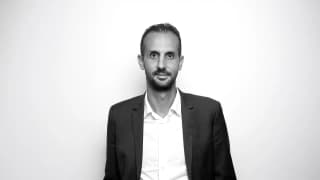
Guillaume Capelle has a goal: to integrate refugees into our society as effectively as possible. But how should this be done, and what can it bring to a company?
During the summer break, the teams at impact.info invite you to (re)listen to one of our episodes published this year. This episode highlights Singa , a non-profit organization aimed at promoting the integration of refugees by creating bridges between local communities and displaced persons. Co-founded by Guillaume Capelle .
Enjoy listening!
Juliette Boulegon
impact.info journalist
Published on 1 August 2024
Transcript Audio in Français — text automatically translated· AI-generated transcript
0:00 Hello, this is Juliette, and welcome to the podcast for those who want to make a difference in their company. 0:08 Investing in favor of refugees is the bet that Guillaume Capelle has taken on, 0:10 founder of Singa, an organization that accelerates the integration of immigrants. 0:16 And today, he is a partner at Impact Partners, in charge of refugee inclusion issues. 0:20 My name is Guillaume Capelle, I'm 35 years old and I was born in Paris. 0:21 I co-founded the NGO Singa, and today I am a partner at Impact Partners. 0:26 I am responsible for all refugee and immigrant inclusion issues at Impact. 0:27 Guillaume Capelle, can you tell us more specifically about your activities? 0:32 So, 12 years ago, I created an NGO called Singa, which started in France and is now international, 0:36 it is in 7 countries, and it works on the 360-degree inclusion of what we call newcomers, refugees, and immigrants. 0:41 And I joined Impact as a partner to set up an investment fund, the first fund in Europe, on the inclusion of newcomers. 0:46 Very well, thank you. 0:51 Can you give us a definition of what a refugee is? 0:55 So, a refugee, first of all, is a woman. 1:00 We often forget this because the image we have when we look on a search engine, 1:01 in the media, is mainly the male image, but there are as many women, if not more, than men among refugees. 1:06 There are also many children, over 40% in France, so a woman, a child, 1:09 a man who had to leave because they were in danger either due to war, persecution, or now increasingly due to climate change. 1:10 And precisely, what are the current and future migration challenges? 1:15 If we look at the latest report from the United Nations Refugee Agency, we see 1:18 that there are currently 100 million displaced people in the world. 1:22 That's a figure, I believe, that is greater than has ever been recorded by this organization. 1:27 It has doubled and more, and it will likely triple in the next 20 years, 1:29 also due to climate change. 1:35 Our ability to anticipate, to solve problems, and to make the most of 1:40 migration today will also determine our ability to achieve a just transition 1:45 in the coming years. 1:50 Are we able to quantify the number of refugees in France? 1:54 In France, we know there are 690,000 exiled people, which is about 100 people 1:59 for every 10,000 inhabitants. 2:03 In absolute terms, it is the third largest host country in Europe after Germany. 2:05 2:10 2:12 2:17 2:21 2:23 2:29 2:36 2:37 2:42 and Poland, but in proportion to its population, it ranks twentieth in Europe, far behind 2:50 Cyprus for example, which is the first host country, hosting about 727 2:54 people per 10,000 inhabitants. 2:55 So, how does it work? Do they have to stay in France? Can they stay 2:59 in France? Do they have the right to work? How does it work? 3:02 If the war continues in their country and they can still be persecuted, they have 3:09 the right to stay in France, but often, it remains a very intimate and personal decision 3:15 whether to stay or go back. 3:17 There are some people who decide to return despite the risks that still exist, 3:22 and there are others who decide to stay their whole life in their new 3:25 host country because they have married, they have a family, they have also changed 3:30 their life. 3:31 You are never a refugee for just three months, it's several years since 3:36 generally, when you are persecuted for a reason, it doesn't disappear overnight. 3:40 Can refugees work? Yes, beneficiaries of international protection have the right to work in France, they can be hired 3:41 just like French people. 3:44 It should be noted that employers will be exempt from the OFI tax, as it is called 3:48 in France, which only applies to foreign workers. 3:50 On the other hand, nuance, asylum seekers, so these are people who have not yet 3:55 received their refugee status, they must have a work permit and 3:58 they can only obtain it after six months in the territory and upon request. 4:03 OK. 4:08 So, how would you answer our question of the day, which is why 4:14 recruit a refugee? First, we are going to recruit someone, a worker 4:15 who will have knowledge and skills that are normally useful for our company. 4:19 It's not just charity, it's simply that we also need this person. 4:24 This is a person who may also have unique skills, a talent that is one of a kind 4:28 that cannot be found in the territory. 4:32 It will also be a way for the company to become more representative of the society 4:37 in which it operates, since today refugees are part of that society. 4:40 There is a study by the Tent Foundation, which specializes in integration 4:45 issues for refugees, which also demonstrated that consumers are more likely to buy 4:48 products from a company that advocates for the welcoming of refugees, 4:52 that will hire them or that will make donations to organizations in this sector. 4:57 In terms of HR, it's also a way to attract talent and retain them, 5:01 because today employees are looking to find meaning in their work as well. 5:06 They want their company to also act on real issues, such as a humanitarian crisis. 5:10 And so when they see that their company allows them to also be citizens, 5:14 5:20 5:25 They have a stronger sense of belonging to this company and they also stay longer, they are loyal in their roles. 5:29 Thank you for that definition. 5:31 And do you have successful examples of economic integration of refugees? 5:34 There are countries where we have welcomed a huge number of people. 5:40 In Europe, this is the case in Germany, which in 2015 welcomed nearly a million 5:43 Syrian people, and in 2022 welcomed nearly a million people from Ukraine. 5:49 After a few years, over 50% of these people have managed to find 5:54 a job or vocational training. 6:00 There are 40 European companies committed to welcoming 250,000 refugees 6:02 into jobs or training in the next three years. 6:08 This initiative has been largely driven by a company called 6:11 Chobani, which was founded by a refugee in the United States, Hamdi Oulukayar, 6:14 who has over 30% of his employees who are refugees. 6:18 In France, we also have examples with Generali, which has not limited itself to hiring 6:21 refugees in the company, but has also thought about how the insurance products 6:27 it offers could be adapted to humanitarian crises. 6:31 For example, they allowed families hosting refugees 6:36 to drastically reduce their insurance during the hosting period, 6:41 but also to insure the people they were hosting throughout that time. 6:47 What fundamentally changes if we want to recruit someone who has just arrived in France? 6:51 If we want to recruit a refugee today, 6:56 I invite all companies to first sign the inclusion charter 6:59 that was created with Symbia and Utopie, because it will allow them to join 7:03 a collective of inclusive companies, but also to have access to many 7:08 resources for hiring, so already a job guide, but also a list 7:11 of specialized recruitment agencies that will help them identify the right profiles. 7:16 It’s important to understand that recruitment is just the first step, 7:21 but the most important thing is everything that will happen afterwards. 7:26 All companies that want to embark on these initiatives, 7:28 I also invite them not to do it alone, but to do it in collectives of companies, 7:31 to be able to exchange with others who have already done it. 7:36 OK, but is there no real barrier or is there something they should still consider? 7:38 No, there are none, there are absolutely no barriers. 7:43 On the contrary, I believe that the company will only benefit from it. 7:47 I don't know if it's a barrier, but one point of attention I would give to companies is 7:50 to quickly move away from 'we hired a refugee.' 7:57 It's essential to give them back their first name, their completely individual and unique journey, 8:01 because no two refugees are alike. 8:08 The issue is not so much about recruiting refugees, but about creating a space. 8:12 8:16 in which refugees can also give their full potential to the company. 8:20 Very well, thank you Guillaume. 8:22 Thank you as well, my pleasure. 8:26 When I was 16, I dreamed of being an architect or a diplomat. 8:30 And yet, I became a social entrepreneur and then an impact investor. 8:35 But I think I still use drawing to create innovation and my diplomacy to negotiate lives. 8:43 Thanks to Guillaume, who is the associate director at Impact Partners, 8:47 for this interview that you can find in our section Insertion, 8:51 which brings together all the episodes on the employability of the most vulnerable. Embed this interview on your site
Show this player directly on your site to share the interview with your audience.
Copy embed code View generated code
![[Rebroadcast] Why Hire a Refugee?](/_next/image?url=%2Fuploads%2F2023%2F10%2FGuillaume-Capelle-V2.png&w=1920&q=75)