translate This article was automatically translated from its original Français version. Read the original
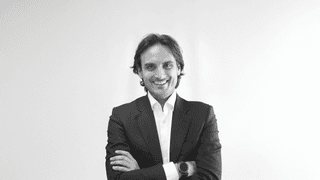
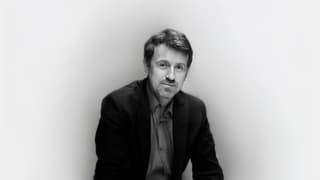
Mohed Altrad is known for his unique journey, having transitioned from a desert child in poverty to a billionaire at the helm of the multinational that bears his name, Groupe Altrad.
Mohed Altrad , founder and CEO of Groupe Altrad .
Enjoy listening!
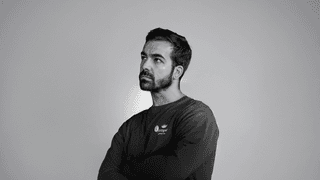
Juliette Boulegon
impact.info journalist
Published on 29 August 2024
Transcript Audio in Français — text automatically translated· AI-generated transcript
0:00 Hello, this is Juliette and welcome to the podcast for those who want to make 0:08 changes within their company. 0:10 Growing up in the Syrian desert to become a billionaire, Mohed Altrad was not destined 0:16 to lead a large multinational that today generates over 5 billion 0:21 euros in revenue. 0:23 As for me, Altrad, I have an unknown birth date because I was born in the desert, there was 0:29 no place of birth, no date of birth, nothing. 0:33 What I do currently is manage the Altrad group that I created, which I continue 0:40 to manage, to develop, and have been doing so for almost 40 years. 0:45 Let's actually start with that. 0:47 Could you present the Altrad show by specifying a bit about the whole 0:51 journey? 0:53 The Altrad group, if you will, started with the acquisition of assets from a company that 0:59 manufactured and sold scaffolding, which continued to develop and gradually diversified into all areas of construction and then into industry. 1:05 If you look at the landscape of the Altrad group's activities today, we are primarily 1:13 geographically present on all five continents, in about a hundred 1:21 countries, generating a revenue of 5.4 billion, with a workforce of 60,000 1:27 people. 1:36 The French part is maybe 20% of the total revenue 1:37 that I just mentioned. 1:44 The group has grown, expanded, developed, etc. 1:45 This group has become very interesting because it has ratios that I think are remarkable. 1:50 In the sense that, for 40 years, there has been growth in revenue. 1:55 It is a group that has never lost money over 40 years. 2:00 And the rest, if you will, of the activity is more about industry. 2:04 Industry, what is it? It is nuclear energy and renewable energy. 2:08 You mentioned it, it is a powerful multinational today. 2:14 My question is, why did you decide to build it like a small business, 2:19 especially in its operation? There isn't necessarily a secretariat. 2:23 You respond directly by email. 2:26 Given the vastness of your company, is that a choice? 2:28 Listen, in terms of management, you have two types of organizations. 2:34 One that is widely spread, implemented, and functioning, called the hierarchical 2:40 organization. But I don't criticize, if you will, the type of organization, 2:48 because there are companies, global and national groups that apply the hierarchical 2:53 organization. We, practically from the start, opted for what we call 2:58 a matrix organization. Matrix means a lot of things. I have written a lot on the subject. 3:04 It means that there is no boss, if you will. The boss is the one who has the most 3:10 capabilities to handle the subject. Among the characteristics of the matrix organization, 3:17 3:22 It's that all information, the rate that can circulate within the Groupe Altrad, 3:27 is seen by at least three people. And so, if you will, why in the hands of three people? Because one person, according to the logic of this organization, 3:32 since you position them in such a place, as a leader, they know everything. 3:37 However, we see in life that we don't know everything and that we need other people in 3:45 the group or elsewhere who can, if you will, contribute to arrive at the best solution. 3:53 You ultimately draw the best from each person by considering that we can't be 3:58 the best everywhere. That's it. And especially, if you will, you create a synergy. Imagine 4:02 you have three people who are interested in the subject. Naturally, 4:07 we're not conformist couples. So, inevitably, there's a plus from each and then 4:13 we're going to arrive at a good solution. You are therefore present in more than fifty countries. 4:19 Is this diversity of origin and culture from these different employees a 4:23 wealth for you? Yes, but if you will, you know that we are chauvinistic in France. It's not 4:29 the only country that is chauvinistic. So, each country thinks it holds the truth about a certain 4:36 number of ideas. We say it, we accept it, there's no problem. However, we would still like, we come from another country and we would still like to tell you that we too, 4:44 are proud of our way of seeing things. So, since we are condemned to work together 4:49 because we are in the same group and we are united, there is a debate. And this debate, 4:57 if you will, we practically started it from the beginning. There is a charter called 5:03 'The Domains of the Possible'. We must be open to all cultures. But then, 5:09 if you will, we can't apply all the cultures of the Red Cross, there are about a hundred, 5:14 to solve a given problem because anyway, around the table, 5:18 we don't have 50 people so that each can represent their country. So, if you will, 5:23 that's the concept we ask people to accept. Then, in practice, it is asked 5:26 yes to apply it and it works quite well. You invest and believe a lot in the 5:33 field of rugby and we know it's a sport for which values are very important. We 5:41 talk about it a lot. How for you, can the values of a company align with the values of 5:46 sport? For me, they must be the same. Rugby is the only combat team sport 5:52 that exists on Earth. That means you are going to fight. Why do we fight? Because 5:58 things are not easy and we have to sort things out. But we must do this within 6:04 the rules with a lot of understanding and ethics, if you will. So, in rugby, 6:09 you mention the club of... I believe you are referring to the Montpellier club. We tell them, 'you are going to fight'. But fight with the weapons, with the rules too, while respecting them. 6:14 If you have among the 15 players one who doesn't do their job, and you're told, 'what's 6:20 going on?'. There is a space that will open up, the opponent will take advantage of it, 6:25 they will score a try and then you lose the match. So, the idea is to win the match. 6:31 But you can't do it alone. No one can save the homeland alone. No one. And 6:37 in the company, it's exactly the same thing. So, I try, if you will, through 6:42 a professional life that is starting to be long, to simplify concepts. We can 6:47 complicate or complexify things infinitely. But I think you are right to mention. 6:53 6:57 7:03 7:10 Rugby matches. They are important. You have to sacrifice for the other. The other, 7:16 is the buddy next to you who missed a tackle. You lose your match. 7:21 How do you think your life journey has helped you become the entrepreneur you 7:26 are today? Good question, Juliette, because if you want, my journey, 7:30 everyone knows it. It started in poverty. It was a survival childhood. After that, 7:37 the rest, you know it, if you want. It hasn't been easy. Arriving in France, 7:41 it wasn't easy. You have to find your bearings. You find a culture that is not 7:46 yours at all, as if it's nothing, fake. So, you fight. You fight precisely to exist, 7:53 and it's still about survival. When you've lacked everything, to the point of risking every morning 8:01 in the desert, risking your life, because you don't know what you're going to eat during 8:05 the day. You know, if you're bitten by a snake, it's over for you, etc. I've kept 8:12 it simple. For example, to succeed in a business, of course, you have to spend, 8:16 but you have to spend when it's necessary. So, it's these simple reflexes, 8:21 that bring you back to life and that are easy to explain and understand. You are an example 8:27 for a multitude of entrepreneurs. What advice could you give them or what would you have liked 8:33 to hear or what helped you climb the ladder? When you ask the question to 8:38 someone who is starting a business, who has a business or who is trying to start a business, but why 8:45 are you doing what you do? Very often, if you want, the implicit or explicit answer 8:51 you get is that they want to be rich. But I said, but how? That shouldn't be an 8:57 objective, you're crazy. I told them, that's a fundamental mistake. First, I do, 9:02 I start treating it because I want to succeed, because I have values, because 9:07 I want to employ people, because I want to contribute to society. And then, if I 9:13 succeed, but inevitably, we will have money, you understand. But starting with money to 9:19 succeed, I would say that's a proposition that should be dismissed completely. We're nearing 9:24 the end of this interview. The idea with Impact.info is to give a voice to those 9:31 who are changing the game within their company and more broadly in society. How do you think your actions, 9:36 make a difference? You can't make great achievements without values, that's clear. The values you choose, they need to be universal. When you take the word 'humility', the whole world 9:41 understands the word 'humility', because these are universal values. Then, there are people 9:45 who talk to you about the value of work. But yes, but that's not a value, it's something, yes, that we all should do. Besides, we do it every day at work, but it's not a value. But you take any company, any product. What's at the base? It's women and men. That's your raw material, we don't care about the product. You can make whatever you want, but at the base, it's a person. You have to 9:51 utilize it and protect it and make something that produces value. Impact.info, 9:56 entrepreneurship differently. I allow myself to adapt the last question. It's a question I 10:00 ask all my guests. I ask them what they dreamed of when they were 16, 10:04 given your story. You adapt it, as you see fit, as you wish. But what did you dream of at that time in your life? I had no dream, 10:10 10:14 10:19 10:27 10:33 10:38 10:44 10:49 because I was confronted with a harsh, difficult reality. Born to a young girl who must have been 12, 10:57 13 years old, raped by the chief of the tribe. This man was the chief of the tribe, so he had all the 11:04 rights. It was an ancestral system of functioning. The first Bedouin of humanity is 11:10 Abraham. And so, it continued until today. But this man was already married 11:17 with children. And that's how my older brother was born, whom the father decided to 11:24 keep with him. He started again a second year, well, the following year, and that's how 11:30 I came into the world. However, he didn't want me, and that might have been my 11:36 chance. So I stayed, if you will, with my grandmother, because the mother died. The 11:41 mother died very quickly. I am the shameful one in the family, because I am the product of a 11:50 rape. So can I dream? But nothing. After that, the dream, if you will, slowly 11:55 started to come, but it was much later. Thanks to Mohed Altrad, who is the leader and 12:02 founder of the multinational Altrad, for this interview that you can, as usual, 12:07 find on our site impact.info, in the CSR section, which brings together all the episodes about 12:13 the issues faced by leaders who place responsibility at the heart of their company. 12:20 This was impact.info, doing business differently. Embed this interview on your site
Show this player directly on your site to share the interview with your audience.
Copy embed code View generated code

![[Rebroadcast] Why Human Values Prevail in Business?](/_next/image?url=%2Fuploads%2F2024%2F03%2FMohed-Altrad.png&w=1920&q=75)