Because money is power and even if you’ve only got 100€ to invest, that’s 100€ of power to wield however you want to.
At citizens’ investment fund LITA, they help people invest in companies developing real-world solutions to ecological and social issues.
As part of our summer break, the impact.info team invites you to (re)discover one of our episodes.
You can also find our article on the topic right here .
Enjoy listening!
Killian Flagey
impact.info director
Published on 18 August 2026
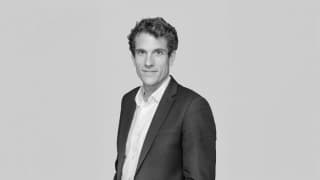
Photo credit — LITA
Transcript Audio in English· AI-generated transcript
0:00 to help people realize that it's a power that they have, 0:04 they can decide where to put their money. 0:08 Impact.info, doing things differently. 0:11 Hello, and welcome to the podcast 0:13 where we explore the many ways 0:15 the world is actually changing for the better, 0:18 despite what the news cycle tells us. 0:21 But there is at least one area 0:22 where the news cycle and positive impact 0:25 overlap the all-encompassing importance of finance. 0:31 My name is Louise Wisteck, 0:33 and I'm a partner at the investment fund 0:35 L'Ita Sobriété Juste and the GPE L'Ita Gestion. 0:38 Hello, Louise, thank you for being with us. 0:40 Hello, Vanessa. 0:42 So, L'Ita, an investment fund. 0:45 Now, it's not the first type of business 0:47 that comes to mind when we think of economic sobriety 0:51 or the energy transition or solidarity, 0:54 and yet those are precisely some of your priorities at L'Ita. 0:58 Yes, L'Ita is a company that had been created 10 years ago, 1:01 and the idea was to use finance as a tool 1:05 to enable everyone to invest in the world 1:07 they want to live in and use the power 1:09 of the citizens' savings to help build a better, 1:13 a more sustainable, and a more inclusive future. 1:15 So, we have built an impact investment platform, 1:18 a crowdfunding platform, 1:19 and we have 200 million euros under management 1:22 that have been directly invested in social 1:25 and environmental companies, and we have... 1:27 200 million? 1:28 200 million, yeah, 200 million invested. 1:31 And we have recently built a GP, a first European GP, 1:35 and funds enabling professional investors, 1:38 institutional investors to co-invest with individuals 1:41 in the social and environmental companies. 1:44 So, for example... 1:46 OK, sorry, excuse my ignorance, but what's a GP? 1:50 Well, sorry, a general partner. 1:52 So, it's a company in finance that manages funds. 1:57 They raise funds, they go to banks, insurance companies, 2:00 big institutionals or companies, 2:03 and they invest the funds in other companies, 2:06 in SMEs, for example. 2:08 Can you tell the story of a company you've invested in? 2:11 One of the first companies we invested in, 2:13 it's a family-owned business in the south of France, 2:17 and they are trying to reinvent food packaging 2:19 by eliminating plastic through years of R&D. 2:22 So, they produce plastic-free pieces 2:26 that can replace plastic containers. 2:29 The company has an annual turnover of 4 million euros, 2:32 and they're working with big brands 2:35 in order to get rid of plastics 2:38 and have the exact same type of packaging, 2:41 but it's more like paper, 2:43 and they have already produced 35 million pieces, 2:46 and we have invested in this company 2:48 in order to help them grow. 2:50 Right, so this is an example of the real economy, isn't it? 2:54 What we call the real economy. 2:56 And would it be fair to say that, in general, 2:58 you only invest in that real economy 3:01 and you don't invest in the financial economy? 3:04 Is that right? 3:06 Yes, it's exactly that. 3:07 So, our market is private equity, 3:10 which means that we only invest directly in startups, 3:14 in SMEs, in companies that are 3:17 the real economical reality of France, 3:21 and we don't invest in financial markets, 3:24 in stocks or bonds. 3:26 And I think one of the main things that sets you apart 3:29 from more traditional investment funds, 3:31 apart from the fact that you don't invest 3:33 in the financial markets, 3:35 one of the things that sets you apart 3:36 is where the money comes from, isn't it? 3:38 Because you have crowdfunding as part of the mix, 3:43 is that right? 3:44 Exactly. 3:44 So, our whole idea was also to democratize finance 3:49 and to help people realize that it's a power that they have. 3:53 They can decide where to put their money. 3:56 And we have built a community of 200,000 committed individuals 4:00 that are investing directly in the companies. 4:03 We have, as well, a business angel network 4:06 with 3,000 top investors. 4:08 They have a strong industrial expertise 4:10 and they can, as well, support the companies. 4:13 And that's how we really try to bring more money 4:17 into the social and environmental companies. 4:20 We need the power of individuals 4:22 to really finance the transition of our economy. 4:26 But so, if you're raising money through crowdfunding, 4:30 and this money that has been raised 4:32 goes and invests in a company, 4:34 what is Lita's role in that? 4:36 Why is the company not doing the crowdfunding itself? 4:40 This is actually our work to select the companies 4:44 to analyze their financial and social performances, 4:48 to make sure that their investing plan is right, 4:52 to just challenge their projects 4:54 and make sure that when we offer an investment opportunity 4:59 to the citizen through our platform, 5:01 we have been analyzing that. 5:03 And it's kind of a way to make sure 5:06 people don't take too much risks. 5:08 Okay, and so, yeah, what's the advantage 5:10 to the company who receives the investment? 5:13 They have access to our communities. 5:15 We can raise from 200,000 to 5 million euros. 5:19 So if you're raising 2 million euros, 5:21 you need to address a large community of people. 5:23 So for the company, what Lita brings, 5:26 it's a community of people 5:28 that are already interested in investing 5:32 directly in the companies and in social companies. 5:36 It's obviously private equity 5:37 and investing directly, becoming a shareholder 5:41 or investing in debt in companies, it's a risk. 5:43 So we advise people to invest only 10% of their savings 5:49 in such type of investments, 5:51 but it's a community that is already interested in that. 5:54 So that's what we bring to the companies 5:57 as well as support throughout the years of the investments. 6:01 We are here not only during the investments, 6:04 but as well, we follow the companies, 6:06 we support them, we are here during their boards 6:10 in order to bring advice and help them achieve their goals. 6:13 So we also do that as analysts at Lita. 6:16 So part of the package, 6:17 so you're sharing your own expertise in effect. 6:21 Exactly. 6:21 So can I get you to walk me through 6:24 how this kind of investment will work 6:27 from the point of view of an individual investor? 6:30 So if, for example, if I had 50,000 euros in the bank 6:33 in a savings account at low risk, 6:37 promising me 3% interest, 6:40 would it be financially worthwhile 6:42 for me to invest some of that or all of that with Lita? 6:46 So yeah, some of that, that's what we say, 6:49 that's what we advise people, only 10% of your savings 6:53 because private equity is a form of risks. 6:56 So we have a team at Lita 6:58 that their job is to advise people like that. 7:01 Then you can go through the platform, 7:03 you can find our opportunities of investments. 7:07 Either you can choose by type of financing products. 7:11 If you want to be a shareholder of a company, 7:13 invest in equity, or if you want to invest in debt, 7:16 which is a different type of risk, 7:18 or you can as well choose through sectors and impact. 7:21 So if you're really interested in supporting 7:24 independent media and companies working in the culture area, 7:28 you can go through that. 7:29 If you want to invest in care, 7:31 if you want to invest in renewable energies 7:34 or tech for good companies, 7:36 you can go through our opportunities by sector. 7:39 We present the companies and explain what are the risks, 7:43 what are the impact, what are the length of the investments, 7:47 and then you can just simply put 7:49 how much you want to invest in. 7:51 It's the smallest ticket of investment is 100 euros. 7:55 So the idea is to be accessible event. 7:58 If you don't have a lot of savings, 7:59 you can still invest 100 euros. 8:01 And then we help, 8:02 if you want to build a portfolio of several companies, 8:06 we also have a team that helps you build this portfolio 8:10 and say, okay, take this kind of risk. 8:12 You can be an equity investor in this company 8:15 and then debt investor in this company. 8:17 So that's how we work. 8:19 So it's a way, in fact, for the investor 8:22 to feel like they're contributing to something, 8:25 contributing to sort of a positive change in society. 8:28 Yes, it's very transparent. 8:30 You know exactly where your money goes. 8:33 It's direct. 8:34 You invest directly in a company 8:36 and then you have a reporting every semester 8:39 explaining what are the steps the company are making, 8:42 what have they been doing with your money. 8:44 So it's, and you have an impact 8:46 and you decide what type of impact you want to have. 8:50 Impact.info, doing things differently. 8:54 Now, I have one last question. 8:56 I have a less financial 8:58 and a more personal question for you. 9:01 If I can get you to remember yourself age 16, 9:05 so how would 16 year old Louise Swistek 9:09 feel about what you're doing now? 9:12 That's a good question. 9:15 When I was 16, I was sure I wanted to have a job 9:20 with an impact and to make sure 9:22 that my jobs had meaning for me. 9:24 So I was more thinking of a job in an NGO 9:28 or in an international organization. 9:30 So I think 16 year old Louise would be surprised 9:33 to know that she works in finance, 9:36 like what happens to you? 9:39 But then knowing that actually I use finance as a tool 9:45 to help do my part of trying to build a more sustainable 9:51 and fairer society is actually not that bad of an idea. 9:56 So when I discovered microfinance first, 10:00 when I was doing my studies 10:02 and it was at the time that Mohammed Yunus 10:05 got his Nobel prize. 10:07 So it was very interesting to see, 10:09 okay, maybe we can use something 10:11 from the capitalistic world and twist it 10:14 in order to use it to hack finance in a way 10:18 in order to support projects, entrepreneurs 10:21 and companies that are trying at their level 10:24 to build a better society. 10:25 So that's what I like about my job and I'm proud of that. 10:28 Louise Swistek, thank you very much 10:30 for talking to us at Impact Info. 10:32 Thank you Vanessa for your questions. 10:36 That was impact.info, doing things differently. Embed this interview on your site
Show this player directly on your site to share the interview with your audience.
Copy embed code View generated code
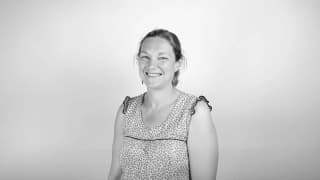
![[Rebroadcast] Why invest instead of saving?](/_next/image?url=%2Fuploads%2F2026%2F05%2FLouise-Swistek.jpg&w=1920&q=75)