translate This article was automatically translated from its original Français version. Read the original
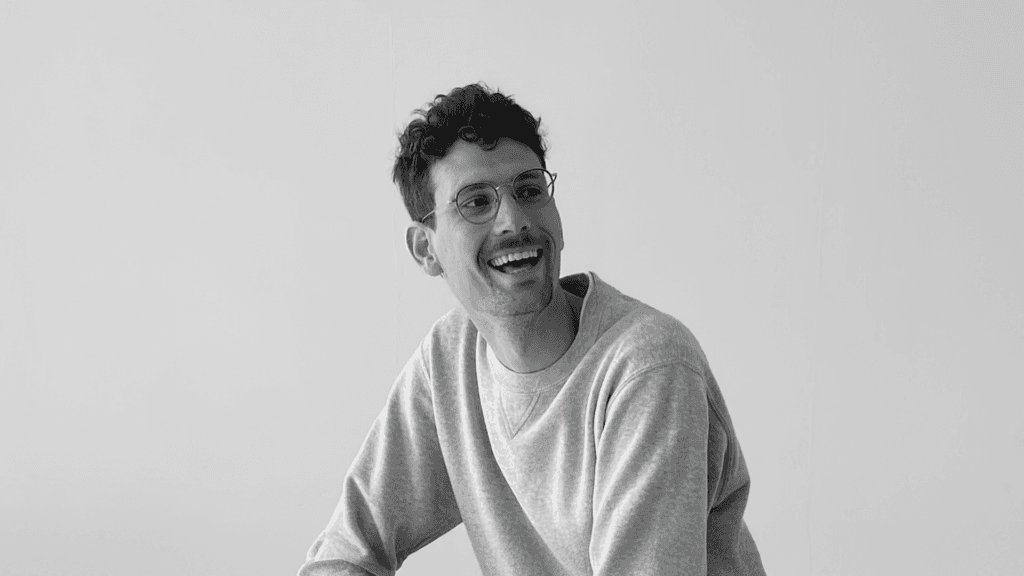
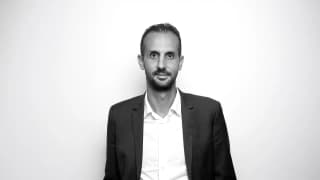
Florent Skawinski is the General Secretary of the Cerf Vert association and the President of the citizen forestry company Cerf Vert, which allows citizens to invest in the purchase and sustainable management of forests in France.
During the summer break, the impact.info team invites you to (re)listen to one of our episodes published this year.
This episode highlights the testimony of Florent Skawinski , co-founder of Cerf Vert .
Enjoy listening!
Florence Jaillet
impact.info journalist
Published on 25 August 2025
Transcript Audio in Français — text automatically translated· AI-generated transcript
0:00 Hello and welcome to the podcast for those who want to make a difference in their company. Our money has a political, social, and environmental impact; it can, for example, be used to manage French forests sustainably. Florence Kavinsky. My name is Florence Kavinsky, I'm 30 years old, I was born in March 1994 in Éculy in the suburbs of Lyon. I am the Secretary General of an association called Cervers and the president of a citizen forestry company also called Cervers; it's a global project. So what is this type of company, a forestry company? Well, a forestry company is a business that aims to buy land. The land can be real estate, it can be agricultural, you know, and we have chosen forests as our asset. So we buy forests and manage them, and it's citizen-owned since it's the citizens who invest in this company, and with their money, we buy forests and manage them. And we have chosen to manage them sustainably, respecting biodiversity and ecosystems to prove that another type of forestry is possible, that it can be profitable, and that it can indeed respect the forests and all the ecosystem services they provide us. How did this creation come about? You started from an observation, things you wanted to change, that you couldn't change alone; how did it come together in your mind? Yeah, so it's a Covid project; we were close to my birthday, the first week of Covid in 2020. I watched an Arte documentary showing forest management in France. I've always been quite into nature; I've always done outdoor sports, and I felt that the forests in France were the last places that were somewhat left alone by humans. And I realized it was the opposite, that the forests were being exploited, that they were overexploited, and that the services they provided were being undermined by humans to feed an ever-greedy forest-wood sector. And that was a bit of a wake-up call. I don't know if I really wanted to be an entrepreneur at the time, but at the end of the documentary called 'Le temps des forêts' by François-Xavier Drouet, there was an opening towards a citizen forestry group called Avenir Forêt. And that was a wake-up call, and I said, 'That's what I want to do.' On the sites, etc., I met one of my two partners. I called him, and after an hour and a half, we were off together to create a forestry group at the time. So it's a kind of SCI that buys forests. And since then, the project has changed; we transitioned to a forestry company, but the project's goal was really the same: to bring citizens back to the forest, especially urban citizens, to reconnect them with nature, to reconnect them with the forest-wood sector to show them, to differentiate simply, an oak from a beech, from a hornbeam. And there are a lot of people today who are not able to do that, and we believe that to protect these ecosystems, you first need to know them. So concretely, how does it work? As a citizen, what can we do, and what does it yield? What is the end goal? What are you going to do with this citizen mobilization? If you are a citizen and you realize that your money is not necessarily well placed, and you say, 'Well, my money, I'm going to invest it properly, sustainably, locally to protect ecosystems.' In any case, CERVER responds to that. From 1000 euros, you can invest this 1000 euros in the CERVER forestry company. You have 0:10 0:15 0:22 0:30 0:36 0:41 0:46 0:53 0:59 1:03 1:08 1:14 1:18 1:22 1:26 1:32 1:38 1:43 1:48 1:52 1:56 2:01 2:06 2:12 2:16 2:21 2:26 2:30 2:35 2:40 2:46 2:51 2:55 2:59 3:04 3:08 3:14 3:19 3:24 3:29 in exchange for shares, social shares of the real estate company. You still have a 25% tax advantage 3:34 since we are the beautiful ESUS, a social utility cooperative. And 3:39 with this money, we will look for forests, acquire them and manage them sustainably. 3:44 So there, managing sustainably, there’s a whole range of things that open up and it will depend 3:48 a lot on the locality, the forest, the plots, the types of wood that are in place. 3:53 But basically, we will do everything to produce wood with this forest since the forest 3:59 wood sector is important in France. It heats us, it builds our houses, 4:03 it makes our furniture. There are many great uses for wood and it is a 4:07 renewable material. But we must never take more than the forest can produce in terms of wood. 4:14 We must especially favor a mix of wood species. There should always be conifers, 4:20 broadleaf trees, etc. depending on the locality of the forest. And we must especially respect the soils, 4:26 the biodiversity present in the forest since forests provide us with what we 4:30 call ecosystem services, meaning that the forest filters water. Without forest soils, 4:36 the groundwater would fill with water that is not necessarily filtered, etc. And when 4:41 we pump this water from the groundwater, it would not be drinkable. And in fact, we realize that if we had to invent a machine that filtered as much water as forest soils, 4:46 it would cost billions and billions and billions of euros and it would just be unthinkable. 4:50 So we need to safeguard these forest soils so that we can continue to drink potable water. 4:55 Managing the forest sustainably is something that is gaining momentum in France. Is it 5:00 progressing at all? Yes, it is progressing. There is a growing citizen awareness. There is 5:05 still a cultural shock between people who live off the forest, who are rural, 5:10 and urban dwellers who have an idea of the forest that must absolutely be put under a bell jar, protected, 5:14 etc. Everything is fine, we just need to have moderation. It’s important to have urban dwellers 5:20 who want to put the forest under a bell jar. It’s important to have rural people who have a pragmatic vision 5:25 of forest management. What is needed is to create links in all of this 5:29 and show the realities on the ground, also show where we need to go for the forest to be 5:34 respected as well. But there you go, it’s something that is gaining momentum, we can see it. There are 5:39 movements like the GFC movement, citizen and ecological forest groups. 5:44 These are mostly rural citizens coming together to buy forest plots 5:48 in their locality, in their forest massif. This is at a very local, very small scale, 5:53 but it’s super important. We also see associations being set up to manage 5:57 forests sustainably. But basically, this desire to manage forests sustainably dates back to the 60s-70s, when we started planting a lot after the war, etc. There are still people 6:02 who said, 'there’s a problem, we see that epidemics are happening much more 6:07 easily, we need to find another way and we will try to go back, 6:13 since the forest has always been managed sustainably for millennia.' And it’s just 6:17 from the 1900s until 1960, until today, there has been an acceleration of 6:22 monoculture, of monoculture planting, and that brings a lot of not great things 6:27 for forest ecosystems. So there was a first movement in the 60s-70s to say 6:33 'okay, we could do it differently and produce as much wood.' It was really a movement. 6:38 6:43 6:47 very niche, and now we are starting to see citizen movements that are increasingly taking shape. So it's happening, we need to push, we need to structure the sector, but it's happening. 6:51 In what way, in your opinion, does what you do change the game, make a difference? 6:56 In terms of real estate investment companies, what changes things is that we finally have citizen investments. It's very reassuring, it's profitable. There are no intermediaries, 6:59 there's traceability of citizens' investments in concrete actions. 7:05 We could draw a parallel with all the social real estate companies, 7:10 like Habitat Humanisme, SNL, Chanel real estate companies, etc. We could draw a parallel with 7:15 Terre de Liens and Ferment Vie in agriculture, where the goal is to put organic farmers back in the fields. All these investments are super important, they are direct, 7:19 and we can see socially what citizens' money is used for. So I think that really changes the game, where the citizen becomes the master of their money, they don't put it in a 7:24 savings account or a life insurance policy, and then really, we have no idea where the money 7:29 goes. Then, on the associative side, what is super important for us is to raise awareness, 7:34 to educate about forests and the benefits they bring us, the services they provide. And every day, I fight to raise awareness among 7:39 students, citizens, the general public with biodiversity cinemas, and also with 7:43 young people who are out of school, aged between 16 and 25. And there you go, I present the Wood sector to them, 7:46 and I tell them that everything is possible, it's a sector that recruits, we need young people, 7:51 who are aware of the environment and who come to work in this sector. And so, there you go, I try every day to change the game so that urban dwellers, disadvantaged public, students, a generation of the future, can become aware of the forest, 7:55 of the services it provides us. And in that, I think it changes the game, and I hope that we will reap the fruits of our efforts in 20, 30, 40 years on the scale of a forest, because in fact, 8:00 by managing the forest sustainably, we are not fighting for the next 10 years, 8:06 we are fighting for the next 50, 100 years, since the forest is a very very very long-term thing. And I 8:12 think that in a world where all vectors are at 5 years, all profitability is seen 8:16 at 5 years, politically, socially, etc., everything must be profitable in 5 years, well we, 8:21 looking much much further than that, I think that also changes the game from that perspective. Impact.info, doing business differently. Florence Kavinsky, you are the president of the 8:26 citizen forestry investment company Cervers and you are the general secretary of the Eponyme association. 8:30 16 years old is the age in France to start your own business. At 16, what were you doing? Did you 8:34 already love the forest? You were talking about nature sports earlier, were you thinking about the future 8:39 of the forest? Not at all. No, no, at 16, I did a lot of nature sports, I really appreciated 8:44 nature for its beauty, but I had no idea, I wanted to be an architectural engineer and build lots of beautiful things in concrete. I actually took that path for 8:50 my studies. No, no, it was really a Covid wake-up call that made me interested in the forest. However, it wasn't at 16, it was around 20, during my civil engineering studies, where I really became aware of the climate issues, of the impact of humans on 8:56 society and the world. And then, I also became aware of the importance of the 9:01 9:05 9:13 9:19 9:24 9:29 9:33 9:39 9:44 9:50 9:55 10:00 10:04 biodiversity by focusing on forests, where this biodiversity is the key to why the world is holding together today. And changing like that, at 16, I find it hard to be aware of all this. I hope the younger generation is aware of it, but at the time, no, I wasn't aware of it. Thanks to Florent Skawinski, president of the citizen forestry company Cervers and general secretary of the eponymous association. You can find this podcast on our website impact.info. This was Impact.info, doing business differently. 10:09 ❤️ by SousTitreur.com. 10:13 10:17 10:22 10:27 10:39 Embed this interview on your site
Show this player directly on your site to share the interview with your audience.
Copy embed code View generated code