translate This article was automatically translated from its original Français version. Read the original
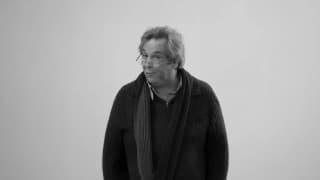
Alexandre Chéroux is a dentist and the founder of Doc Tripper, a solution to give visibility to under-resourced territories, aimed at the younger generation of healthcare professionals.
During the summer break, the teams at impact.info invite you to (re)listen to one of our episodes published this year.
This episode highlights the testimony of Alexandre Chéroux , founder of Doc Tripper .
Enjoy listening!
Frequently asked questions What is a medical desert and why is it problematic? A medical desert refers to a geographical area where access to healthcare is limited due to a lack of healthcare professionals. This situation poses a major problem as it leads to inequalities in access to care, affecting the health of residents and their quality of life, particularly in under-served rural or urban areas.
How does Doctriper contribute to solving the problem of medical deserts? What types of incentives are offered to young healthcare professionals by local authorities? What is the impact of Doctriper on the relationships between healthcare professionals and local authorities? How has Doctriper developed since its launch? Florence Jaillet
impact.info journalist
Published on 31 August 2026
Transcript Audio in Français — text automatically translated· AI-generated transcript
0:00 That is to say, we start from something that is not very engaging. 0:02 The internship replaces a few days to encourage this young person to say, 0:06 it was nice, I would like to come back for a second replacement, 0:09 a third replacement, and then settle down later. 0:13 Impact.info, doing business differently. 0:17 Hello and welcome to the podcast for those who want to shake things up 0:21 within their company. 0:23 Fighting against medical deserts in rural or under-resourced urban areas 0:27 involves creating favorable conditions for young graduates to come. 0:32 Alexandre Chérou. 0:34 Alexandre Chérou, I was born in Toulouse on October 21, 1989 0:39 and I am a dentist and also the founder of Doctriper. 0:44 So, what is Doctriper? 0:46 Doctriper is a solution I envisioned to bring positive visibility 0:52 for the younger generation of healthcare professionals in under-resourced areas. 0:56 We talk a lot about medical deserts. 0:58 Today, access to care is 1:00 one of the most important elements for the French. 1:02 And in fact, I was surprised and a little shocked 1:05 when I wanted to do my first replacements after graduating 1:08 from dental school because I wanted to return to the village. 1:10 I come from a very small village in Lot-et-Garonne and I wanted to come back 1:13 to the village to do my first replacements, to bring care there 1:17 where we were in a truly desert area in terms of dental care. 1:20 And in fact, I couldn't find a position. 1:22 I looked a little bit everywhere. 1:23 The platform that existed at the time only offered ads by the sea, 1:27 in coastal areas near university towns, in attractive zones. 1:31 I reached out at the time to colleagues who practiced not too far away. 1:35 In fact, most of them told me that they had given up a long time ago, 1:39 that they stopped trying to find replacements because in any case, 1:41 there is never anyone who comes to replace us. 1:43 So, I did my replacements elsewhere. 1:44 A little disappointed, a little surprised. 1:46 And that's where the idea started to germinate that there was a real problem 1:50 because on one side, we had needs, 1:53 areas identified as medical deserts, but which are not really deserts. 1:56 And on the other side, local authorities that prevent themselves from trying 1:59 to bring in people with a lot of incentives, tax benefits, help here and there. 2:04 But ultimately, it doesn't work because it's too engaging. 2:07 There is a student who will come out of their studies, 2:10 suddenly settled in the middle of I don't know where, 2:12 if they haven't had the chance to discover both the local practice and the local life. 2:17 So that's a bit of the starting point of the project. 2:21 To say how we can bring about an interesting engagement in areas 2:25 that are interesting to live in and to experience. 2:28 So how is this going to happen concretely? 2:31 The healthcare professional, the dentist, the doctor, the clinic, 2:34 will offer replacement announcements, internships, whatever they need. 2:38 And the local community, local partners that we can also 2:43 reach out to, will add information about the area, 2:47 the attractiveness, the benefits for the young person who will project themselves 2:51 so that they can access the sports facilities, 2:54 cultural offerings of the area, for example, to continue their sports activity 2:57 if they have one or discover others. 2:59 And that way, they actually have the opportunity for a few days, 3:03 a week of replacement, to discover a practice, 3:06 but also to discover the area and overcome any preconceived notions 3:09 that might exist about these under-resourced rural or urban areas. 3:14 You launched Doctriper in Corrèze. 3:17 First of all, there were good responses. 3:19 What was the impact? 3:21 In fact, when we started with a completely empty platform, 3:24 I organized a meeting with all the colleagues in the area. 3:28 So initially, it was, we created an entire year focused on dentists 3:31 to validate the models and the processes. 3:33 So we had this 30-year meeting. 3:34 In the summer of 1941, I would have asked the question, who is taking time off at Christmas? 3:37 It's almost two years to the day. 3:39 And so there, of course, everyone takes time off. 3:41 Who is getting a replacement? 3:42 No one raises their hand. 3:43 That means there will be a lot of closed practices, 3:46 so it's better not to have a toothache during that time. 3:48 And who looked for a replacement? 3:51 No one was looking, so we discussed and then asked the question 3:54 of why, in fact, you aren't looking for a replacement? 3:56 And the reason was that most were convinced 3:58 that even if they looked, they wouldn't find anyone, 4:00 because the area is not attractive enough in the eyes of potential candidates, 4:03 because they don't really know where to look and how to do it. 4:06 So, they prefer not to waste time on that. 4:09 So, I would have proposed the solution, I would have said maybe, post your ads, 4:12 we're going to start from a blank platform, so it's going to be the priming of the pump. 4:16 They posted their ads, great, I went to see the local authorities 4:19 one by one to explain to them what I'm trying to explain to them. 4:22 The first local authorities embraced the concept. 4:24 We had the first ads that were co-created and enriched like that. 4:30 And then we went with the elected officials, 4:32 to present all this at the University of Bordeaux, 4:34 to the sixth-year students, who are the potential candidates. 4:36 We had the first matches, the first experiences. 4:39 And then gradually, by capillarity, 4:41 it spread to Nouvelle-Aquitaine, then nationally. 4:45 And today, we have ads all over France, 4:47 in metropolitan areas, as well as in the overseas territories. 4:50 130 local authorities have joined the system, 4:54 which we support in this enhancement of the territory, 4:58 with this somewhat new attractiveness strategy. 5:01 And since the beginning of 2025, 5:04 we're addressing all health auxiliaries, medical, paramedical, 5:07 and also animal health. 5:09 In what way, in your opinion, does Doctriper change things, 5:12 shift the lines for the people, of course, who use it? 5:14 And then, on a larger scale, on these issues of medical deserts 5:16 or continuity of care? 5:18 The idea is that today, we are creating a tool that will be super flexible. 5:22 So, in fact, we are going to build with those who want to build, already. 5:25 And we are going to make this tool available to a territory. 5:29 It's not up to me to say, do this part, actually. 5:31 Because the territories, we have declining territories in Brittany, 5:34 for example, in areas where I myself have never set foot. 5:37 So, it's quite alarming for them to say, 5:39 you need to do this or that to be effective. 5:41 On the other hand, we give them a tool that allows them, behind, 5:44 to strengthen the proximity of souls. 5:47 We are also going to involve local private actors, 5:50 professional sports clubs, 5:52 who provide match tickets, for example, 5:54 to allow and show that there is sports entertainment in certain territories. 5:58 We have a whole framework of local partners, restaurants, spas, 6:02 fitness centers, which actually contribute their little stone to the building 6:06 because we are talking about the health of the residents, 6:08 but there is also a very strong link with the economic health of a territory. 6:12 And all these private actors know that if there are no doctors, 6:15 it will be more difficult to have a community feel. 6:18 In places that are very touristy, 6:20 if there is no possibility to provide care in the summer, 6:23 tourism will also be penalized. 6:25 So, we have partners like that who will also enrich the announcements. 6:29 And today, to give an example, in Bril, 6:32 because that's where it all started in Corrèze, 6:34 a student coming to do their replacement in the area, 6:37 will have housing offered by the local community 6:40 at a very, very preferential rent depending on the period, 6:45 or even free according to certain communities, it will depend. 6:48 They will have unlimited access 6:50 to all the sports and cultural facilities in the city. 6:52 They will also have access to match tickets 6:55 to see CAB play, which is in pro D2. 6:57 There will be theater tickets, since we have a national stage 7:00 if there are theaters during this period that we present. 7:02 And like that, they have a bit of the 'all-in-king-leave' of the territory. 7:04 And depending on their interests, their appetites, 7:07 they will be able to discover this and that. 7:09 And if they didn't have time to discover everything, 7:11 it will actually be a desire to come back to push a little more the actor 7:14 in community, meaning we start from something that is not very engaging. 7:17 The internship, the replacement for a few days to make this young person feel like, 7:20 'it was nice, I would like to come back for a second replacement, 7:24 a third replacement, and then later settle down.' 7:27 That's how I settled in the area. 7:28 And we also have a whole aspect of marketing and feedback. 7:32 We will ask the young people who come 7:34 to only share testimonials for other users. 7:38 The younger ones, 7:40 those who are starting their studies, to see their elders having 7:43 great experiences in the territory where there might be 7:46 big preconceptions or known issues. 7:47 And like that, we bring a positive dynamic. 7:50 from generation to generation towards the territories. 7:52 A special connection also with students? 7:55 The goal was to have the majority 7:58 of possible students on the SYNC or young people. 8:00 So, we have links with universities, with student unions. 8:04 Today, we have over 2000 students registered on the platform that we can 8:08 positively influence towards positions, territories, and to whom we can 8:13 offer this value for the territories, the neighborhoods that need it. 8:19 Impact.info, doing business differently. 8:23 Alexandre Chérou, you are a dentist and founder of Doctripeur. 8:27 16 years old, it's the French agent to create your business. 8:29 You, at 16, what were you doing? 8:31 What were you aiming for? 8:32 Could you have imagined 8:34 creating a solution to connect others, to help? 8:37 At 16, I was in high school. 8:39 I was heading towards health studies. 8:42 So yes, of course, this desire to help, to heal. 8:46 We try to heal the territories as we can heal human beings. 8:49 I also come from an entrepreneurial family, 8:51 so there's always this balance a little bit present. 8:53 I grew up in that ecosystem. 8:55 But no, at 16, you're there, it's very young. 9:00 I imagine you would have liked to have a solution like that. 9:03 When you started, you talked a bit about it earlier, 9:05 but in any case, you created what you would have liked to find. 9:08 Yeah, exactly. 9:09 In talking with students, it's what I often say, 9:11 I create today for you the solution I would have liked to have back then. 9:15 And which today also serves me professionally. 9:19 We have a great dynamic in the practice. 9:21 There are many practices in rural areas that are afraid to hire 9:24 collaborators because they think, the day the collaborator leaves, 9:28 all the patients created, generated, 9:31 these people, I will have to take care of them. 9:33 And if I can't recruit again, I will be overwhelmed. 9:36 So, we have managed to have this attractiveness, 9:40 this dynamic that allows us to always have new collaborators. 9:43 We are no longer in this approach of settle down, settle down, settle down. 9:46 We are at the fourth rotation of young people coming to enhance their skills. 9:50 in the office and who stay for two years. 9:52 According to them, they will spread their wings elsewhere and that's great. 9:55 And most of them end up settling not too far away. 9:57 So, very beneficial for the territory. 9:59 We are happy, it brings more care to the structure and to our patients. 10:04 And there you go, and it's good because behind that, 10:06 it shows that you have to take the leap, but it also requires an investment. 10:10 We are a training site, we welcome young people and there is this need for cooperation 10:15 between the territory and health professionals because it can't just be one-sided. 10:18 And behind that, it's true that having the support of the territory saying 10:20 your intern, when you finish your training day with him, we will take over. 10:25 And then, we will show him that the area is really nice to live in. 10:27 It's always more pleasant and nicer than working separately. 10:31 Thank you Alexandre Chéroux, dentist and founder of Doctriper. 10:35 You can find this podcast on our website impact.info. 10:40 This was Impact.info, doing business differently. 10:45 Subtitling ST' 501 ![[Rebroadcast] Why the health of individuals is linked to that of territories?](/_next/image?url=%2Fuploads%2Fimages%2F2026%2F07%2F88261d6c-3111-4ad2-8c6a-9e12c8da12ad.webp&w=1920&q=75)