translate This article was automatically translated from its original Français version. Read the original
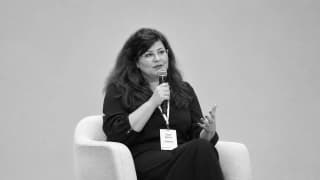
Gilles Mentré is the co-founder of Electis, a tool that allows secure online voting.
During the summer break, the impact.info team invites you to (re)listen to one of our episodes published this year.
This episode highlights the testimony of Gilles Mentré , co-founder of Electis .
Enjoy listening!
Frequently asked questions What is electronic voting and how does it work in the context of businesses? Electronic voting is a system that allows members of an organization to vote online in a secure and anonymous manner. In the context of businesses, it is used for professional elections, such as those for employee representatives, and facilitates employee participation, especially in sectors where it is difficult to travel to vote.
Why is it important to have a corporate democracy? What are the advantages of electronic voting compared to traditional voting? How does Electis ensure the security and verifiability of votes? What types of organizations can benefit from Electis's services? Florence Jaillet
impact.info journalist
Published on 18 August 2025
Transcript Audio in Français — text automatically translated· AI-generated transcript
0:00 Hello and welcome to the podcast for those who want to make a difference in their company. 0:08 Voting has always been an effective and concrete way to choose a change together 0:09 or to make a decision. 0:15 It's the ultimate tool of democracy, it can be found in all organizations, 0:17 whether formal or informal, as long as it is secure. 0:21 Gilles Mentré. 0:26 Thank you. 0:28 Hello Juliette. 0:29 So Gilles Mentré, I'm 47 years old and I'm one of the two co-founders of Electis 0:30 which is an innovative startup that offers a secure, verifiable voting platform 0:37 online. 0:44 So, we're obviously going to talk about Electis and how it works. 0:45 How does it work? Is it reserved for companies, specifically for CSEs? 0:49 What is it? 0:54 No, it's not reserved for anyone, and that's exactly how we built Electis with the idea 0:55 that having access to an easy-to-use voting platform, fully 1:00 secure and anonymous and entirely verifiable, will finally be a convenience that will serve 1:06 all sectors of society. 1:13 So there are sectors that today have an immediate need, I would say 1:14 almost that there are legal obligations that lead certain organizations to 1:18 have to conduct electronic voting. 1:23 As you mentioned, CSE elections, which are the elections of representatives 1:24 of employees in companies with more than 11 employees. 1:28 It's also, for example, in schools, if some of those listening have 1:31 children enrolled in schools, middle schools, high schools, the parents 1:36 as you know, elect their representatives to the school councils and educational institutions. 1:39 Since last year, it's possible electronically and so we are one of the major players 1:44 in this voting in educational establishments. 1:45 More generally, in companies, associations, federations, there 1:49 is a need to vote to gauge the feelings of members, the feelings of employees, the 1:52 feelings of all those who participate. 1:56 This corresponds to a general trend towards the horizontalization of our societies. 2:01 So, that's actually my next question. 2:03 What changes when you use your system, your tool to vote rather 2:08 than a more traditional vote among people who need to vote? 2:11 Yes, so first, why do we do electronic voting rather than 2:15 paper voting by putting a ballot in a box? 2:20 Well, as far as presidential and legislative elections are concerned, we just saw it, we don't have... 2:23 2:26 2:32 obviously no need for this Internet voting at all, except for a few special cases 2:36 when you're abroad, maybe tomorrow for people who have 2:40 difficulty getting around, there are a whole series of issues for people who are 2:43 excluded from voting and could vote with electronic voting. 2:45 But it's not about changing our system because there is trust around it. 2:49 On the other hand, for all the elections that are, we want to say, of lower stakes, 2:54 even if there is a stake, as soon as there is a stake, everyone 2:57 immediately demands a high level of security and that's normal. 3:00 But for these elections, we, for example, have been working with Neuilly-sur-Seine for 3:04 the past two years. 3:05 Well, there are regular consultations from the town hall so that citizens can 3:09 decide on very practical and daily matters of their lives. 3:14 And for that, we obviously need secure solutions. 3:16 And how are we different? I want to say from the dinosaurs, the old 3:21 electronic voting solutions that existed before. 3:24 Why did we say, 'this is not possible, we need to change 3:27 this system'? It's because today, there is no solution that combines three 3:33 fundamental factors. 3:34 The first is to be really simple to use. 3:37 The second is security, anonymity. 3:38 We must be absolutely sure that your vote can never be traced back to you. 3:42 We happen to use next-generation cryptography, what we call 3:47 homomorphic asymmetric, this is not a technical podcast, so I won't go further. 3:50 Just to say what it allows, it allows that the information that leaves your phone 3:51 or your computer is never individually decryptable again. 3:56 And then, the third thing, and then I'll finish, we want a vote that is verifiable end-to-end. 4:00 When you vote, why do we trust paper voting? And still, 4:03 there are many countries where we would be better off not trusting it. 4:04 It's because if you wanted to, you could spend your day next to 4:08 the ballot box, you would see your ballot in the transparent box, you would notice throughout 4:11 the day that your ballot was never altered or removed. 4:15 You would be present when the ballots are counted at the end and you would trust 4:20 the result. 4:23 Well, we do the same thing, thanks to blockchain, and again, this is not a technical podcast. 4:27 What blockchain allows is to have the same uniqueness of a digital object as 4:28 if it were a physical object. 4:31 These three things, ease, security, verifiability, are what we... 4:32 4:38 4:40 4:45 allowing to completely transform the relationship people have with electronic voting. 4:49 Can we talk about digital democracy in this case? 4:52 That's exactly what we want to build. 4:54 We want to build a digital democracy. 4:56 Look, we just had elections in Venezuela last Sunday, and it's 5:01 almost a counter-advertisement for what we do because Venezuelans vote electronically. 5:05 They vote on electronic voting machines, so it's not over the Internet, and we see 5:09 that the result has been denounced by many observers and actors 5:14 as being fraudulent. 5:15 Why? Because in the end, the government refused to provide proof of the votes. 5:21 When you vote on a machine, you vote electronically, there is a digital data 5:25 that goes out, and at the same time, we print a paper ballot that can be recounted. 5:29 And the government refused the data, so we can't do this recount. 5:33 We, with Internet voting, we can't do this printed paper ballot that we print, 5:36 but thanks to blockchain, we do the equivalent, we make a digital print that has the 5:40 same reliability as if we had made a paper print. 5:43 And it's even better than paper proofs because those, we won't be able to 5:47 conceal. 5:48 As soon as it's on the blockchain, we're talking about public blockchain, it's accessible to 5:51 everyone. 5:52 So, to stay a little focused on voting in companies, because that's 5:57 what you also propose, why do you think it's useful and even important 6:01 to be able to vote this way in companies? 6:03 It's very important because you can see that professional elections in 6:06 companies are elections that mobilize very few, very few employees and fewer 6:11 and fewer employees. 6:12 However, we need a corporate democracy, we need representatives of the employees 6:16 to discuss with management, to be able to bring up ideas, to be able to co-decide 6:21 on certain topics. 6:22 And that's the sense, we can clearly see, of all the evolutions in our societies. 6:27 As long as it was a ballot box vote, well, there was low engagement because it 6:32 required being available on a certain day, at a certain time. 6:34 It's very difficult in some sectors. 6:36 We, it turns out that the first industry we work with is all that 6:39 is maintenance, logistics, transport. 6:41 Because obviously, employees are all across France, on the territory. 6:46 How can they vote physically on the day? Well, thanks to electronic voting, 6:51 we allow them to make their voices heard. 6:53 Do you have examples in companies of this functioning that has ultimately borne fruit? 6:58 6:59 Of course. 7:00 I see it first, as I told you, in certain sectors where it was difficult 7:04 to vote in professional elections. 7:05 And thanks to our system, it becomes easy. 7:08 And the fact that it has to be done online is not a barrier. 7:14 We realize that thanks to the support we offer and that we allow the company 7:18 to provide, there is no such thing as digital illiteracy. 7:21 There are no employees who find themselves in difficulty. 7:24 There is even the possibility, if desired, to maintain paper voting in parallel. 7:29 We can vote in a hybrid manner. 7:30 If we really notice that there are employees who have a strong reluctance or difficulty 7:34 they will still vote on paper or we can even provide 7:37 an iPad in the company where they vote electronically, but perhaps in a 7:42 facilitated or assisted way. 7:43 So, we already see that it makes participation possible. 7:46 And then, we see that it applies to more and more subjects. 7:49 We have clients who start simply using us for professional elections 7:54 because that is what is mandatory by law and they realize that it is 7:57 very practical to use. 7:58 It mobilizes employees and they then use it for internal consultations. 8:03 It creates collective intelligence and we see that companies adopt it right 8:07 away. 8:08 Listen, my next question will certainly resonate with you as well. 8:12 The idea with our media Impact.info is to give a voice to those who 8:17 are eager to make a difference. 8:18 So, in your opinion, how will your actions change the game? 8:22 I think this demand for direct expression from each of us, as employees in 8:29 our company, as activists in our association, as voters, as citizens in our country, 8:36 this need for direct expression, without going through representatives who have become polarized, 8:43 who we can see, and this may be one of the lenses for analyzing the last elections, 8:47 who are no longer listening, who have disconnected from the concrete expectations 8:52 that exist. 8:53 It's not that they don't understand political positions, values, etc. 8:58 It's the concrete expectations, it's that beyond the issues of great philosophical debates, 9:06 there are many things that are not being done, that no longer exist. 9:08 The general desire is to find solutions that work. 9:11 So, what better way to find solutions that work than to consult directly 9:15 those who are grappling with these problems. 9:18 Therefore, we have a deep need to express ourselves directly in each of our organizations. 9:23 That's what we're building, a digital commons. 9:25 Impact.info, doing business differently. 9:29 We're going to conclude this interview with a question that concerns you. 9:33 So, 16 years old is the legal age in France to start your first business. 9:37 Did you know what you dreamed of when you were 16? 9:41 I didn't see myself as an entrepreneur at all. 9:44 That wasn't at all what I envisioned for myself. 9:46 That's the beauty of life. 9:47 As Leonard Cohen said, 9:51 life is what happens to you while you're busy making other plans. 9:54 No, I wanted to be a member of parliament. 9:56 I wanted to represent the nation. 9:57 I wanted to tackle the big public, political issues. 10:04 And then, along the way, I first became a civil servant, 10:07 so I supported the state from the inside. 10:09 And then I became a consultant in the private sector before starting this business. 10:13 I realized that this is not how you make things change. 10:17 Alongside our representative democracy, 10:19 we need to establish a direct democracy. 10:22 Thanks to Gilles Mentré, who is the co-founder of Electis, 10:25 a tool that allows for secure voting and is accessible to everyone. 10:29 You can find this interview on impact.info, in the CSR section, 10:33 which gathers all the episodes focusing on the challenges faced by leaders 10:37 who place responsibility at the heart of their business. 10:43 Doing business differently.