translate This article was automatically translated from its original Français version. Read the original
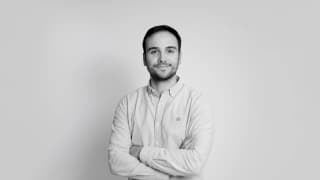
Nicolas Dufourcq has been at the helm of the French Public Investment Bank for 10 years. But what are the goals of this organization?
On the occasion of the summer break, the teams at impact.info invite you to (re)listen to one of our episodes published this year.Nicolas Dufourcq , CEO of BPIfrance .
Enjoy listening!
Juliette Boulegon
impact.info journalist
Published on 15 August 2024
Transcript Audio in Français — text automatically translated· AI-generated transcript
0:00 Hello, it's Juliette and Jeanne, and welcome to the podcast for those who want 0:09 to shake things up within their company. 0:12 BPI, the Public Investment Bank, was established 10 years ago to help 0:17 businesses, big or small, to make their projects viable. 0:21 Nicolas Dufourcq has been at its helm for this decade and reflects on the goals of 0:26 this organization. 0:27 Hello Nicolas Dufourcq. 0:29 Hello. 0:30 Thank you for being with us. 0:31 So let me introduce myself, I'm Juliette Boulgon, I work for the media Impact.info and I'm 0:36 joined by another journalist. 0:39 My name is Jamie Thivier from Herzen Radio. 0:41 What is your job? 0:43 What is the job of the CEO of the Public Investment Bank? BPI is a house of entrepreneurs, 0:49 so we all have a bit of an editor's job, 0:55 an entrepreneur's job. 0:57 They bring us their manuscripts, we see if we can publish them, we edit them and 1:01 then we do everything to ensure they have as wide an audience as possible. 1:04 We are a bit like an entrepreneur's impresario, that's our job, with all 1:08 the tools that include financing, investment advice, guarantees, everything that 1:15 supports a creator. 1:17 What is BPI? 1:19 BPI is that, in the usual categories we would say it's a large French bank, 1:25 a major financial institution that masters all the trades of finance. 1:30 These are very complex jobs, in fact, they are jobs in which you become 1:35 good over time. 1:36 They are mostly experienced people and it's also, because it's not just that, 1:41 a house, I've always said a psychobank, meaning a house that deals with the 1:46 very question of the entrepreneur's will and their desire to fulfill themselves. 1:51 So we encourage them. 1:52 How many times do we see entrepreneurs, we tell them you can do more, you can 1:56 do better, you can do even more, you can think big, you can do it. 2:02 In fact, we are here to give courage, ambition, self-confidence and to enhance, in fact, 2:11 people a bit. 2:12 Many people are too shy. 2:14 How does BPI help disabled people find employment? 2:18 The possible answer to the question, first we recruit. 2:20 Within BPI? 2:21 Within BPI of course, of course. 2:23 There are visible disabilities and invisible disabilities. 2:26 Obviously, 80% of disabilities are invisible. 2:29 So there are a lot at Bpifrance, naturally. 2:32 Then we promote the subject to our entrepreneurs, ultimately. 2:38 So we talk about it a lot, we hold events, we sponsor events dedicated to 2:43 the very question of disability. 2:46 Since we are on the board of about 600 companies, we have the opportunity 2:51 600 times a year at least to say that it's an important issue and that we need to take care of it. 2:58 And finally, we finance a number of startups that are in the field of disability, 3:04 around technology, that's for sure. 3:06 And then you were telling us about this desire to encourage entrepreneurs to launch their 3:12 projects, to create their projects. 3:13 How do you support entrepreneurs in capital? 3:15 In capital, we start by putting in a little, then medium, then it's 3:19 like a daisy. 3:20 Depending on the entrepreneurs, are there stages or how do you define that? 3:26 Of course, of course, but it's not a question of age. 3:28 It's a question of project maturity. 3:30 So there are projects where we start with a first convertible bond of 100 3:34 000 euros, then we go up to 500,000, then 1 million, 1.5 million, 2 million. 3:40 Sometimes it takes years to raise 5 million euros in a company. 3:45 And sometimes it's much faster. 3:48 For example, last week we approved in a committee the fact of putting several 3:52 tens of millions of euros into a project developed by a 27-year-old guy. 3:57 It's a project for making chicken-flavored steaks, let's say chicken 4:03 steaks, but without chicken. 4:05 So we're going to build a factory, so that's a lot of capital. 4:08 And he's 27 years old. 4:09 And he's perfectly surrounded, he's very good. 4:11 Precisely, this question of being surrounded, how do you support entrepreneurs 4:16 from a human perspective? 4:18 First of all, we talk to them all the time. 4:20 They're a bit like a violinist who has a little dip in morale, he goes to see his luthier. 4:24 He tunes his violin, we talk about it, he spends the afternoon at the workshop. 4:28 So the entrepreneur does the same with us. 4:30 Then we send consultants. 4:31 Next, we created 150 schools for entrepreneurs that we call accelerators. 4:35 So they come to participate in our schools. 4:38 Some last a year, others two years. 4:40 It's not every day obviously, they don't have the time. 4:42 But for two years, they will be in a cohort with other entrepreneurs who 4:46 they become their friends. 4:48 With WhatsApp groups, parties, a little trip abroad, and a lot 4:52 of advice, a lot of consulting. 4:54 And that's super powerful. 4:56 Super, super, super effective. 4:58 We don't leave them alone, that's the battle. 5:00 What are you doing for ecology? 5:03 For ecology, we do a lot of things. 5:06 Since we said we were a climate bank. 5:08 For many years, for about six years now. 5:11 First, there's what we do for ourselves. 5:13 The way the bank operates, the use of small lamps, cardboard cups, 5:17 electric cars in the fleet, all that goes without saying. 5:20 A bank doesn't consume much carbon. 5:22 On the other hand, our clients, that's huge. 5:24 Our clients, we are ultimately the advocates of their transformation. 5:28 So we do mass door-to-door to reach them. 5:31 Tell them, you need to change, you need to move. 5:34 You're not alone, we'll do it together. 5:36 It will cost a bit of money, we will finance it. 5:39 It costs expertise, we will provide you with a study office, a consultant. 5:43 We will measure your greenhouse gas emissions, your carbon footprint. 5:49 And then we won't let you go. 5:50 In fact, that's what we do. 5:52 So that's what we need to remember. 5:53 Mass door-to-door, initially, for 20,000 companies. 5:57 We need to have completed this before 2027, which has started, we've done 2,000. 6:04 How do we change the company so that these carbon emissions are first reduced, then canceled? 6:10 We know it's one of your topics, to decarbonize, but also to reindustrialize. 6:16 When we say that, it seems a bit contradictory. 6:20 Can you explain how we can do both at the same time? 6:23 We have a chance, it's that ultimately, having destroyed half of our industry, 6:27 we destroyed the most polluting part of the industry. 6:30 Now that we're rebuilding, we're setting up factories that are actually clean rooms everywhere, electrified. 6:35 The energy used is not carbon-based. 6:39 The buildings are brand new, so they are insulated. 6:42 The products we produce are products that didn't exist before, which have been eco-designed. 6:48 On the contrary, it's precisely because we skip a step that we can promise that our reindustrialization is inherently green. 6:57 I go further than that, meaning that BPI will not finance, outright, projects for factories that are not. 7:04 At least, that's clear. No one will do it anymore, by the way. 7:07 There are banks that still finance large projects abroad, very far from France. 7:12 We can get into the details. There's coal, there's oil, there's natural gas. 7:18 Natural gas is perfectly acceptable in the transition phase. 7:21 In any case, we can't transition the Western productive fabric without natural gas. 7:29 Natural gas is incomparably less polluting than oil and coal. 7:35 Coal is coming to an end and no one is financing it anymore, that's for sure. 7:38 Oil, well, there is still some, not at all at BPI France, but a few financings for very distant projects 7:45 in the major French financial institutions. 7:48 And then there's natural gas. And it's perfectly legitimate to finance natural gas. 7:53 We shouldn't be completely naive. 7:56 Would you have an example to give us of a project that has been the most ecologically impactful for you 8:03 and that you were able to realize? 8:05 There is a large market share in financing photovoltaic and wind energy in France. 8:10 We are very big. 8:11 So the large parks you will see in Noirmoutier, Honfleur, especially the Côte de France, in Fécamp, 8:18 are financed by BPI. 8:20 We finance a lot of photovoltaics too. 8:22 We finance a lot of methanization. 8:24 We finance a lot of biomass. 8:26 We finance a lot of electric batteries for electric vehicles produced in France. 8:32 We finance hydrogen a lot, electrolyzers. 8:35 Copper recycling, very important. 8:37 All of this is in BPI's plans. Not just in plans. In the accounts! 8:42 It's a bit of all the projects you set up, that you realize. 8:45 I would like to hear an example on which I can concretize what you were saying. 8:51 The one I can mention is the factory I inaugurated the day before yesterday. 8:54 It's called Agronutris. It was in Retel, which is in the Ardennes, north of Reims, on a large industrial wasteland. 9:04 We built a factory that will produce, that is now producing, 9:10 feed for fish farms based on insects. 9:18 It's the soldier fly that we raise, which produces larvae in large quantities, 9:24 since the flies produce larvae almost every day. 9:26 The lifespan of a fly is 15 days. 9:28 For 15 days, it will produce enough to cover the entire planet with identical flies. 9:34 It's incredibly productive. 9:36 And we collect those larvae and turn them into a kind of flour that will feed the fish. 9:43 Initially, what do we feed the fish with, so we can compare? 9:46 It was mostly animal meals. 9:48 They produce a lot of carbon emissions. 9:50 And in that, we invested 30 million euros. 10:00 What did you want to do at 16, Nicolas Dufourcq? 10:03 What is your ambition to do everything you do today? 10:08 Listen, if there are young people listening to me, they need to know that at 16, you absolutely don't know. 10:13 One fundamental thing is that life is full of irrationalities. 10:17 Full of surprises, just unpredictable. 10:21 So, don't bother trying to predict what you will be, right? 10:26 In any case, you will be surprised by the irrational. 10:29 So, let yourself be taken by that, on the contrary. 10:33 So much so that when I was 16, I wanted to do a lot of things that were totally incompatible with each other. 10:40 I wanted to go to art school. 10:47 And at the same time, I didn't want to be alone in an artist's studio at all. 10:51 I wanted to be an art publisher, a painting publisher. 10:55 And that's how it started. That's why I went to business school. 10:58 Because I thought, after all, as a publisher, you need to know how to count. 11:03 Since I came from a family where we didn't count much, as they were literary types, I went to business school. 11:10 That was the ambition. 11:12 Yes, absolutely. 11:13 Then I looked for an internship in a printing house, because I thought, as a publisher, you need to know how to print. 11:18 I couldn't find a printing house that would take me as a worker intern. 11:21 So, I did my worker internship in a pharmaceutical laboratory, I remember. 11:25 Then, in my second year, I looked for a publisher to take me on as an intern. 11:29 And I couldn't find one. 11:31 It was a different France back then. 11:33 It had nothing to do with it. 11:35 So, I ended up doing something else. 11:37 And then, little by little, I completely forgot that I wanted to be a publisher. 11:43 And you got to a point. 11:49 Thank you. 11:50 Thank you very much. 11:51 And let's realize all our dreams. 11:54 That's very, very good. Thank you very much. 11:56 A big thank you to Nicolas Dufour, who has been the director of Bpifrance for ten years. 12:01 And you can find this interview on our website impact.info, 12:06 in our Entrepreneurship section, which brings together all the episodes addressing the challenges faced by leaders who want to undertake differently. 12:16 This was Impact.info. 12:18 Undertake differently. 12:23 To learn more, visit impact.info. Embed this interview on your site
Show this player directly on your site to share the interview with your audience.
Copy embed code View generated code
![[Rebroadcast] Why was Bpifrance built?](/_next/image?url=%2Fuploads%2F2023%2F12%2FNicolas-Dufourcq.png&w=1920&q=75)