translate This article was automatically translated from its original Español version. Read the original
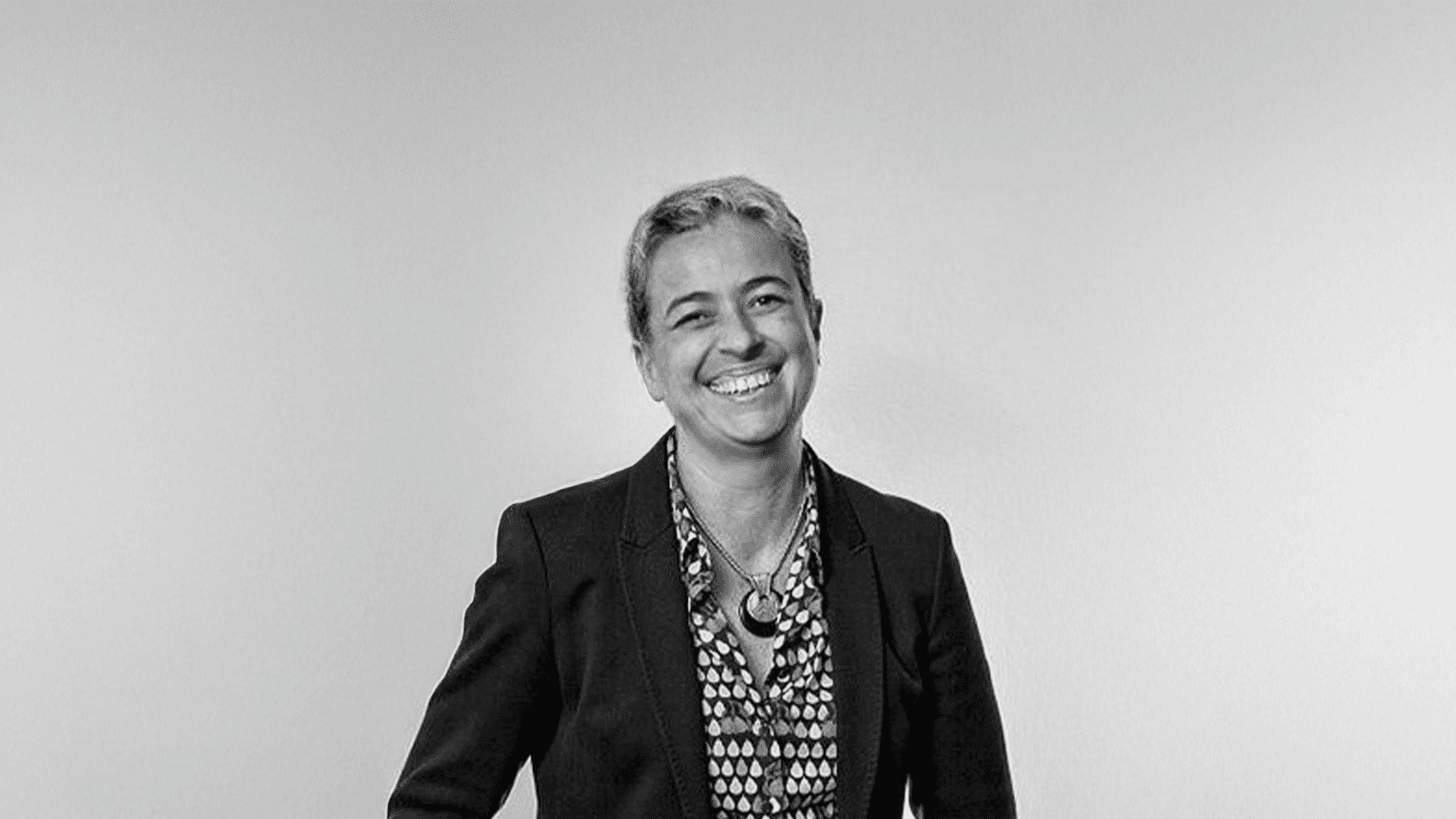
Mercedes Valcárcel is the general director of the SpainNAB association, an advisory council for impact investments in Spain, a financial solution that allows companies to leave a mark on society by providing capital to entities that want to generate a positive social or environmental impact.
Beyond companies with a social background, any company can contribute its bit to society. One way to do this is through impact investments. “The most important active element for achieving change is companies. It is crucial that they are the ones promoting positive social or environmental actions and that they have sufficient funds to carry out these activities” , explains Valcárcel.
For the director of the association, these actions can also become a differentiating factor that serves as an extra hook to attract young and committed talent.
María Díaz Valderrama
impact.info journalist
Published on 3 April 2025
Photo credit — D.R.
Transcript Audio in Español — text automatically translated· AI-generated transcript
0:00 Impact.info, another way to undertake. 0:07 Good morning, welcome to the podcast for entrepreneurs 0:10 who want to change things, starting with their own companies. 0:14 With them, they can, for example, bet on a new economic model 0:18 that defends investment with social impact. 0:23 I am Mercedes Valcárcel, I am 56 years old, I am from Madrid, Spanish, 0:29 and I am the general director of the association SpainNav, 0:33 which is the advisory council for impact investments in Spain. 0:38 Could you tell us a little more about what the mission of SpainNav is? 0:42 Well, what we seek at SpainNav is for the capital that is dedicated 0:48 to investing in companies to be directed towards investing in companies that generate social impact 0:57 and, within this, to be able to mobilize more funds to finance 1:04 these types of initiatives and support these initiatives in their visibility 1:11 and in having clarity about what it means to generate positive impact, 1:17 whether social or environmental, so that they can measure it adequately 1:21 and differentiate themselves from other companies that do not do so. 1:24 In what way would you say that SpainNav is an actor trying to change things, 1:29 that wants to transform society? 1:32 The most important active element in today's society to achieve changes 1:38 is basically companies or entities, so it is important 1:45 that these are the ones promoting positive social or environmental actions 1:51 and that they have sufficient funds to carry out these activities. 1:57 We are the association of entities that provide capital to this type of company 2:02 so that they can really launch new lines of action, grow and scale, 2:10 operate in new geographical areas and increase the positive impact they are already generating. 2:17 You mentioned earlier that SpainNav is the representative in Spain of GSG Impact, 2:22 the main global platform for seeking impact investment, 2:26 which encompasses more than 40 countries and the European Union. 2:30 I don't know if you could explain to us, simplifying, what exactly impact investment consists of 2:35 and whether it is a new concept or something we have been seeing for some time. 2:42 The concept of impact investment is relatively new, 2:46 we consider it new, which I think can be regarded as a concept that is around 10 years old, 2:53 but the content, that is, investors who seek, with their investments, 3:01 not only to obtain positive financial returns but also to generate or support entities or companies 3:09 that have a positive social impact and generate positive social changes. 3:15 This is a reality that has been happening throughout history. 3:19 As a clear focus and grouping of entities that start to recognize themselves as such 3:28 and that really want to go down this path, it initially emerged in the late 1990s, 3:38 especially in the Anglo-Saxon sphere, because they saw that social needs were very high 3:45 and that really only with donation models or non-repayable funds. 3:51 not all problems could be solved. 3:54 And we started to migrate towards a model more focused on financing and support 3:59 for all these social enterprise initiatives. 4:02 It was also around that time that the concept of social enterprise was created. 4:06 And what are the different actors in the economy that you support with your services? 4:13 Well, this is honestly infinite. I would break it down into two levels. 4:19 Firstly, we as an association support both impact investors, 4:28 who basically, as I mentioned before, are wealth and impact fund managers, 4:34 also among our members are academics, universities, and business schools 4:42 and consultants who are dedicated to supporting the ecosystem. 4:47 And lastly, very interestingly in our associations, there are also actors from the social ecosystem itself. 4:52 We have members who are foundations or companies that have their social focus as their main mission. 5:01 That said, if we really look at who these actors are, that is, within the social ecosystem, 5:08 what types of companies or entities are being financed, here is what I mention that the universe is infinite 5:15 because in legal forms you can find very diverse types. 5:21 There are foundations, there are associations, there are other entities of the social economy, 5:28 such as labor insertion companies, special employment centers, 5:32 social enterprises as such, that is, companies that prioritize their social mission over pure financial profitability. 5:41 So, in legal forms, there is great diversity. 5:44 In areas of activity, there is also great diversity. 5:47 You can find sectors of activity such as culture, environment, issues closely related to the elderly, dependency, health, 6:00 of course, sustainable mobility, alternative energies, more social issues related to support and generation of services for vulnerable groups. 6:12 It is very diverse, which also makes it exciting because we have a very high capacity for impact among our members in different areas. 6:23 There is also a very strong line now here in Spain supporting what they call the empty Spain, 6:30 supporting more rural areas, there is a huge range of types of companies. 6:40 A company that has not yet been interested in this impact investment, why should it consider it, why should it be interested in this type of investment? 6:51 I think it is important to know what impact you want to have in your environment. 7:00 In my opinion, and this is already a personal opinion, at an ethical level it is important to give back to society what it is giving you. 7:06 You are working in an environment with regulations and structures that allow you to really generate the benefits you have 7:15 and in that sense it is important to be able, in some way, to compensate this society for that ease of work that remains. 7:28 That would be on the ethical aspect. 7:29 On the more purely practical side, in some points there is an element of risk reduction. 7:35 Supporting certain types of initiatives will reduce your risks and with that the volatility of your company's value. 7:45 There is also now a very important element that I find very interesting, which is talent retention. 7:52 How young people prefer to work in companies that have a purpose. 7:57 So, when you enter this path, you are generating lines of action and an internal culture that will allow you to retain that talent. 8:10 And then I think that, lastly, it is another way to make your investments profitable while also generating a positive social and environmental impact. 8:30 In Spain, 18 years is the legal age to create your own company. 8:34 Mercedes, at 18, could you imagine working on something like that? What were you dreaming of back then? 8:42 I was very interested in financial matters due to family tradition because my father worked in the sector and I had just started studying Law and Business. 8:54 I really enjoyed studying and to be honest, I imagined myself working in the financial field and in the stock market. 9:03 At that time, social investment topics weren't even mentioned, we're talking about the year 86, they didn't exist. 9:15 And the truth is, I imagined myself working in the stock market a bit with the imagery of that time of a financial institution executive, but not at all working on social issues. 9:32 So I admit that being able to have arrived here has been a luxury for me because regardless of the personal satisfaction from the social impact generated, I have really learned a lot and have a lot of fun. 9:50 And the truth is that being able to combine the very positive impact that the financial sector has on economic growth, thanks to the allocation of resources to the most efficient entities, with the social impact it can generate, seems like a privilege to be able to work in this sector. 10:11 Thanks to Mercedes Valcárcel, director of SpainUp. You can read this interview on the website impact.info. 10:20 Another way to undertake. Embed this interview on your site
Show this player directly on your site to share the interview with your audience.
Copy embed code View generated code