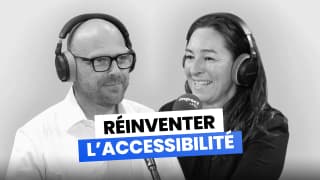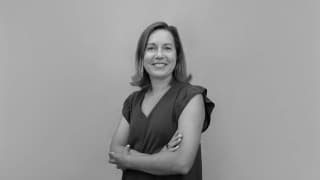
Have you ever wondered whether those horrific photos of cancer and amputation on cigarette packets actually make any difference? Sophie McGannan at French charity VIF answers that and much more in this episode.
Not many of us live quite as healthily as we’d like to, but the challenges to a healthy lifestyle tend to get bigger if and when our economic and social circumstances get worse. And that can tip us into a vicious spiral where health declines and with it opportunities for work and general prosperity.
French charity VIF was set up to interrupt that spiral; to support people to make healthy life choices, not through fear or instruction, but by ‘nudging’ them in the right direction. And those nudges are the fruit of scientific exploration of people’s situations, needs and desires; and marketing techniques!
Listen to Sophie McGannan talk about the difference VIF has already made, and the organisation’s hopes for the future.
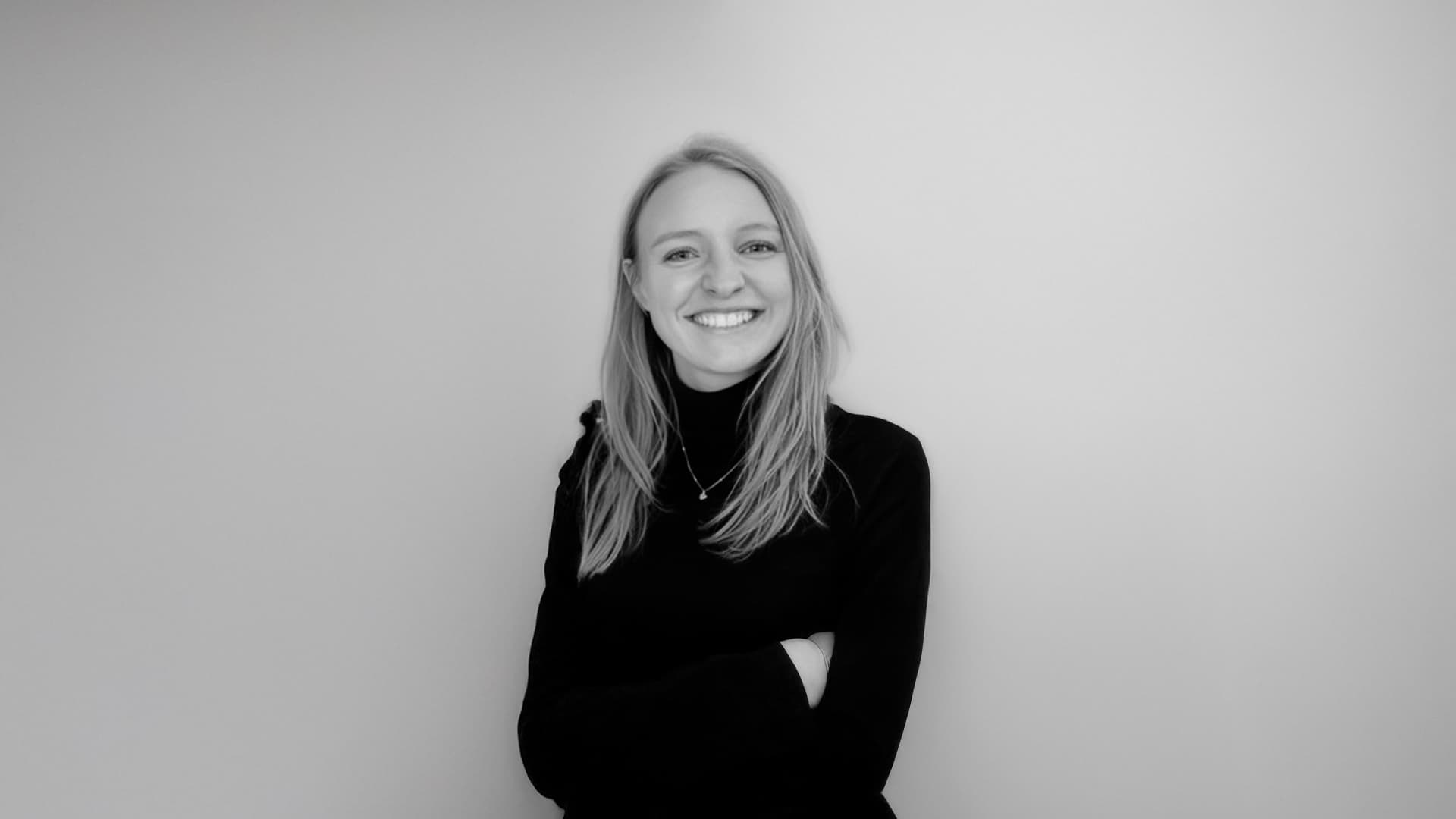
Vanessa C. Stone
impact.info journalist
Published on 13 May 2026
Photo credit — VIF
Transcript Audio in English· AI-generated transcript
0:00 When it comes to smoking, healthy eating, exercise, anything that tries to scare people doesn't work. 0:12 Hello and welcome to Impact Info, your positive podcast. 0:16 We often explore solutions to broad societal or environmental issues, 0:21 but today we're looking at perhaps the most fundamental factor in any effort, 0:26 the health of each of us, regardless of income or background. 0:31 My name is Sophie McGannon and I'm Head of Development for the Vivants En Forme programme in France. 0:38 Hello Sophie, welcome to the podcast. 0:40 Hi Vanessa. 0:41 So, VIF is based in northern France and in French the word VIF means sort of vibrantly alive. 0:48 So it's a uniquely perfect acronym really for your health programme Vivants En Forme or Let's Live Fit and Healthy. 0:57 But aside from that sort of noble and important ambition, can you give us an overview of what you actually do at VIF? 1:07 Yeah, so VIF's main mission is to support towns and cities to put in place health actions for their citizens. 1:16 And as you said, regardless of their background, wherever they're from, whatever their income is, the goal is to support them to live healthily. 1:24 And we do that using a methodology that's called social marketing and nudge to make small changes step by step that can last long term and can keep going. 1:36 Okay, and do you have a focus on a particular sort of section? 1:40 We work with the whole city, so it depends on what the town or city tell us they want to work on. 1:46 But our main focus is families and children and also people who are living in more difficult circumstances, struggling to pay the bills at the end of the month, put food on the table, as that's really our main focus. 2:00 You mentioned marketing and nudge social marketing, I think, and they're not terms that we often hear in the field of preventative health care. 2:10 How do you use marketing tools to affect behavioural change in people? Because you're not getting them to buy things. 2:18 Yeah, it can sound a bit strange when we're talking about health to talk about marketing, but it's actually using what we know from traditional marketing to encourage behaviour change. 2:28 So marketing shows us that by sending out this message or that message, we can influence how people buy things. 2:36 We can actually do the same thing to influence how people behave when it comes to their health. 2:41 So rather than telling everyone, eat five fruit and vegetables a day, everyone knows that. 2:47 That's not an attractive way to get them to do it. 2:50 What we can do is look at what really matters to them. 2:52 Is it their health or is it something else? Is it their budget at the end of the month? 2:57 Is it when you're a child, colours, taste, texture, doing what your friends do? 3:02 So it's really using those tools to nudge people in the right direction. 3:06 And so how do you go about finding that out? 3:09 That's a long process. So we spend about six months when we're putting together a new action or a new tool in a specific health field. 3:18 We spend about six months studying the population. What are their needs? 3:23 What are the barriers to the behaviour that we want to achieve? 3:27 And what are the motivators? That's the main thing. What motivates people? 3:30 So we spend a long time studying that with the people concerned, but also with all of the actors around them in the cities. 3:37 And also a scientific background when it comes to our committee, our board of scientific members who can help us look into more high level studies of that kind of behaviour. 3:46 And so do you meet people? Do you go out and interview people sort of face to face? 3:51 Yeah, absolutely. We spend a lot of time talking to people about all sorts of random things. 3:56 Because when it comes to health, there's so many factors that matter to people. 4:01 And you really need to talk to people about what really does matter. 4:04 If you're looking at something like stopping smoking, for example, is it the little picture on the packet that actually makes a difference to someone? 4:11 Or is it thinking about their budget? Is it thinking about the smell on their clothes? Is it thinking about their children? 4:19 It's really what matters to people that we've tried to find out. And that goes by talking to them. 4:24 And just, I mean, this is my curiosity, because I've always wondered about those horrific photos on cigarette packets. 4:30 Is it efficient in your experience? 4:31 No. Scare tactics, when it comes to smoking, healthy eating, exercise, anything that tries to scare people doesn't work. 4:41 It turns people off the other way. And it makes people detach from the issue and think that's not me, that's not my problem. 4:50 And so no, it doesn't work. 4:52 So clearly your approach is scientific. Can you share some of your results? 4:59 Yeah, so the program itself was actually born out of a study that took place here in the north of France in 91, before I was born. 5:09 But it was a study that lasted from 91 to 2004 and looked at, does this social marketing and nudge methodology have an impact on reducing childhood obesity? 5:20 So that study took place and then we tried to renew those studies periodically. 5:25 We had one from 2008 to 2015, which showed that we could reduce childhood obesity. 5:31 We reduced it by 5% across the cities that were members of the program. 5:36 And we've just finished another study on behavior change that took place from 21 to 24. 5:43 So we'll be publishing the results of that really soon. 5:46 And was that focusing on obesity? 5:47 That was focusing more on health behavior as a whole. 5:51 So what kind of behaviors do families use when it comes to eating, exercising, screen use after COVID? 6:00 That was a big subject that our cities wanted to work on. 6:03 So we asked populations what are their behaviors? 6:06 So do you focus on physical and mental health? 6:09 Yeah, we try to steer away from pure medical mental health, because that's something that needs to be taken into account by a professional. 6:19 And there are many brilliant organizations that work on that. 6:22 In the field of prevention, we're more looking at well-being and preventing future heavy mental health issues, or at least directing people in the right direction where they can get proper help. 6:33 It's very important, very complimentary, really. 6:36 Because the full-on medical follow-up tends to be follow-up, doesn't it? 6:41 It tends to be kind of after the event. 6:43 Yeah, it's more curative. 6:45 And we're really looking at trying to prevent those problems happening in the first place. 6:49 Yeah, yeah. 6:51 So VIF started life, as you say, back in 1991 and in northern France. 6:56 But I think you now cover the whole of France, don't you? 6:59 Yeah, we've got 300 cities across the whole of France that visit the program. 7:03 And so do you have your own staff everywhere? 7:07 Yeah, that's one of our big ambitions for the coming years. 7:10 So we've got one person over in the Reunion Islands who's managing our cities that are members over there. 7:16 The rest of us are in Lille, and we have one person in Brittany managing that little corner of France where it's quite far to go from Lille. 7:26 And the goal for the coming years is to have people in different areas across France. 7:31 But what we do is work directly with the local actors working in the cities. 7:36 So we've got representatives of the program in every one of the 300 cities who work for the cities themselves, 7:43 but take the role of the VIF project manager within their own city. 7:48 Right, right. Yeah, I see. It's good, good approach. 7:52 It allows us to reach more people, yeah. 7:54 Yeah. And so clearly that key concept is a network supporting families. 7:59 Supporting them to make good health choices. 8:03 So you have VIF yourselves, you have your local actors that you just mentioned. 8:10 Are there other entities, other people involved? 8:13 Yeah, absolutely. Every city has a whole network within that city. 8:18 So we have the local actors that are kind of the go-to person for us in each city. 8:23 But then within their city, they're responsible for mobilizing a whole network of people. 8:30 And that could be public, private, charities, families. 8:34 But the idea is that if we want sustainable behavior change, we have to mobilize the whole ecosystem. 8:41 And the messages need to be coming from everywhere. 8:44 We can't just, us as a charity, come in and say, this is what you need to be doing. 8:49 It has to be a systemic approach. 8:51 Impact.info. Doing things differently. 8:56 Now I have maybe a surprise question. It depends whether you've listened to previous episodes. 9:02 But my question is a quick flashback to you as a teenager. 9:07 What would 16-year-old Sophie McGannon think about the work that you're doing now? 9:14 That's a good question. 9:17 I think she would be proud of the work I'm doing now. 9:21 My dad has a company in the UK called Wellbeing People. 9:26 So I've grown up in the wellbeing sector, in the world of health and prevention. 9:32 And I don't know if at 16 I wanted to work for a charity in France. 9:37 I don't think I even knew that was an option. 9:39 But I'm really glad that that's where life took me. 9:43 And it's amazing to do a job where you can go out and meet people on the ground 9:50 and see how it's impacted them and changed their life and their family's lives. 9:55 So, yeah, I think 16-year-old Sophie would be proud of 30-year-old Sophie. 10:01 That's great. That's great. Yeah, making a real difference. 10:04 Well, Sophie McGannon, thank you very much for coming on the podcast. 10:08 Thanks, Vanessa. Bye. 10:09 That was impact.info. Doing things differently. Embed this interview on your site
Show this player directly on your site to share the interview with your audience.
Copy embed code View generated code
Paste this code into an HTML/code block on your site: “Custom HTML” on WordPress, “Embed a Widget” on Wix, a “Code” block on Squarespace.