translate This article was automatically translated from its original Français version. Read the original
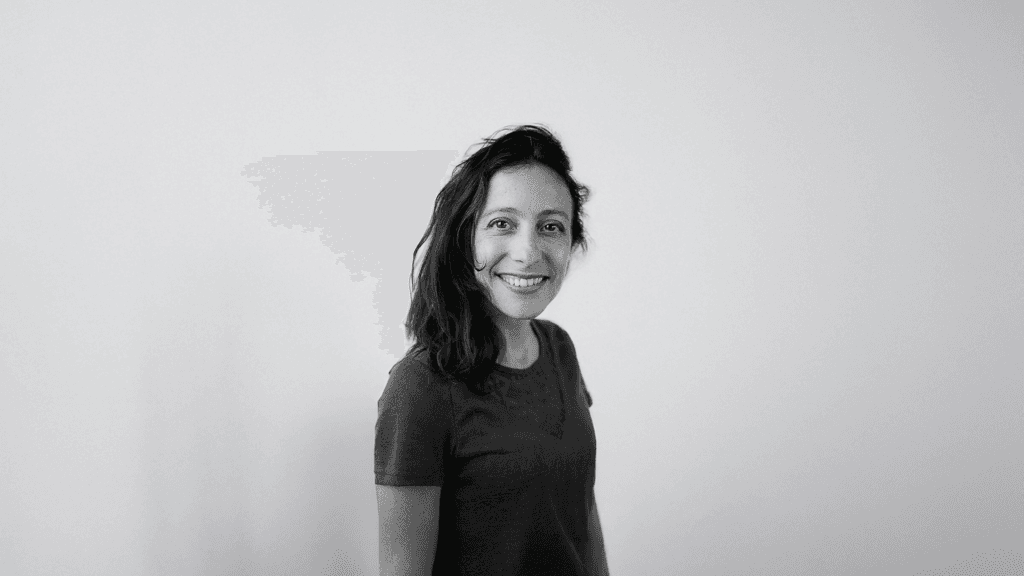
Mona Hitti is the General Director of the Réseau Môm'artre association present in Île-de-France, Nantes, Marseille, and Hauts-de-France, whose mission is to reveal each child's potential through artistic, civic, and inclusive education, which is one of the essential levers to reduce inequalities.
During the summer break, the teams at impact.info invite you to (re)listen to one of our episodes published this year.
This episode highlights the testimony of Mona Hitti , co-founder of the Réseau Môm'artre association.
Enjoy listening!
Florence Jaillet
impact.info journalist
Published on 11 August 2025
Transcript Audio in Français — text automatically translated· AI-generated transcript
0:00 Hello and welcome to the podcast for those who want to make a difference 0:09 within their company. 0:11 Giving access to artistic practice, culture, and soft skills to children 0:16 is a major benefit that will support them throughout their lives, especially 0:21 for those who are the most distant from it, particularly for reasons of precariousness. 0:25 Mona Hitti. 0:27 Mona Hitti was born on October 20, 1978, and it always has a little effect on me because I had 0:34 the chance to be born in Rio de Janeiro, Brazil. 0:36 My parents were expatriates for a few years, so I am of Brazilian nationality, 0:40 Franco-Brazilian. 0:41 We lived there for a few years and then returned to France. 0:45 I am currently the general director of the Réseau Môm'artre association. 0:48 So simply put, what is Réseau Môm'artre? 0:51 Réseau Môm'artre was born 23 years ago in Montmartre, so the first branch, the 0:56 welcome place was in the 18th in Montmartre. 0:58 It has spread well since today we are present throughout the Île-de-France, 1:02 in the Pays de la Loire in Nantes, in Marseille we have many activities and we are 1:06 expanding into the Hauts-de-France. 1:07 So today we are a national association whose mission is to reveal 1:12 the potential of every child through artistic, civic, and inclusive education. 1:17 In practical terms, this means allowing as many children as possible, especially those 1:22 who do not have access to this in their daily lives, to be in contact with artistic 1:28 practice, the arts, and culture. 1:31 The real conviction is that this is one of the levers, it's not the only one, we don't think 1:35 it's the only solution, but it is truly one of the important levers and we are not 1:38 the only ones saying this, to reduce inequalities. 1:41 Culture is very broad, it includes books at home obviously, but access 1:46 to everything that is artistic expression, whether it be live art, visual art, it 1:50 allows for the development of those famous soft skills that we need so much 1:55 and that today's children will need so much tomorrow, and if we don't have 1:59 access to it, then inequalities deepen between those who, particularly during after-school time, 2:04 have access to all of this and others. 2:05 So we have welcome places, concretely, we pick up the children after 2:08 school, we take care of them until 7:30 PM, they are children aged 4 to 11 years and then it's 2:13 the meeting with artists who come to lead projects with the children over several 2:17 sessions, it's not just a one-off, with an exhibition time at the end, and so 2:22 we have several branches in this format, but we also carry out many artistic projects 2:26 that we call 'Or les murs', so we go into schools to 2:30 carry out projects, in nurseries too because we have deployed many activities 2:34 for almost ten years now with young children, there is really 2:37 An awareness, we've heard it in the media recently, that the early childhood sector is complicated and we come in, we intervene as a complement to the educational team in nurseries to bring artistic awakening to very young children, in relation to the program of the first 1000 days, this idea that really a lot of things are at play from that age, and then we also go into colleges to intervene during lunch breaks for example to carry out artistic projects with young people, we are also a training organization, so we also train education and animation professionals to enhance the skills of professionals in the sector. 2:41 And nurseries close early, childcare options close early, do you offer a wider range of proposals? 2:44 Completely, and then there is something very particular, it's that we work and really we monitor this, I would even say like watching milk on the stove, on social diversity. 2:48 Often I tell myself that in fact we show and really we prove every day that this story of living together is possible, and our openings, I find that they are magical every time, it's that we have both the hipsters from the neighborhood who have put their children there because it's great and they see the artistic quality. 2:53 Families who have been referred by social workers, by educational success programs because it's a child in difficulty, well, not at all the same context and all these people meet, it's also about creating connections between parents, we do a lot of support for parenting and the connection between parents is great, and children who otherwise would never talk to each other, who actually meet, we create places of meeting somewhere and in the end it's all about social ties. 2:57 I think there is something like that in our particularity because indeed we create places that do not exist in this form, with this social diversity, with this artistic requirement too, because we are an associative approach, so entrepreneurial, so we always want it to be better, we have a work on an artistic charter, well, I would say that this is the difference, with very constrained means sometimes, municipal proposals, at the same time it's completely accessible or even free for certain audiences, so that's a bit of our particularity and indeed we have expanded over the years, we are often told that we do a lot of things, but in fact the needs are there, so today indeed we intervene from nursery to college, but always with a line that is artistic and civic projects, there is also this civic dimension that is important, so done through diversity, but the projects themselves will integrate a civic dimension, we are not just going to do a photography project, linocut or theater, but we are going to do a photo project on the issue of gender equality, or on the issue of school bullying, obviously we don't approach it head-on like that, but we will say hey, let's question. 3:01 3:05 3:10 3:11 3:16 3:18 3:22 3:25 3:26 3:30 3:33 3:37 3:41 3:42 3:45 3:49 3:53 3:57 4:01 4:05 4:08 4:12 4:16 4:21 4:27 4:32 4:36 4:40 4:45 4:51 4:55 4:58 5:05 5:10 5:14 this question with children and so the speech is freed, it's also spaces 5:18 in the pedagogical pillars of our pedagogy, the welcoming of emotions, positive pedagogy, 5:23 so it's also spaces in relation to the constrained school time, and it's 5:28 perfectly normal, that is to say there is a logic of evaluation, we really position ourselves 5:31 in the field of popular education, where there are no good and bad, 5:35 there are no grades, and so it's true that the speech is freer, it's neither the 5:39 family time which is very diverse, as I said, depending on the families, so we 5:43 talk about the third time of the children, so we can address questions of 5:48 citizenship that are complicated to address elsewhere, and that's true that it's a 5:53 very Montmartre specific feature. 5:55 What was the origin of the creation of Montmartre? Was there an event? Was there a life experience? Was there 5:59 an observation, a questioning, a meeting, a coincidence? 6:01 Well, Montmartre is 23 years old and I am not the founder, like many associations 6:04 that have been around for a few years now where there are transitions of leadership. 6:10 Chantal Minguenet who founded the association was a single mom, so the starting point 6:13 is very marked, and we have it in our DNA, she was a single mom with her 6:17 two daughters and she couldn't find childcare solutions that matched her desires, and then 6:23 indeed the extended hours, because we are open until 7:30 PM, we go 6:28 pick up the children at the end of the schools we serve on foot, so the parents 6:32 don't have to do anything, we go pick them up from that type of school, and at 7:30 PM they come 6:36 to pick them up. 6:39 We also provide homework help and snack time, so it's really 6:40 a complete support proposal for families and the starting point is really that, 6:44 it's a single mom from the 18th district of Montmartre who created a first branch, not even imagining 6:48 that 20 years later it would be a national association, and for 6:53 several years it remained a fairly local initiative, and then there were supports 6:57 in different scaling mechanisms that allowed the program to spread. 7:02 In what way do you think Montmartre shifts the lines, changes things, is specific, 7:06 unique in the landscape? 7:10 Well, I would really come back, I would insist on this social mix. 7:12 There are very beautiful projects by public, we tend in the associative world to 7:16 slice things a bit, so there are the reception systems for children in particular, 7:20 disability is very marked, it's very specific, there are children who 7:25 live in situations of homelessness, such a very specific and very targeted public. 7:30 I find that Montmartre has this strength, and what makes us unique is to welcome 7:36 unconditionally all audiences in an ultra-local logic, that is to say we 7:40 are locally anchored, and there we will welcome the neighborhood, and in that we bring these famous 7:44 neighborhoods to life, we are a Bondy, we are in Argenteuil in particular, the Argenteuil station, a good example, 7:49 last week there was a brawl on the square of the station, there was a piece by the way. 7:53 7:59 who damaged our showcase, and the town hall told us actually we know that it hadn't happened for a long time 8:03 but they insist that we stay because we also pacify the 8:07 places in fact, we are this very local network of creating social ties between people and 8:14 for the children of tomorrow, so that's very particular because we are not yet 8:18 specific to any particular type of audience, we allow encounters between people who 8:23 otherwise would not meet, and with an entrepreneurial requirement once again, 8:27 because in the associative world I like this idea of being more of an entrepreneur, 8:31 because we have a majority of employees, we have a few volunteers who come to help us 8:35 but they are trained employees, so there is also a level of requirement that 8:39 means that this is why we are still here 23 years later, I think that's a good 8:43 signal, we also have support from the state, so there you go, that's also a good proof that we 8:50 are doing something useful. Impact.info doing business differently 8:56 Indeed, a company can be created at 16 in France, what were you doing, what did you 9:02 dream of, did you have ideas that converged towards creating an association 9:07 or a social entrepreneurship? So in my personal story there is Brazil, so I was 9:12 born abroad, but also my dad is Lebanese, 9:16 he arrived in France at 18, he met my mom, and so I have this very rooted thing of being 9:22 a citizen of the world, for me it's obvious, I went to an international high school, and so at 9:27 16 I was completely immersed in that world, and then when I asked myself the question it's 9:31 like an explorer who came back, I remember I loved Indiana Jones, I could see myself in this 9:36 whole world, going deep into the Amazon, going to remote places to explore, find treasures, I loved 9:41 doing treasure hunts and all that, 9:46 so then the link with what I do today, I believe it's at least this absolute 9:50 awareness that we are all on a small planet, and the question of inequalities, I'm getting there, in fact 9:56 I think it's so ingrained in me, the absolute equality among everyone, it has marked my path quite a bit, 9:59 because then I followed an academic path, well within the lines, very good student, and in fact it caught up with me somewhere, meaning 10:03 that even if I could have had a career in big companies, I can't 10:07 live with that injustice, and tell myself, there are things to explore, and maybe solutions to find so that this little world works more together. Thank you to Mona Hitti, 10:13 general director of the Réseau Môm'artre association in Ile-de-France in Nantes Marseille, 10:19 and soon in the Hauts-de-France, you can find this podcast on our site impact.info! 10:25 10:29 10:43 Embed this interview on your site
Show this player directly on your site to share the interview with your audience.
Copy embed code View generated code