translate This article was automatically translated from its original Français version. Read the original
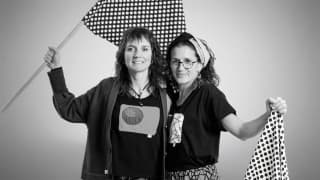
Marie Donzel is a partner at AlterNego and an expert in inclusion and social innovation. In this interview, she discusses the impact of gender inequality at work.
As part of the summer break, the teams at impact.info invite you to (re)listen to one of our episodes published this year.Marie Donzel , partner at AlterNego .
Enjoy listening!
Juliette Boulegon
impact.info journalist
Published on 23 August 2024
Transcript Audio in Français — text automatically translated· AI-generated transcript
0:00 Hello, this is Juliette and welcome to the podcast for those who want to make 0:09 a difference in their company. 0:11 The wage gap between women and men is an ongoing issue 0:15 that continues to deepen inequalities within companies. 0:19 So how do we tackle it? This is part of the topics that Marie 0:24 Donzel, associate director and expert in inclusion and social innovation at Alternego, 0:30 is working on. 0:36 Hello Juliette, I'm Marie Donzel, I'm 47 years old, I was born in Annecy and right 0:39 now I have two full-time jobs, one is being 0:44 an associate director at Alternego and the other is being a single mother 0:46 of a teenager. 0:51 Let's get straight to the point if you don't mind, where do we stand 0:54 today regarding gender equality at work? 0:59 Well, we are not as advanced as we would like, as we wish, as we 1:07 tend to say, we have real sticking points, indicators that we can't 1:13 seem to move at all, starting with the issue of pay. 1:17 Okay, do you have any figures to guide us a bit, so we can 1:19 understand schematically where we are? 1:24 So, schematically, the figures, for example on pay, will 1:28 precisely indicate both where we stand and why we are not making 1:29 progress. 1:32 Because we actually find ourselves with very different figures depending on the methods of 1:33 calculation. 1:38 If we take a global method which looks at wealth and income gaps, we will be 1:43 around 22-24% wage gaps between women and men. 1:49 But if, for example, we use the method derived from the Blinder and Oksaka decomposition, we 1:50 drop to 8%. 1:56 Now 8% is still a relatively significant level of wage gap. 2:01 But what’s important to see is that within this 8% wage gap, 2:04 there is only the discriminatory gap in the strict sense of the term. 2:09 That is to say, in this 8% gap, we have removed many other elements that 2:13 are factors of inequality, such as the issues of gender diversity in jobs, such as the 2:16 issues of differences in working hours. 2:21 In fact, by going to 8%, not only do we avoid a large part of the issue of inequalities, 2:24 but we also remain at a very high rate of discrimination. 2:27 But in your opinion, why do these inequalities still persist? 2:34 In reality, fighting against wage inequalities between women and men is 2:37 deeply destructive for society. 2:43 The inequalities between women and men stem from production models. 2:44 They come from working hours and what we call productivity. 2:49 It even touches on performance criteria. 2:52 Today, the performance criteria as we know them, whether at the level 2:56 of companies or at the level of an entire country with GDP, clearly tend to 3:02 make invisible a lot of women's work, and by making it invisible, it renders it free. 3:09 That's not just me saying it, it's Joseph Stiglitz, Nobel Prize in Economics, who in the early 3:14 2000s established that in GDP, there was 33% of unaccounted work, and notably all the work 3:21 related to what we now call 3:27 the CAIR. 3:28 So in fact, there is a whole value, a whole wealth that is produced and that 3:31 is largely produced by women, which is not accounted for and does not meet 3:36 performance criteria, even though it clearly supports companies, 3:41 it supports the economy, it supports society. 3:43 So in this case, what is the role of leaders? 3:46 The role of leaders is first and foremost a posture of humility and lucidity regarding 3:53 this major social fact that we are facing. 3:58 We cannot be against wage inequalities if we do not look at how things are happening 4:04 internally within our company, and if we do not have a different 4:09 intention than simply erasing the visible gaps on the accounting, we have a real 4:15 intention to change the model. 4:17 I find it very hard to still hear leaders tell me, 'I am against wage inequalities' and at the same time, in my company, there are none, in yours, there are none, yet if I look at the highest salaries, it turns out 4:22 that they are men. 4:26 And then I am told, 'Oh well, that's because they have management positions.' 4:30 And yes, but then how come your organization, which has for example 4:31 50, 60, sometimes 70% of women in its workforce, is not able to promote women to management positions? That needs to be looked at with humility and lucidity. 4:35 And then, it is about taking extremely concrete and strong actions. 4:41 For example, I completely advocate for a wage adjustment budget. 4:48 There are times when we see it, we observe that there are gaps. 4:53 Now, there are many reasons why this happens. 4:59 It happens because women ask for raises less often than men. 5:05 It happens because there are promotions that serve as real salary stepping stones while other promotions do not provide these stepping stones. 5:09 And well, I want to say, every 3, 4, 5 years, we need to be able to make adjustments. 5:11 So that's something I advocate for. 5:15 Where did it drop and why? And do I have issues 5:22 in my way of functioning, in my business model, in my KPIs that are not right? 5:26 And is that difficult for them? Have you been able to observe that in companies? 5:31 5:32 5:33 5:37 5:42 5:46 And especially for leaders, it's difficult to break these beliefs a little bit, isn't it? 5:51 Yes, it's obviously difficult to break beliefs. 5:55 And moreover, if breaking beliefs leads to a sort of penalty, the need to take 6:03 immediate budgetary consequences. 6:06 All this time we are, we prefer to think about the money we can spend to invest 6:11 rather than the debt we have to settle. 6:14 So in fact, by touching on the soul of the leader who seeks sustainability, 6:21 durability, and even the transmission of their business, we can still get them to 6:28 move. 6:29 And then, the question might seem a bit contradictory given the topic, but what 6:33 is the role of women in all this? And what preconceived notions do they need to 6:38 break through, in particular? 6:40 Well, the role of women, you know as well as I do, it's been about 20-25 years since we’ve 6:45 been telling them they need to break the glass ceiling in their heads, 6:50 that they need to have more self-confidence, to be more assertive. 6:54 And I’ve sometimes called this the school of women, as if we needed to send women back to 6:58 the school of the working world and the world of power, because 7:04 men would be naturally suited to that world while they, on the other hand, 7:08 would have real difficulties adapting to it. 7:10 I am, as you’ve understood Juliette, extremely critical of this mindset today. 7:14 I believe that what women can do and have an interest in doing, even if 7:19 it's not that easy, is what we call sisterhood. 7:22 About fifteen years ago, I set up several women's networks in 7:27 companies and at that time, something miraculous happened at the same time 7:32 as it was very simple, which was that the first reaction of women when they talked to each other, 7:36 was 'Oh, you too are experiencing this, I thought I was all alone.' 7:40 In fact, there is a systemic issue that together we are, if not victims, at least, we 7:46 are together capable of fighting against and addressing these issues. 7:51 So for me, we need to stop telling women that they always have to do more, 7:58 develop themselves, have more confidence in themselves, and develop 8:04 soft skills. 8:05 Men, like women, equally need soft skills. 8:09 However, we need to encourage women to be actors in the rise of all. 8:15 Let’s ask the question the other way around, what is the role of men and in particular 8:19 of their colleagues within a company? 8:21 The role of men, you probably know as well as I do, Juliette, has been very deeply 8:28 studied, notably by Francis Dupuy-Derry, regarding how far men actually have their 8:35 place in this fight. 8:37 Well, for me, the role of men is in two areas. 8:41 It is indeed about being good allies and good allies, 8:47 It actually starts from the other place, that is to say, the awareness of the advantages 8:56 that they have by default, not by intention, not by will, the advantages they have by default 9:04 in a patriarchal society and in economic models that favor them. 9:09 So for me, for example, again these are extremely concrete things, but never 9:14 cutting off a woman when she speaks, it's a small thing but it changes the mindset. 9:20 And what does it produce in me? The fact of never cutting off a 9:24 woman, even if she talks too much, even if she says uninteresting things, etc. 9:28 Well, it produces an acute awareness of what it means not to have 9:34 the floor when you want to have it, every time you want to have it. 9:43 Marie, to finish, I don't know if you know this, but 16 years old is the legal age 9:47 in France to start your first business and so I ask all my guests, what did you 9:53 dream of doing when you were 16? 9:55 Well, when I was 16, Juliette, I dreamed of being a lawyer and I don't rule 10:00 out becoming one day, since it's a profession, you may know, that you can 10:04 do your whole life, there is no age limit. 10:07 We've seen people who, upon retirement, became lawyers, especially on essential topics 10:14 like for example immigration law, children's rights, women's rights. 10:20 So, I'm not retired yet, but I don't rule out at all in retirement 10:25 or before realizing my dream from when I was 16. 10:28 Thanks to Marie Donzel, who is, I remind you, the associate director at AlterNego. 10:32 And you can of course find this interview on our website impact.info, in the section 10:38 insertion which brings together all the episodes related to the employability of the most vulnerable. 10:49 Subtitles created by the Amara.org community. Embed this interview on your site
Show this player directly on your site to share the interview with your audience.
Copy embed code View generated code
![[Rebroadcast] How Gender Pay Inequality Affects Company Performance](/_next/image?url=%2Fuploads%2F2023%2F12%2FMarie-Donzel.png&w=1920&q=75)