translate This article was automatically translated from its original Español version. Read the original
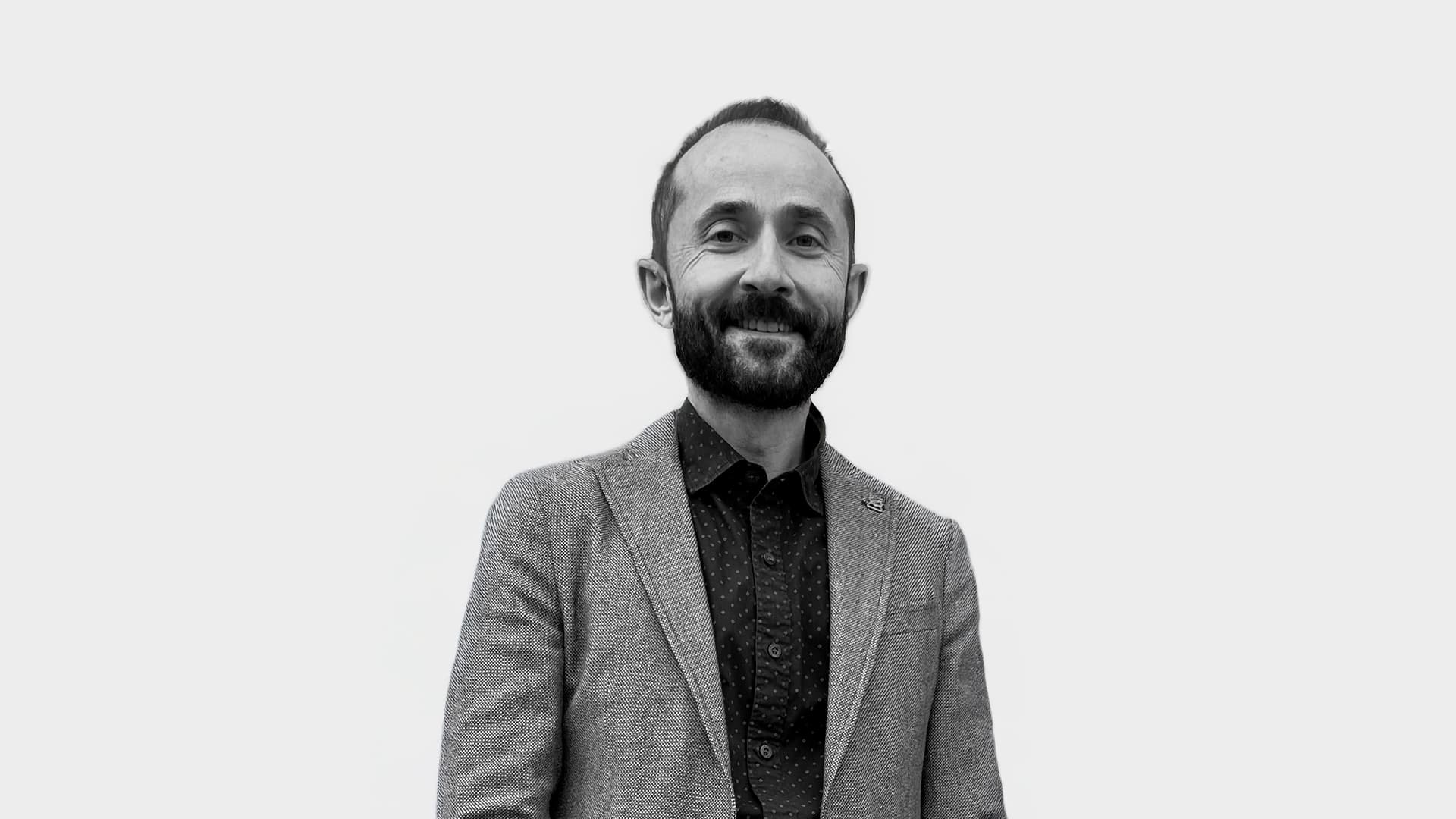
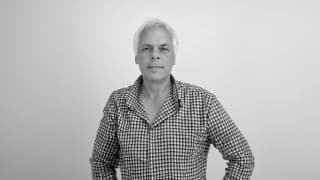
Ander Etxeberria is the cooperative diffusion director of Corporación Mondragón, the largest cooperative group in the world, made up of 92 cooperatives and over 70,000 worker-owners.
impact.info
Listen to the testimony of Ander Etxeberria, cooperative diffusion director of Corporación Mondragón.
María Díaz Valderrama
impact.info journalist
Published on 18 August 2026
Photo credit — Corporación Mondragón
Transcript Audio in Español — text automatically translated· AI-generated transcript
0:00 Impact.info, another way to undertake. 0:07 Good morning. Welcome to the podcast for entrepreneurs who want to change things, 0:12 starting with their own companies. Companies like Corporación Mondragón, 0:17 which demonstrate that another economic model is possible. 0:21 I am Ander Etxeberria, I am 54 years old and I am the director of cooperative dissemination 0:27 in the Mondragón group, at Corporación Mondragón. 0:30 Ander, Mondragón is today the largest cooperative group in the world, 0:34 a global reference for decades. 0:37 But we have to start with this key question, right? 0:40 What is Corporación Mondragón? 0:42 We are a group made up of 92 cooperatives, worker cooperatives, 0:47 that is to say, the person who works is a partner, is an owner, 0:53 about 80% of the workforce is owner-partners. 0:57 We also have 104 companies abroad, in the United States, in France, in China, 1:03 that are not cooperatives. 1:05 We generate a total of about 11 billion euros a year 1:09 and we are together about 70,000 people. 1:13 How did this cooperative of companies come about, so to speak? 1:17 What is your story? 1:18 It was born with the arrival of the Catholic priest José María Arizmendiarrieta 1:23 from a relatively nearby municipality, 40 kilometers from here, Marquina. 1:28 He arrived in Mondragón in 1941, in the post-war period, 1:32 like all post-wars, a very tough situation. 1:35 Arizmendiarrieta promoted social relationships, 1:40 he brought friends and families together again, 1:43 through cultural, sports, and also educational activities. 1:47 Since 1943 he started what was called the Professional School 1:53 and today is Mondragón University, 1:55 and through that cultural, sports, also spiritual and educational activism, 2:00 in 1956, five of the young people who moved around him, 2:06 who thanks to him studied Technical Engineering, 2:09 were encouraged to create a company where the owner would be a worker, 2:15 the worker would be an owner, 2:17 in a context in the municipality of Mondragón where there were no cooperative companies. 2:23 Ander, you talk to me about a gigantic business volume, 2:27 with almost a hundred cooperatives. 2:29 How do you ensure today the real participation of workers 2:35 in decision-making, which is one of the key points in cooperative companies? 2:40 From the very first minute of the creation of the first cooperative, 2:44 back in 1956, we make the big decisions, 2:49 all of us, where each member has one vote, 2:54 in the General Assembly. 2:55 That is, practically once a year. 2:58 If there are more important issues, there will be extraordinary assemblies. 3:02 But I want to say, the operational issues are decided by the managers. 3:07 We don't meet every two or three days with all the members in the Assembly to make decisions. 3:13 The big issues, those that mainly affect my life once a year, 3:18 which is the Annual General Assembly, and the daily issues, the managers. 3:24 After so many decades in which you must have had to withstand economic crises, 3:30 a permanent industrial transformation, 3:33 how would you summarize today the philosophy that has supported you since your origin? 3:38 What has been the key to preserving the essence? 3:40 Well, one of the keys is what Arizmendi Arrieta always repeated. 3:45 When we started creating cooperatives, starting in '56, 3:49 you all, what are you going to manufacture? 3:51 We, machine and tool. 3:53 And you, we, valve. 3:54 We, automotive parts. 3:57 And he always told each of those promoting groups, 4:00 don't let anyone beat you. 4:02 You have to be the best. 4:04 Don't let anyone beat you. 4:05 And, on the other hand, he also asked, 4:07 who is the first member, the first female member of the cooperative? 4:10 Who is the most important? 4:12 And the answer was given by him. 4:15 The most important member is the cooperative itself. 4:18 When the year ends, and with that gross, positive result that we expect, 4:24 what we are going to do is invest in new machines, new programs, 4:29 in opening markets, developing patents, 4:31 and then the distribution of a part among the members will come. 4:36 But first we are going to maintain the competitiveness of the cooperative. 4:40 Those ideals, or that way of understanding the cooperative business, 4:45 from minute one. 4:47 Mondragón generates thousands of jobs in the Basque Country and beyond. 4:51 How does your impact translate in the territory and in social cohesion? 4:57 Of course, if we take into account that our cooperatives are of associated work, 5:02 that is, whoever is a member, works, has a vote. 5:08 The same vote is held by the person who works in the office, 5:14 who works in the workshop, who works with management responsibilities. 5:19 The same number of votes. Each one has one vote. 5:22 They are stable jobs. 5:25 If things go wrong, we tighten our belts. 5:29 So I'm going to be working, I'm going to give my best until the day I retire, 5:34 or until the day I decide to leave for some other reason. 5:38 And they are cooperatives, they are companies where the lowest earner and the highest earner, 5:45 that difference is limited. 5:48 The maximum difference that the top executive, the general director, can have, 5:54 compared to the lowest earner is six times more. 5:58 All of this has an impact on society. 6:02 Also the fact that, as we mentioned before, we participate in the General Assembly. 6:07 We don't just participate in the General Assembly once a year, 6:11 but the workers, the members, are part of the social bodies of the cooperative. 6:18 The Board of Directors, which is called the Governing Council. 6:21 The Social Council, which is also a very important element for the company's communication. 6:28 We participate in those bodies, then we learn to speak, to defend our ideas, 6:34 to respect the ideas of others, to lead meetings, to lead groups. 6:39 And those skills are also fundamental, outside of the cooperative, in the society around us. 6:44 So, normally, each year, if we do statistics, 6:50 the region where most cooperatives are concentrated, which is the region of the municipality of Mondragón and its surroundings, 6:56 is usually, on one hand, in the Basque Country, the region with the highest family incomes. 7:02 The Mondragón cooperative model is not about distributing poverty. 7:06 Higher family incomes, normally, here in the Basque Country. 7:09 At the level of the whole State, it is usually the region with the lowest unemployment, 7:15 the one that invests the most in research and development, because we want to keep existing, 7:20 and the one that usually presents the lowest economic inequality. 7:24 One of the lowest economic inequality values in the world. 7:28 We are talking with Ander Etxeberria, responsible for cooperative dissemination at Corporación Mondragón. 7:34 I wanted to ask you, also, what you think differentiates you, in your opinion, from more accessible cooperatives, 7:40 smaller ones, which is what people usually understand when we talk about cooperatives. 7:46 From the very beginning, what we wanted to do was a type of company 7:52 where the central focus was the person and a type of company that would be profitable. 8:00 That is to say, a company. 8:02 A cooperative company has one side in the heart and another side in the pocket. 8:09 There is solidarity and there is business. 8:12 And we have always kept that balance in mind, both aspects. 8:17 If any cooperative leans too much towards the heart, it will go bankrupt. 8:23 And if any cooperative leans too much towards the business side, then it won't be a cooperative. 8:28 From the very first minute of the creation of the first cooperative, 8:31 we have kept both aspects in mind up to today. 8:43 In Spain, 18 years old is the legal age to start your own business. 8:48 I would like to know where you saw yourself when you were 18 years old. 8:52 When I was 18, I started studying Technical Engineering at what is now the University of Mondragón, 8:58 in the town of Mondragón itself. 9:00 A tradition of this town for industry that goes back to medieval times. 9:06 And my intention was to work in a cooperative, also due to family tradition. 9:12 Many close people have worked, work in cooperatives. 9:17 I also have many friends who work in cooperatives, which allows me to compare. 9:21 And then I studied Sociology. 9:23 And with that combination, I remember that when I saw on our local television, 9:29 the regional television, a member of Mondragón, who was the director of cooperative diffusion, 9:34 talking about Mondragón, I said to myself, one day I will do that. 9:38 One day I have to do that, because I understand that this system needs to be extended, 9:43 it needs to be made known. 9:45 But first comes the academic part, first comes working in a normal position, 9:52 and after years of knowing both on-site and through references from family, friends, etc., 9:59 I hope one day to dedicate myself to cooperative diffusion. 10:03 And that's how it turned out. Different coincidences have happened, but that's how it turned out. 10:07 Thanks to Ander Etxeberria, head of cooperative diffusion at Corporación Mondragón. 10:13 You can listen to this interview on the impact.info website. 10:17 You have listened to Impact.info. Another way to undertake. Embed this interview on your site
Show this player directly on your site to share the interview with your audience.
Copy embed code View generated code