translate This article was automatically translated from its original Français version. Read the original
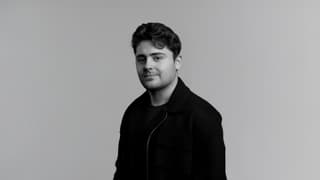
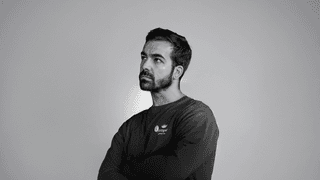
Making a traditional phone call is impossible for someone who is hard of hearing or deaf. However, thanks to the software developed by Ivès, this has become possible. Pascal Dupuy, its founder, came to discuss it with us.
As part of the summer break, the impact.info team invites you to (re)listen to one of our episodes published this year.Ivès , founded by Pascal Dupuy .
Enjoy listening!
Juliette Boulegon
impact.info journalist
Published on 6 August 2024
Transcript Audio in Français — text automatically translated· AI-generated transcript
0:00 Hello, this is Juliette, and welcome to the podcast for those who want to make 0:09 a difference in their company. 0:11 Did you know that it's possible for deaf people to call each other? You heard me 0:17 right, calling each other is possible, even if one is hard of hearing. 0:22 And this possibility came about thanks to IVES, a call center dedicated to deaf 0:28 people, created by our guest today, Pascal Dupuis. 0:32 I am Pascal Dupuis, I'm 59 years old, I was born in Auvergne, in Thiers, in the 0:39 city of cutlery. 0:40 I am married, I have two children. 0:42 Today, I am the CEO and co-founder of the IVES group, Interactive Video and System, 0:48 which aims to develop communication solutions for deaf 0:52 and hard of hearing people. 0:53 My role, from the beginning, has been to provide the vision of the group, what we do, what 0:59 type of services we will develop, for whom, and then on the management side. 1:05 So Pascal Dupuis, you were telling me about IVES, can you tell me a bit more 1:13 about your actions? 1:15 The purpose of this company was to create a communication solution that integrates 1:22 three means of communication, which are video, text, and audio. 1:26 This company was born in 2006, just to remind you, in 2006, the Internet was not 1:31 what it is today, and we wanted, from the very beginning, to allow people to communicate 1:37 through these three means of communication, live, with audio, 1:42 video, and text. 1:43 And can you explain to me how a phone for the deaf works, because it seems 1:48 very contradictory, after all, so I would like to understand. 1:52 Yes, of course, but when I first said that, my colleagues told me, both of them 1:58 said, I think you are tired, Pascal, you need to go sleep. 2:02 At the time, there was a company in Toulouse that employed deaf people and 2:08 worked in communication for deaf people, but did not have 2:12 a specific solution, and was looking for one. 2:14 So, I went to Toulouse, I talked a lot with them to understand. 2:17 And they explained to me what I’m going to tell you, you have deaf people who use their 2:24 mother tongue, which is French sign language, meaning, when they are born, 2:27 they are deaf. 2:28 So, to connect with what you were saying, the skill we needed, that we 2:34 needed, the video, the work on the video we had done was perfect 2:39 because it was a direct video communication system. 2:43 And that, of course, interested the deaf population who signed. 2:47 I realize while listening to you, in 2005-2006, these people had no other means 2:53 to communicate than being in person with the person. 2:56 So, it was a bit of a revolution for these people. 3:01 So, we're not the inventors of this system, you should know that. 3:05 What we've learned is that French sign language is one of the means 3:11 used by deaf people. 3:13 In France, there's what we call the code. 3:15 It's like, imagine I'm deaf, or at least I don't hear well, 3:19 but I can speak. 3:20 But when you respond to me, I won't understand you because I don't hear 3:23 well. 3:24 So there are people called code users who will help me understand 3:27 what you're saying to me. 3:28 I'll give you a very simple example, you're going to say, coat or boat? If I 3:31 am deaf, I won't really understand the difference between coat and boat. 3:34 So, the code user, coat starts with an M, will say coat, the deaf person can 3:40 read it on your lips, and with their fingers, will make an M. 3:44 The third means of communication is text. 3:46 In fact, it turns out that deaf and hard of hearing people have difficulty following a 3:51 schooling, I would say, quote-unquote, fairly normal. 3:54 As a result, we have deaf people who do not master French sign language, 4:00 who do not master the code, and who write, but their way of writing is not as 4:06 organized as what we, have learned in grammar and syntax. 4:09 So, there are people who are professionalized, called written interpreters, 4:13 who are also able to mediate a discussion between a deaf person 4:17 and a hearing person, to allow the hearing person to understand what the deaf person is 4:21 writing, and to allow the deaf to understand what the hearing person is saying. 4:26 And so, we set up a system called a media relay, in fact, ultimately. 4:30 The deaf person will call your 06, we will direct them to the right person, and we do this live. 4:36 We know, because you talked about three types of possible deafness, or at least, 4:42 of communication, when one is deaf or hard of hearing. 4:46 Do we know how many deaf or hard of hearing people there are in the world? 4:51 That's difficult, because, I'll give you an example, the Ivès group works in 4:57 Canada and Tunisia, and it's probably the example of Tunisia, there are many 5:00 deaf Tunisians who are not registered. 5:02 And there are many countries like that, where deaf people have not been identified 5:06 as being deaf, because in some countries, even today, 5:10 in 2023, they are seen as idiots, etc., when they are just deaf. 5:15 In France, I want to tell you that we are around 7% of the population who are 5:20 deaf and hard of hearing. 5:21 And then, regarding accessibility for companies, there is a law that was created 5:27 to impose this accessibility, right? 5:30 Yes, it's an implementing decree from May 2017, which states that normally, 5:39 All companies should make themselves accessible to deaf and hard-of-hearing people. 5:43 In this decree, there is a second part which is the establishment of a relay center 5:47 telephone. 5:48 They asked a consortium, the French Federation of Telecoms, to set up 5:52 this telephone relay center. 5:53 In what they requested, they said that the first hour of phone calls, from 5:58 2018 to 2021, will be free, meaning that I am deaf, I have a 6:04 telecom operator X, I have my SIM card just like you, like a hearing person, but since 6:11 I am deaf, if I go through such a platform offered by the French Federation 6:16 of Telecoms, I get one hour of free phone calls. 6:19 And after 2026, it will be five hours of free calls. 6:23 So today, deaf people in France have what we call a telephone relay center 6:28 which should allow them to make phone calls for free for three hours at 6:34 least. 6:35 On the side of public and private companies, the State, which wrote this decree, has been a bit more 6:39 restrictive or I don't know how to say it, does not necessarily encourage companies 6:43 to make themselves accessible, since in fact, they wrote a decree and there is no one 6:47 behind it to check if the company has become accessible or not. 6:50 And beyond these legal constraints, why is it interesting for a company 6:56 to communicate with this clientele? 6:58 I think that already, they are people. 7:02 Why would we push them aside? Just because they are deaf, whatever. 7:06 Secondly, they are people who, like you, like me, live every day. 7:10 They have a disability, but they go shopping, they go to work, they have 7:15 children. 7:16 And so, as a company, they are potential customers just like everyone else. 7:21 There is no human reason, at least, to push these people aside. 7:26 I think it's not necessarily intentional. 7:29 It's just a lack of awareness and information. 7:34 I will give you a very specific example. 7:37 If you see two people on the street walking, one with a dog or with dark glasses, 7:42 you will think that it's a person who has visual problems. 7:46 The person next to them, if they are deaf and walking down the street, you don't see 7:50 it. 7:51 And that's what makes every entrepreneur, every company, in my opinion, need to open 7:59 up to this type of disability or person, because they can read, they can write, they 8:05 understand. 8:06 Yes, that's what I mean. 8:07 When I was young, I wanted to be a footballer. 8:10 As I tell my children, I missed my football career. 8:12 Very quickly, I was made to understand that I couldn't be one. 8:15 So, I thought I wanted to be a chemist. 8:16 And then in the end, I have a degree in chemical engineering and ultimately, the chemicals 8:23 took a toll on my body and so I had to change careers. 8:28 I asked myself a lot of questions, a lot of friends told me, 'but you're quite 8:33 pedagogical, you should look into teaching.' 8:35 So I was a technology teacher in middle school for almost 10 years. Embed this interview on your site
Show this player directly on your site to share the interview with your audience.
Copy embed code View generated code
![[Rebroadcast] Why Create a Call Center for the Deaf?](/_next/image?url=%2Fuploads%2F2023%2F10%2FPascal-Dupuy-1.png&w=1920&q=75)