translate This article was automatically translated from its original Français version. Read the original
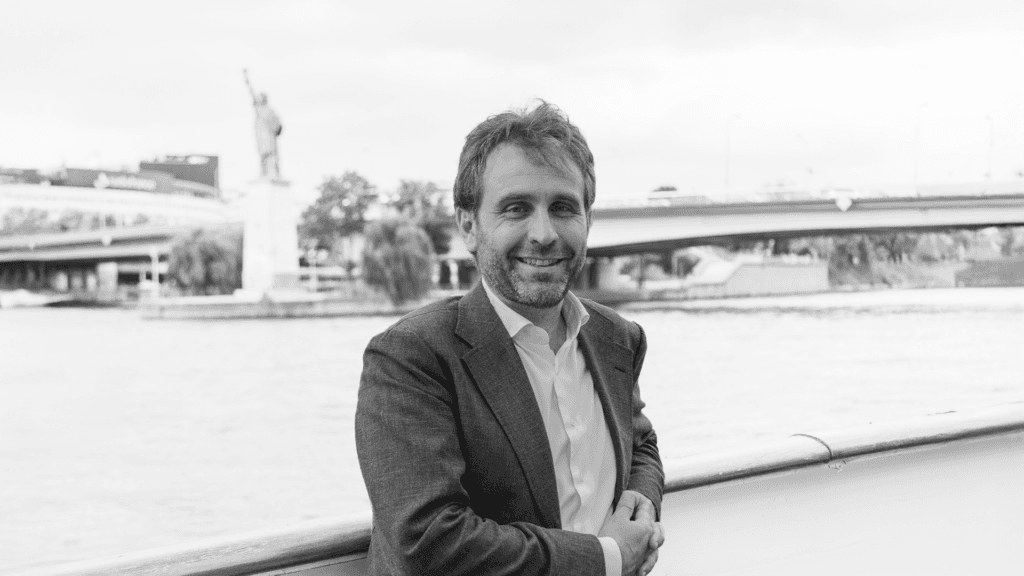
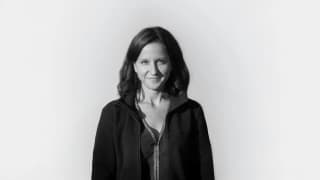
Damien Baldin is the general director of the La France s’engage foundation, created in 2014 by François Hollande, then President of the Republic, who aimed to create an initiative to encourage French citizens to engage for others.
During the summer break, the impact.info team invites you to (re)listen to one of our episodes published this year.
This episode highlights the testimony of Damien Baldin , general director of the La France s'engage foundation .
Enjoy listening!
Florence Jaillet
impact.info journalist
Published on 11 August 2025
Transcript Audio in Français — text automatically translated· AI-generated transcript
0:00 Hello and welcome to the podcast for those who want to make a difference 0:09 within their company. The desire to help others, to set up positive initiatives 0:14 exists in France. We just need to allow them to emerge, to materialize, and to spread. Damien BALDIN 0:20 So my name is Damien BALDIN, I was born on August 1, 1979, in Nice, and I am the director 0:22 general of the foundation La France s'engage. 0:29 So La France s'engage, can you tell us a bit about the history 0:32 of this foundation, where it all started? 0:36 La France s'engage has a very particular history; it is the result of a presidential ambition, 0:38 in the literal sense of the term. La France s'engage was born in the Élysée Palace by 0:44 François Hollande, who was then the president of the Republic and who was keen to 0:49 help the French people who were committed to others, who by 0:53 creating associations, giving their time, and donating their money 0:58 allow in France to find local solutions to pressing problems in the lives of the French concerning their education, their housing, their health, their access to 1:02 leisure. It was in 2014, how in 2014 do we create an initiative that will encourage 1:08 these French people to engage for others, hence La France s'engage. 1:13 And then what didn't exist and what we needed, I'm talking here about the associative leaders, 1:20 volunteers, employees, what we needed was recognition 1:25 precisely at the highest level of the State, of this commitment. We also need 1:30 all those who enable associations to exist, to function, to innovate, 1:37 well it was the collaboration of several actors, the State obviously, but not just them. 1:41 From the beginning, La France s'engage is not only the initiative of the State, 1:47 it is the initiative of the State and businesses to support, to promote the engagement 1:53 of the French in the service of social innovation. 1:57 What type of projects does La France s'engage support? 2:02 La France s'engage has supported and accompanied 204 structures of the social 2:05 and solidarity economy for ten years, about 80-85% are associations that fall under the general interest. 2:10 And then there are also structures that are commercial enterprises, which have 2:16 a profitable activity, but which fall under the social and solidarity economy because they 2:21 have the ESUS approval and they manage to reconcile limited profitability and a 2:26 service to the general interest. And these structures operate in all areas of 2:30 sustainable development. The essential criterion for La France s'engage is that these structures 2:36 have innovative projects and have projects that have a strong social impact and also 2:39 are structures that we believe have the capacity for scaling up. After demonstrating the success of a social action at the scale of a municipality, a neighborhood, 2:45 a department, there is in this structure both a desire and a capacity to be able 2:51 to deploy its activity in other territories. And so these are the three criteria that guide 2:56 the selection of La France s'engage, regardless of health issues, as I said, 3:00 issues concerning early childhood, issues that concern the isolation of the elderly, 3:05 3:10 3:15 3:19 questions related to food, everything that can ensure progress 3:24 socially, to improve the daily lives of those who need it the most. 3:29 Do you have any examples of projects that you have particularly supported? 3:32 A few examples of great successes, I think especially because I am right next to 3:37 La Cravate Solidaire, which is an association founded in 2014 by three young 3:43 people in civic service who decided to support those who, distanced from employment, 3:48 have less chance than others to succeed in their job interviews and find work, 3:53 and decided, through the collection and donation of ties in particular, to allow them to be well 3:58 dressed for a job interview. And then this young association became 4:02 a laureate of La France s'engage, and today it reaches more than 12,000 people per year, 4:07 it has 14 branches across France, and it has deepened this support by allowing them 4:13 to attend job interviews by helping them create their CV, by helping them take a photo of themselves for their CV. So here is an action that concretely helps those 4:18 who are distanced from employment to succeed in their job interviews, 4:24 and it has grown from three young people in civic service to more than a hundred employees. 4:27 Another example that touches on two important aspects of our societies today, 4:32 is the schools of ecological transition. Here too, the idea of a young educator who 4:36 worked in the suburbs of Toulouse, who decides to raise awareness among the young 4:42 people he accompanies about environmental issues. He decides to help them in his village, 4:46 in Haute-Garonne, and there he decides, somewhat spontaneously, to create the first school 4:49 of ecological transition, that is to say a free school for young people who are very far from 4:54 school, training, studies, to start training them for manual jobs 4:59 in ecological transition, for several reasons. First, because it offers them a 5:05 training opportunity with extremely important professional prospects, 5:09 to meet an economic need of the country that requires a qualified workforce in these 5:13 future-oriented jobs, and third, connected through training and work, 5:19 to not only make these young people aware of environmental issues, but to make them 5:23 true actors of ecological transition. And this school emerged in 2018 in 5:27 a small village in Haute-Garonne, it was selected by La France Engage in 2019. 5:33 Six years later, today there are more than 25 schools across France that support 5:37 hundreds of young people each year in their professional transformation, in their orientation 5:41 towards manual jobs in ecological transition. What does the support consist of? From the start, La France s'engage made several bets that were somewhat 5:47 innovative in 2014 and which we continue the tradition of innovation. What do they need, ten years ago 5:52 but still today, founders of associations, social and solidarity economy structures that carry an innovative subject? They need long-term support, they need 5:58 significant funding and they need support in skills and expertise on subjects that they do not know a priori because they are not their profession, such as communication, 6:04 strategy, human resources. And they also need recognition to allow them to multiply their partnerships, whether public or private. And so to respond to 6:09 6:14 6:20 6:24 6:30 6:34 These needs, because the support from La France Engage is there to meet a 6:38 need that comes from the ground. And how do we contribute to addressing these needs? First, 6:43 by awarding a label, being selected by La France Engage means becoming labeled by La 6:47 France Engage and benefiting from a label that today has a leverage effect with other 6:52 private and public actors. It's an endowment of an average of 250,000 euros over three years, 6:59 entirely dedicated to the operation of the structure, which will therefore allow these 7:03 structures to make recruitments, to spend on the growth of the structure. And then it's about 7:09 being able to benefit from advice, missions on legal issues, on human resources issues, on 7:16 territorial implantation issues where La France Engage will either mobilize skills in sponsorship 7:21 from these sponsoring companies, or be able to, in addition to the financial endowment, ensure a 7:27 supplementary funding to finance specific missions that are useful for the growth and proper 7:33 growth of these structures. In what way do you think the actions of La France Engage will move the 7:39 lines, change things specifically in society? We recently surveyed the laureates of La France Engage 7:44 on the occasion of its 10th anniversary, and one in two laureates believes that their action has 7:50 changed a regulation, a law, a public policy practice. That's an incredible impact because beyond the 7:54 number of beneficiaries reached last year, all the laureates of La France Engage managed to reach about 10 million French people. Beyond the figures, which are obviously important to demonstrate this change of scale, 8:01 there is with La France Engage this idea that organized civil society around an association, 8:07 around a structure of general interest is capable of evolving public policies. It is capable of drawing much more positive horizons than those in which we live today. It is about saying that we can positively change the lives of those who live in France through concrete actions. And La France Engage also demonstrates that a public-private coalition around the general interest, which brings together large companies, mutuals, and a former president of the Republic, is capable of working together, achieving concrete results in the service of the general interest. And that's the big message of La France Engage as well. 8:11 Impact.info, doing business differently. 8:15 Damien Baldin, you are, I remind you, the general director of the La France s'engage foundation. 16 years old is the age in France to start your own business. At 16, what were your dreams? What did you aspire to? What did you envision for yourself? Was having an impact on the common good already something that concerned you? 8:22 Well, at 16, I wanted to be a history teacher, which I became. I wanted to serve 8:26 the general interest. Well, I might not have phrased it that way, but in any case, 8:32 I wanted to serve the public service. 30 years later, I think I'm not far from it. First, 8:38 because history helps a lot, even when you are in social and solidarity economy, 8:45 it helps a lot to think about the long term, but also the future and horizons. It allows 8:50 you to create a narrative and thus connect people with each other. And whether in a classroom or at the head of La France s'engage, there is a strong similarity here. It's about how. 8:54 9:00 9:05 9:09 9:14 9:19 9:24 9:27 9:33 9:36 9:41 9:45 9:50 9:55 10:00 we are able to move forward together with goals of development, knowledge, and success. 10:05 And then, the somewhat universal dimension of public service, even though I am in a 10:10 foundation which is a private structure, it remains that these are wonderful 10:15 organizations that, just like the Ministry of National Education, are at the service of 10:20 everyone, regardless of their nationality, gender, or territory. In short, 10:26 this dimension of universal aid is very present in La France s'engage. 10:30 Thanks to Damien Baldin, the general director of the La France s'engage foundation. You can 10:35 find this podcast on our site impact.info. This was impact.info, doing business differently. Embed this interview on your site
Show this player directly on your site to share the interview with your audience.
Copy embed code View generated code