translate This article was automatically translated from its original Français version. Read the original
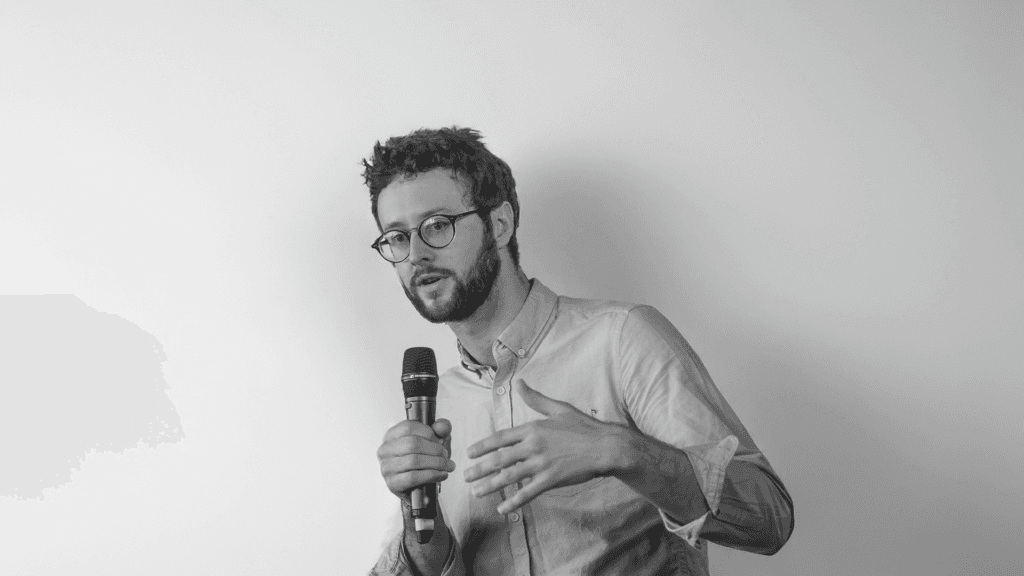
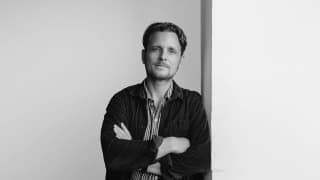
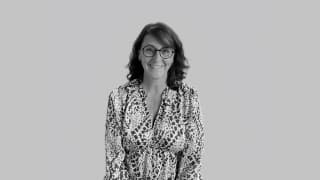
Matthias Monneron is the president and co-founder of Ecométrique, a startup specializing in monitoring micropollutants in waterways and assessing environmental quality in Limoges.
During the summer break, the teams at impact.info invite you to (re)listen to one of our episodes published this year.
This episode highlights the testimony of Matthias Monneron , president and co-founder of Ecométrique .
Enjoy listening!
Florence Jaillet
impact.info journalist
Published on 28 July 2025
Transcript Audio in Français — text automatically translated· AI-generated transcript
0:00 Hello and welcome to the podcast for those who are making a difference in their companies, by combining, for example, science and ecology, Matthias Monneron. 0:10 I am Matthias Monneron, born on February 4, 1992, in Limoges, and I am the president and co-founder of Ecométrique. 0:15 So what is Ecométrique? 0:24 Ecométrique is what we call a university spin-off, meaning we were born from research work at the university, particularly from the University of Limoges, and we are a startup specialized in monitoring micropollutants in watercourses and in the exploitation of environmental data on water quality. 0:25 Could we explain what micropollutants are? What exactly are they? 0:27 So micropollutants are things we hear about every day but not necessarily under the name of micropollutants. 0:31 They include large families of molecules, such as pesticides, pharmaceutical residues, and we also talk a lot today about forever chemicals, which are PFAS. All these families are micropollutants, and we call them micropollutants because they are molecules that are present in water bodies at very low concentrations, on the order of nanograms per liter, which is really very low. 0:36 For example, if you take a sugar cube and throw it into an Olympic swimming pool, that represents one nanogram per liter, so that's what micropollutants are, and they pose a problem because they have toxicities at these very low concentrations, hence the term micropollutants, that's what they are. 0:42 And today, we see that these micropollutants are present absolutely everywhere in our watercourses, in the water bodies we use for drinking water, and so there are many issues today regarding the monitoring of these molecules. 0:47 Specifically, is it quite recent that we can capture and treat these molecules? 0:48 So, these molecules, you should know, have appeared not too long ago, more than 50 years ago. 0:51 They appeared with synthetic chemistry, with the ability to synthesize all the molecules we wanted from carbon. 0:52 And that's when the number of pesticides has continuously increased and been used. 0:57 In the 1970s, pesticides were already being used, but we didn't have the analytical techniques we have today to monitor these molecules. 0:59 We were interested in everything related to nitrogen and phosphorus, so for example, what is related to eutrophication, those are the elements we studied, but we weren't able to see micropollutants too much. 1:04 In fact, there have been huge analytical advances since that time that allow us today to detect them much more. 1:08 1:12 1:17 1:20 1:21 1:26 1:29 1:33 1:36 1:41 1:45 1:49 1:53 1:58 1:59 2:03 2:05 2:11 2:15 2:19 2:23 2:27 2:29 2:33 2:36 So, there are also many more because of population growth, 2:40 there is an increase in needs, a multitude of pesticides have been synthesized. 2:44 Now, there are millions and millions of organic molecules. 2:48 Generally, when we conduct studies on micropollutants, if we study 1000 2:53 molecules, that's already very good, but these molecules have been around for about fifty 2:58 years. 2:59 The number has increased, but it's just that today, we are capable of analyzing a lot of things. 3:02 What are the risks of having these micropollutants in our water? 3:04 The risk is in our water, so the risk is health-related because today, 3:08 there are watercourses that will be contaminated, there are underground water tables that 3:13 will be contaminated and we will also pump from this water. 3:16 The fact is that today, what we call the thresholds of use, the toxicity thresholds, 3:19 they are still made to protect health. 3:26 Today, for me, there is not a huge risk if we make it a point to treat 3:29 properly and to monitor this drift on micropollutants. 3:36 There have been issues in the media, there have been exceedances 3:40 of thresholds here and there and sometimes, water has been distributed with concentrations 3:45 above the thresholds. 3:51 It should be noted that toxicological thresholds are constructed to have safety margins 3:52 that are still very important, even a slight exceedance 3:56 of a threshold does not really lead to a toxic risk. 3:59 But still, there is a real issue that, especially with 4:02 eternal pollutants, today, we don't really know how to treat these molecules, 4:06 it's been about 2-3 years that we've had real controversies everywhere, that we see they 4:10 are there, because we were able to analyze them, we hadn't really looked into it. 4:13 Now, we are looking into it. 4:16 And the problem is that there is a huge investment to be made both in studying 4:17 these molecules, in monitoring their concentration a bit everywhere and also 4:18 in treating drinking water and wastewater as well afterwards. 4:23 Your system, what does it allow? How does it work concretely? 4:26 It's a small device that we will place in the bodies of water we want to study, 4:29 whether it's natural waters, wastewater or industrial waters, 4:34 and we will immerse it for generally 15 days. 4:38 During this entire period, it will accumulate targeted families of micropollutants. 4:42 After that, we will retrieve them, dismantle it and analyze it. 4:45 So, what is done today as routine? Today, it's technicians 4:50 who go to the watercourses with a bottle and boom, they take samples. 4:53 There, the image of the water quality they have is a snapshot. 4:56 4:59 5:02 If there's a pesticide that passes an hour later, in fact, they won't see it. 5:06 So, the information we have is not very representative of the overall quality. 5:11 We, the devices will accumulate throughout the deployment period. 5:15 For 15 days, they will accumulate pollutants. 5:18 That means we will know everything that has happened over those 15 days. 5:21 So, we still have a much more representative picture of the water quality that is actually there. 5:26 And what do you do with this data afterwards? 5:28 So, this data, you should know that we work 80% for local authorities 5:33 because they are the ones managing this policy, the water policy. 5:38 Local authorities or large accounts like Suez, Veolia, those kinds of companies 5:42 which are also managing water bodies for local authorities. 5:45 And we provide the data to the clients afterwards. 5:48 We are not an analysis lab. 5:49 We are not going to provide them with an Excel file and say, good luck. 5:52 We, behind, also do all the interpretation of the data. 5:55 That means we will put it back in context, 5:56 we will study the industries in the sector, 5:59 we will study agriculture to try to outline some leads 6:03 and say that this molecule, very potentially, 6:05 will be used in this part of your sector. 6:08 Finally, recommendations on potential sources of emissions. 6:11 And behind, this will help them make decisions 6:14 both on continuing monitoring, prioritizing actions, 6:19 for example, agricultural rotation on certain plots, 6:22 maybe going to see some industrial players to discuss their practices 6:26 and that kind of thing. 6:27 So, for them, this allows them to steer their environmental policy 6:30 in a slightly more reliable way. 6:32 How do your actions, your system, your company 6:36 make a difference, bring something, 6:38 advance these questions of water quality management? 6:41 In fact, we do not position ourselves as what we can recall 6:45 a routine laboratory or a routine player 6:48 who is there to control the water at regular intervals, 6:52 to enforce regulations. 6:53 We are not exactly in that approach. 6:55 We are more in a study approach aimed at knowledge. 6:58 Our partner will have a problem. 7:00 They will say, well, here I am, in my sector, 7:02 I do have a bit of agriculture, I have wastewater treatment plants, 7:06 But I don't know the dynamics of pollutants at the scale of my sector. 7:09 I'd like to know a bit about how all this works. 7:12 And that's where we position ourselves. 7:13 We're going to help our partner build the strategy. 7:18 We're going to tell them, there's no point in implementing this, 7:21 to go do that study. 7:22 It's better to do a study in this location. 7:24 It needs to be done like this, like that. 7:26 So, we help them build their request, 7:29 to align with what is feasible, 7:31 and actually, with the data they will obtain afterwards. 7:33 Because there are many studies where we see, 7:36 the studies are conducted, the data is there, 7:38 but no one does anything with it because actually, 7:40 the idea we had at the start, the results, 7:41 it doesn't solve that problem. 7:43 So, the first step is to help them understand the issue 7:46 and how we can study their sector to address it. 7:49 We, behind our systems, 7:51 it allows us to have something very representative at a lower cost 7:55 to actually shed light on data that is truly reliable behind it. 7:59 That's mainly it. 7:59 It should really be seen as assistance on micropollutants 8:02 and not as routine studies for legislative purposes. 8:06 That's not our expertise, you see. 8:14 So, 16 years old is the age in France when you can start, 8:17 you can create your first business. 8:18 Well, I don't know, you waited a little longer. 8:21 Maybe, but at 16, you imagined, well, 8:26 assisting on these issues. 8:28 What was it? Was it science? Was it the environment? 8:30 What was the first lever, actually, in your journey? 8:35 Yes, it has always been a mix between science and the environment 8:37 because, well, I was raised in the countryside, 8:40 I've always been very aware of these themes. 8:42 I've always loved science a lot. 8:44 Business, much less. 8:45 Business actually came along the way. 8:48 I did science, I had a very classic path, 8:51 high school diploma in science, I went to university, I went to engineering school, got my engineering degree. 8:56 After that, I did a thesis on contaminated sites and soils, 8:59 the health risks associated with those sites. 9:02 And it was only later, in fact, that I joined a new research team 9:04 at the University of Limoges, where I focused on this very specific theme 9:08 of micropollutants. 9:10 And still not, in fact, with the idea of starting a company behind it. 9:13 But in fact, while working with this research team, 9:16 seeing everything they were doing, we thought, 9:18 it's a shame to just deploy this technology 9:21 within the university framework. 9:22 That's when I said, let's go for it, let's go further. 9:25 We're going to take this technology out of the lab. 9:27 We're going to try to deploy it more widely than just under the university's wing. 9:31 But then, in fact, the company came about with the opportunity 9:35 to say, look, we have a problem with the university. 9:39 We actually have a solution that allows us to address it well. 9:43 We need to go further and we need to spread all of this. 9:46 That's how it came about. 9:47 What attracted you to this particular theme? 9:50 How do you explain it? 9:51 I've always mixed science and environment. 9:53 So, it fits quite well with this theme. 9:56 And then, the fact of shifting the research team from contaminated sites and soils 10:00 to micropollutants in water, in fact, is just to broaden horizons. 10:04 I didn't want to be an expert very deeply in one field. 10:09 So, I had no problem changing themes 10:11 to learn new things, in fact. 10:12 That was it, it was really about learning new things, 10:14 a new theme, a new team 10:16 to see what was happening on the other side. 10:18 Thanks to Matthias Monneron, president and co-founder of Ecométrique. 10:22 Find this podcast on our site impact.info. Embed this interview on your site
Show this player directly on your site to share the interview with your audience.
Copy embed code View generated code