translate This article was automatically translated from its original Français version. Read the original
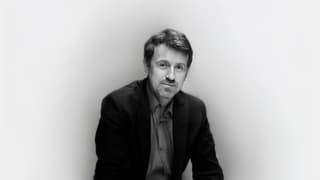
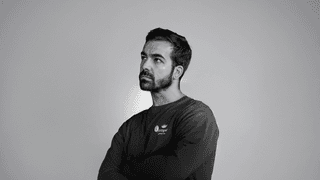
On October 10, 2024, the next edition of BIG will take place at the Accor Arena in Paris. This event, organized for 10 years by BPIfrance, will focus on the theme of “progress.” Julien Noronha is the Executive Director of Communication at BPIfrance, the French Public Investment Bank.
As part of the summer break, the impact.info team invites you to (re)listen to one of our episodes published this year.Julien Noronha , Executive Director of Communication at BPIfrance , the French Public Investment Bank, during the organization of the last BIG (BPIfrance Inno Generation).
Enjoy listening!
Juliette Boulegon
impact.info journalist
Published on 27 August 2024
Transcript Audio in Français — text automatically translated· AI-generated transcript
0:00 Impact.info, doing business differently. 0:04 Hello and welcome to the podcast for those who want to change the game in their 0:08 business. For the past ten years, BPI France has been organizing the BIG, a huge event that brings together all 0:14 entrepreneurs. This year, it will take place on October 10, 2024, at the AccorArena in Paris, 0:20 with the theme of progress. Julien Noronha is here to talk to us about it. 0:26 Hello, my name is Julien Noronha, I am the executive director in charge of 0:30 communication at BPI France. I am 40 years old and I was born in Paris. 0:35 Julien, we will indeed focus on the BIG, the next BIG. Can you, 0:40 to start, introduce what the BIG is for all our listeners? 0:45 BIG is the largest gathering of entrepreneurs in Europe because it is the 0:49 only event where you will find a kind of big picture of what the French economy is. 0:55 We truly have a real variety of entrepreneurs, from business creators to the industrial SMEs 1:00 of the regions, to the hyper-innovative startups emerging from a research lab, all the way to large corporations. And of course, the entire ecosystem that supports the life of 1:05 the entrepreneur, from support networks for business creation to investment funds. This kind of BIG picture of the French economy comes together once 1:11 a year. It is the result of a real strategy of human proximity carried by BPI France as we 1:15 produce a little over 500 events a year. Each year, there is a theme. This year, 1:20 it is therefore progress. Can you explain to us, first of all, why you chose 1:25 progress as the theme for this year? And then, could you share a bit 1:30 about your perspective and what progress means to you? It is true that 1:35 for the past few years, we have decided to put a theme on the BIG. There have been freedom, pride, 1:39 transformation. And this year, we wanted to talk about progress because we are entering a 1:44 cycle of major transformation. Ultimately, entrepreneurs and businesses have experienced a lot 1:50 over the past few years, having to navigate COVID, the energy crisis, the war in Ukraine. But we have noticed, because we are in direct contact with 1:56 them constantly, that despite all this, there is a strong conviction, a strong drive to move forward 2:02 among entrepreneurs. So, progress is ultimately this 2:07 collective ability to rebuild France, at the heart of the global economy, but even at the heart of society in general and societies in general. My vision 2:12 of progress is to move towards something better for humanity, for humanity with a 2:18 capital H. Progress can be about starting from solid foundations to move towards something 2:23 different. Listen, I was going to ask you, my next question was about what entrepreneurship of tomorrow looks like. I think you have more or less answered that. Is that a bit of your 2:29 vision? Entrepreneurship remains entrepreneurship. That is to say, entrepreneurship is the 2:34 ability to have an idea, to imagine something that will change society or individual needs 2:38 and to say, 'I'm going for it.' So, the entrepreneur of tomorrow will still be an entrepreneur 2:42 who will be in all sectors because all sectors are transforming. I could 2:48 say that the entrepreneur of tomorrow will move towards artificial intelligence, will move towards 2:53 ecological and energy transition, will move towards digitalization. I could go into... 2:57 3:03 3:07 3:11 3:15 3:21 big trends, but ultimately, these trends are all in service of 3:25 concrete projects. We might need to ask even more questions because it's always harder 3:29 to transform than to create. And we are in a society of transformation. And to go back a 3:34 little bit to BIG, this is already the tenth edition. Do I think you have 3:41 material to give us feedback on what it has brought from a perspective, if you have any 3:46 figures to share so we can really grasp the scale of this event? 3:51 Ultimately, when we go to BIG, we come away with two things. The first is content. There’s 3:55 content of various types. Of course, there’s a lot of inspiration. We love the 3:59 peer-to-peer. I saw Pays-France, the mirror films. So, we offer a range of women and 4:05 men who have succeeded in many sectors so that others can envision themselves. And 4:10 then, there’s content. BIG has 70,000 participants in one day. So, that’s 4:17 a lot of people. We meet investors, export advisors, business creation support, all the 4:20 experts in the ecosystem. And of course, there’s the digital tool of BIG that allows for direct 4:25 digital connections with participants, using algorithm systems. And there, there are 25,000 connections made in 4:29 one day. So, two strong axes. Content, the networking with, 4:33 as I mentioned earlier, the very important challenge for the entrepreneur to properly 4:41 prepare their event so that in the end, they come away with the NIAC, but also with 4:46 concrete projects for the next day for their business. The idea, therefore, with our 4:51 media Impact.info, is to give a voice to those who want to make things happen. 4:56 5:00 lines within their company and more broadly in society. You can guess, 5:04 in your opinion, how do your actions make a difference? 5:08 Oh, you know, I'm lucky to work for... I was an entrepreneur before 5:11 joining BPIfrance. And so, I know very well the life of an entrepreneur and also the world 5:18 that supports entrepreneurs in all their phases. And conversely, going to BPIfrance, 5:25 for me, it was going exactly where I needed to be, in the sense that it really is 5:29 an institution at the crossroads of the economic world and the general interest. And we 5:34 are constantly making a difference, in reality, on all the lines that 5:39 can be impacted by the economic world. If I have to illustrate this, for the industrialists, 5:46 for example, we have a big project around the reindustrialization of the country. Of course, 5:50 we invest, we finance, etc., all the new industries. But on the other hand, 5:54 and here, it's my role at BPIfrance as a communication director, it's to be in this general 5:58 interest and to go see industrial entrepreneurs asking them what their 6:01 major challenges are. And there, they tell me, we can't recruit and we need young people. 6:06 So, on one side, they have 70,000 open positions in the industrial world. And on the other side, 6:10 they know they need 600,000 young people to transform the industry in the next 6:14 five years. There, I really feel like I'm making a difference. When 6:17 I go look for young people at the school exits by bus, take them to an industry and 6:22 they look at me with wide eyes saying, but why are we going to an industry? I, 6:26 I want to work at L'Oréal later. So already, we explain to them that L'Oréal is a 6:29 industry. And then, we take them to industrial SMEs. And there, they meet the 6:35 leader who tells them, I need to digitize my production line. I need 6:40 engineers to implement AI, 5G in my production line. I need to make 6:44 my ecological and energy transition. So, I need brains who want to transform 6:50 to make me greener. And simply put, I also need to sell. I need 6:55 salespeople. I need to develop sites internationally. In fact, all of a sudden, they realize that there are tons of opportunities in jobs they hadn't thought of 6:58 when thinking about industry. And then, we change their mindset about that. So that's an 7:02 example of moving the lines. The second thing is in priority neighborhoods of the city. 7:07 We have a program called Quartier 2030. We constantly go to the priority neighborhoods 7:12 of the city to present all the support networks for starting a business and 7:19 show them that this entire ecosystem that supports entrepreneurs is also there for them. 7:24 So, there's a very important awareness aspect because in France, 7:28 we have an incredible chance. We have a really rich ecosystem to support all 7:32 entrepreneurs at every stage of their development. But we still have a flaw, 7:36 which is that this ecosystem is so rich that it becomes nebulous for the entrepreneur. They don't know 7:40 where to orient themselves, which door to knock on, at what time. And besides that, they need 7:45 to know that this ecosystem is meant for them. So here, we have a real job to do 7:49 to move the lines by telling every French person that actually, if they want to carry a project and 7:53 develop it, they are in a country where they have everything to do it. They just need to know where to knock 7:59 and take their chance. Impact.info, doing business differently. We'll conclude with a question that's a 8:04 little more personal. Julien, 16 years old, that's the legal age to open your first 8:11 business in France. I think you're well aware of that. Did you know 8:15 what you dreamed of when you were 16? So, 16 is a special age for me 8:20 because it's the age when I decided to drop out of school to take over a business. My parents 8:25 were entrepreneurs, working hard, merchants in the restaurant 8:31 and entertainment world in Paris. And I, not really understanding the meaning of school since at home, 8:35 I was talking about VAT all day, decided to get a vocational diploma in accounting and work 8:41 with my parents to take over one of the establishments. So, my dream at 16 was 8:49 to take over the family business, leaving restaurants, dinners, shows 8:53 in Paris. And ultimately, at 17, I realized that I would be better off going back to school because 8:58 I wasn't mature enough to do it, and I especially understood the meaning of school through 9:03 this experience. And so then, I followed a traditional path and started a business 9:08 in a completely different sector. Thank you to Julien Noronha, executive director in charge of 9:13 communication at BPI France. You can of course find this interview on impact.info, 9:18 in the CSR section which brings together all the episodes focusing on the challenges faced by leaders 9:23 who put responsibility at the heart of their business. This was impact.info, 9:29 doing business differently. 9:36 Embed this interview on your site
Show this player directly on your site to share the interview with your audience.
Copy embed code View generated code
![[Rebroadcast] Why Progress Will Be the Theme of the Next BIG?](/_next/image?url=%2Fuploads%2F2024%2F05%2FJulien-Noronha.png&w=1920&q=75)