translate This article was automatically translated from its original Français version. Read the original
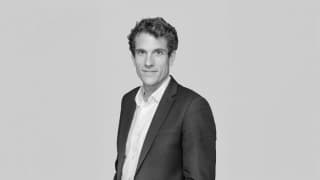
Johann Kalchman is the co-founder and CEO of Lifeaz, a connected defibrillator made in France, deployable in businesses and communities, and now for the first time in private homes.
During the summer break, the teams at impact.info invite you to (re)listen to one of our episodes published this year.
This episode highlights the testimony of Johann Kalchman , co-founder and CEO of Lifeaz .
Enjoy listening!
Frequently asked questions What is a defibrillator and how does it work? A defibrillator is a medical device that delivers an electric shock to restore a normal heart rhythm in a person experiencing cardiac arrest. It is designed to be used by anyone, even without prior training, as it guides the user with voice instructions and automatically determines if a shock is necessary.
Why is it important to equip citizens with defibrillators? What are the challenges related to the maintenance of defibrillators in public places? How does Lifeaz differentiate itself from other defibrillator manufacturers? What is Lifeaz's mission and how does it plan to achieve it? Florence Jaillet
impact.info journalist
Published on 2 September 2026
Photo credit — Lifeaz
Transcript Audio in Français — text automatically translated· AI-generated transcript
0:00 The basic observation we've made is that topics like cardiac arrest 0:04 have always been approached as a public health policy 0:07 and not at all as an individual policy or an individual right to protect oneself. 0:11 So the way it has been done over the last 15 years, 0:14 is that we put a defibrillator in a train station because there are a million people passing through the station 0:18 and therefore the defibrillator has a higher chance of being used. 0:21 But the people who are in the station, 0:23 they have a 99% chance that it will happen to them at home or in their workplace rather than at the station. 0:29 So we kind of flipped the model around. 0:31 We train and equip citizens who can then change things. 0:40 Hello and welcome to the podcast for those 0:43 who want to shake things up within their company. 0:46 Reacting quickly during a cardiac arrest can change everything. 0:50 Johann Kalchman. 0:52 Johann Kalchman and I was born on June 21, 1987, in Paris 0:57 and I am the co-founder and CEO of Lifeaz. 1:00 Lifeaz, what is it? 1:01 I worked with pacemakers and implantable defibrillators 1:04 in a rather large company called Sorin. 1:07 And at that moment, I discovered or rediscovered 1:10 that the technology to save people from cardiac arrest has existed for a very long time. 1:15 That when you have an implantable defibrillator, when you are at very high risk, 1:18 you are protected and that ordinary people who will have a cardiac arrest in the street, 1:22 at home, who are sometimes much, much younger, 1:24 they today only have a 5% chance of survival. 1:26 I started from that observation. 1:28 Little by little, I saw that 80% of cardiac arrests happen at home. 1:31 And I just thought we would create a defibrillator 1:35 that we would democratize and make accessible to everyone. 1:37 So what is Lifeaz? 1:39 It started from a mission to enable all citizens, 1:42 and every company to be able to save a life in case of cardiac arrest. 1:46 And for that, we developed a connected defibrillator, made in France. 1:50 Very, very simple to use, 1:51 deployable in companies and communities, of course, 1:54 but also for the first time in the homes of individuals. 1:57 You still need to get trained, though. 1:58 How does it work, actually, to learn how to use it? 2:01 Well, first of all, what you need to know is that using a defibrillator, 2:04 even in a train station, in the street, you don't need to be trained. 2:07 You have the right, anyone can use it. 2:09 And the defibrillator, whether it's ours or others', 2:11 is extremely simple to use. 2:13 There is a voice that guides you. 2:14 It's the defibrillator that decides alone whether to shock or not. 2:17 You can't go wrong. 2:18 So, there's no need to be trained to use a defibrillator, 2:20 but being trained helps to recognize a cardiac arrest, 2:23 to have the right gestures, to know that you can use a defibrillator 2:26 and that there's no risk, etc. 2:28 So, there were several issues 2:31 to make the defibrillator accessible to individuals. 2:33 The first was the business model 2:35 that we addressed, particularly by being a manufacturer and not just a distributor, 2:39 by creating our own defibrillator, 2:40 by mastering the entire line of innovation and production. 2:44 And today, we make our defibrillator accessible 2:46 through a subscription and about thirty euros a month. 2:49 So that was very important. 2:50 The second issue was the perceived simplicity of the defibrillator. 2:54 It's white, it doesn't look scary, it's rather small and light. 2:58 It speaks with a reassuring voice. 3:00 We simplified its use to the extreme. 3:03 And there's another problem that needed to be solved, 3:05 which is the maintenance of defibrillators. 3:07 Today, in public places, 3:08 a third of defibrillators do not work due to lack of maintenance. 3:12 And the classic operation is a technician coming once a year. 3:15 And in fact, we just said, with technology, 3:17 we can change a lot of things. 3:18 And our defibrillator is connected, we monitor it continuously. 3:21 We can update it remotely. 3:23 We receive alerts for a low battery, 3:25 expired electrodes, or any technical problem. 3:28 And so, we can fix it. 3:29 Today, for an individual, it's like having an alarm at home. 3:32 They can have a defibrillator, they know we're keeping an eye on it, 3:34 that it will work in case of emergency 3:36 and that they can change things if there's a cardiac arrest. 3:38 How many cardiac arrests have been able to be handled immediately? 3:41 thanks to LifeEase? 3:42 Cardiac arrest is the leading cause of preventable death in France and Europe. 3:47 That's 50,000 deaths every year in France. 3:49 So, it's quite huge. 3:50 It affects everyone at any age. 3:52 The average age of victims is 60, but sometimes they are much younger. 3:55 For example, among amateur athletes, it's around 40 years old. 3:58 And today, to answer your question about what we've managed to avoid, 4:02 there's only a 5% survival rate. 4:03 So, it's extremely low because to save a life, 4:06 you need to act in the first few minutes, within the first 4 minutes, 4:08 well before the emergency services arrive. 4:10 So, the whole mission of LifeEase is to ensure that the first witness, 4:12 the relative, the friend, the colleague has a defibrillator within reach 4:15 to change things. 4:16 And today, with LifeEase, 92 lives have been saved. 4:19 Absolutely, victims of all ages. 4:22 We had an 11-month-old girl, a 96-year-old woman, 4:25 a high school student, young people aged 32, 35, 40 years old. 4:30 Really, it can happen at any age and by acting quickly, we can change everything. 4:34 How does what you do Bouge les lignes change things? 4:37 Of course, for the people it has helped, but on a larger scale? 4:42 So, actually, the basic observation we made is that 4:44 the topic of cardiac arrest has always been approached 4:48 as a public health policy 4:50 and not at all as a somewhat individual policy 4:52 or an individual right to protect oneself. 4:54 So, the way it has been done over the last 15 years is, 4:57 we put a defibrillator in a train station 4:59 because there are a million people passing through the station 5:01 and therefore the defibrillator is more likely to be used. 5:05 But the people who are in the station, 5:07 they have a 99% chance that it will happen to them at home 5:10 or in their workplace rather than at the station. 5:12 So, we've kind of flipped the approach. 5:14 We are addressing citizens who are employees in a company, 5:18 managers, or for their home. 5:20 And the idea is just to give them the opportunity to be protected at home. 5:24 But there are also those who carry their defibrillator 5:26 in their backpack, in their car. 5:27 and who will be altruistic and able to save a life. 5:30 We actually focus on the person and not the place. 5:34 Equipping a train station is good, 5:35 but if there is no one trained, no one aware, 5:37 who knows how to use it, etc. 5:40 It's not the same approach. 5:41 We train and equip citizens 5:44 who will be able to make a difference. 5:46 How many equipped citizens today? 5:48 How many tomorrow? 5:50 So, we have about 22,000 deployed defibrillators. 5:54 And how many tomorrow? 5:55 I hope hundreds of thousands. 5:57 In Europe, there are 100 million fire extinguishers 6:00 and 1 to 2 million defibrillators. 6:01 So, we are very, very far from that. 6:03 Often, people say, 6:04 'Yes, but I saw a defibrillator at the corner of the street.' 6:07 But that's absolutely not enough. 6:08 You need to act within the first four minutes. 6:09 It's a bit like saying to you, 6:10 'There is a fire extinguisher at the corner of the street. 6:11 So, if there is a fire, it will be fine.' 6:13 That's not the case. 6:14 So, really, we are at the very beginning of the journey 6:16 and our goal is to democratize 6:18 the life-saving actions and defibrillators. 6:20 What are the challenges for an entrepreneur 6:22 to move into the medical sector? 6:26 So, there are quite a few challenges. 6:28 First of all, building an industrial hardware product, 6:31 is not that common. 6:32 In France, there is much less investment 6:34 in industry, much less support for that. 6:38 So, it takes time. 6:39 Bringing a medical product to market, 6:40 you need to obtain certifications. 6:41 For us, it took five years of R&D 6:43 before obtaining European medical certification. 6:46 Today, we have the latest certifications. 6:48 who are at the highest level, 6:49 who place the defibrillators in class 3. 6:51 And then, we added another challenge, 6:54 which is that we chose to produce in France 6:56 for reasons of quality, proximity 6:58 and to support the French economy and jobs. 7:01 And at the beginning, many people advised us 7:04 to go for the cheapest option in Asia. 7:06 So, we added a challenge, 7:08 but one that is largely justified 7:10 on our side. 7:16 Johann Kalchman, you are the co-founder 7:18 and CEO of Lifeaz. 7:19 16 years old is the age in France to start your business. 7:22 Maybe you already have that in mind. 7:24 What were you doing at 16? 7:25 What were your aspirations? 7:26 So, at 16, 7:27 I wasn't thinking about starting a company. 7:29 I think I was really just in teenager mode. 7:33 I was enjoying life with my friends, 7:36 doing a lot of sports. 7:38 I played handball at a fairly high level. 7:41 And I was hesitating about my future 7:43 between being a doctor, an engineer, or even a lawyer. 7:46 Really, I didn't have a very clear idea. 7:49 How did it go from there? 7:51 How did it go from there? 7:53 From there, 7:54 when I took my baccalaureate, 7:56 I went to engineering prep 7:58 because I was interested in it. 8:00 I was quite passionate about that. 8:02 I really enjoyed the prep. 8:04 Super challenging, 8:05 hard, 8:06 but super intellectually challenging. 8:09 And in prep, 8:10 I wanted to get into a school 8:12 to study engineering in the space field. 8:15 I also liked medicine, 8:17 but I was leaning more towards space. 8:20 Then afterwards, 8:21 I went to a general school. 8:23 I got into Centrale Lille. 8:25 I spent two years at Centrale. 8:28 Then, 8:29 I was lucky enough to do a double degree 8:31 for two years in Japan, in Tokyo. 8:33 Knowing that during my middle and high school years, 8:35 I had learned to speak Japanese. 8:37 I had an interest in that. 8:39 In Japan, 8:40 I specialized in biomedical. 8:42 As many people have often said 8:44 who I interned with 8:46 when I was younger, 8:47 when you touch on medicine, 8:48 it's hard to get out of it 8:49 because it's fascinating, 8:50 it has a great impact. 8:51 And there you go, 8:52 you can do so many things. 8:54 Would you have imagined 8:57 a product like LifeEase back then? 8:59 Does it ultimately, 9:00 make perfect sense 9:01 in relation to your journey too? 9:03 Well, 9:04 I wouldn't have imagined it. 9:05 Does it make perfect sense? 9:07 In fact, 9:08 I also have a personal story. 9:09 I lost my father 9:10 to a cardiac arrest 9:11 when he was 33 years old. 9:12 I was two years old. 9:13 It was about thirty years ago. 9:15 To answer your question, 9:16 yes, 9:17 it all makes sense 9:18 but it wasn't planned. 9:19 I could have ended up 9:20 in any other company 9:21 so sometimes fate works out well. 9:23 But in any case, 9:24 that's also what makes it 9:25 that when it's tough, 9:26 when we spend 5 years in R&D 9:27 to launch the product 9:28 and we're told 9:29 that it's not possible, 9:30 we have a special reason 9:31 to go much further 9:32 and to tell ourselves 9:33 that we need to make accessible 9:34 the defenders to everyone 9:35 so that it can change things 9:36 for other families. 9:37 Thanks to Johann Kalchman, 9:38 co-founder and CEO of Lifeaz. 9:39 You can find this podcast 9:40 on our website impact.info. 9:41 This was Impact.info, 9:42 doing business differently. 9:55 Subtitles created for the Amara.org community. ![[Rebroadcast] Why equipping citizens with defibrillators can save lives?](/_next/image?url=%2Fuploads%2Fimages%2F2026%2F07%2F49251aa8-91d5-432d-9986-e24446879710.webp&w=1920&q=75)