translate This article was automatically translated from its original Español version. Read the original
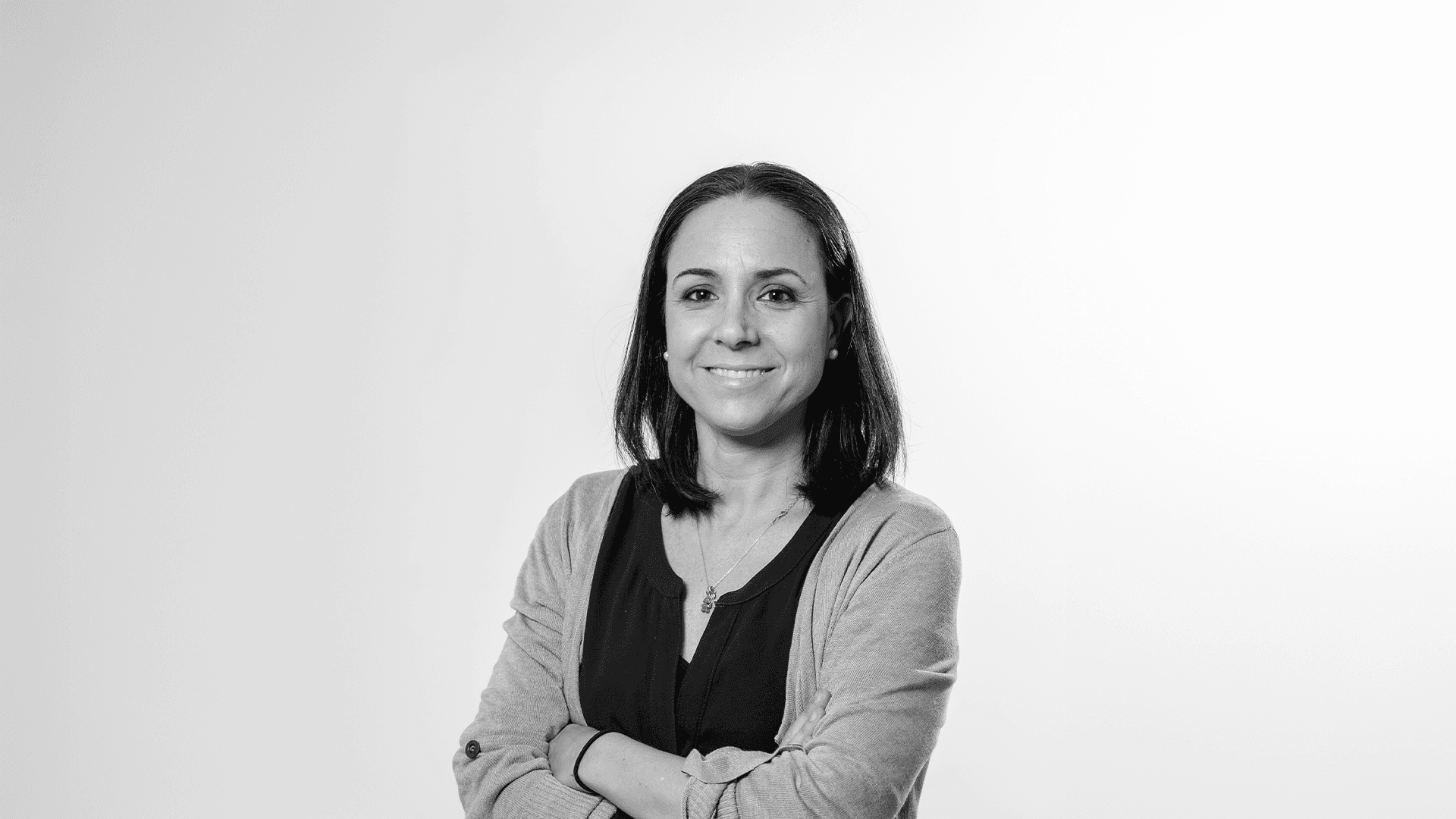
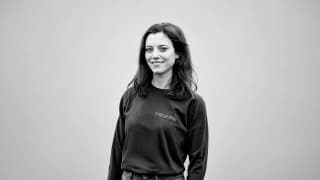
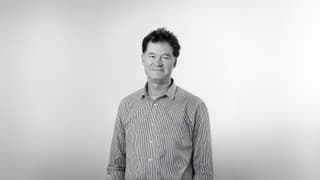
Macarena Morales is the General Director of Fundación Ayo, a private non-profit organization that works to create opportunities for young people and others in disadvantaged situations.
María Díaz Valderrama
impact.info journalist
Published on 3 April 2025
Photo credit — Reyes Cervantes
Transcript Audio in Español — text automatically translated· AI-generated transcript
0:00 Impact.info, another way to undertake. 0:05 Good morning, welcome to the podcast for entrepreneurs who want to change things, 0:11 starting with their own companies and foundations, 0:14 foundations that contribute to leveling the playing field 0:18 for those who start from a more disadvantaged situation. 0:22 My name is Macarena Morales, I was born in Madrid in 1978 0:27 and I work as the general director at Fundación Ayo. 0:31 Macarena, what is Fundación Ayo? 0:34 Fundación Ayo is a private, non-profit entity, 0:38 and it arises from the social concern and desire to help of its founder and current president, 0:44 who is Juan José Nieto. 0:46 Juan José is a person with a background in the financial sector, a banker, 0:51 also very entrepreneurial, 0:53 and over the years he has been developing and is very clear, 0:58 very convinced that we must support each other, that we need to help. 1:03 In this sense, the foundation works to generate opportunities for young people 1:07 and other individuals in disadvantaged situations, 1:10 and to facilitate personal and professional development, 1:13 and with all that, to build a life project with more options and stability. 1:19 In what way would you say it is an entity that seeks to change things? 1:24 I would say we seek to change things through people. 1:28 That is to say, we believe that change happens, on one hand, when those facing difficulties 1:33 or who are in a complicated vulnerable situation, 1:36 become the protagonists of their own change, 1:40 and then when at the same time there are other people who actively get involved 1:44 to drive that change, to support. 1:47 For example, the three lines are Ayo Impulsa, Ayo Acelera, and Ayo Emprende. 1:51 In Ayo Impulsa, what we do is support young people in vulnerable situations 1:56 through mentoring processes. 1:58 In this sense, professionals, who are people over 50 years old, 2:02 train with us as mentors and accompany children and young people 2:07 who are selected by educational centers to provide them with an adult reference 2:12 who motivates them, accompanies them, and helps them make decisions. 2:17 Our other line, Ayo Acelera, again connects needs, 2:22 people who have some need with people who have something to contribute in this case, 2:28 professionals from NGOs who have a vision very aligned with ours, 2:33 to generate opportunities and serve groups in vulnerable situations, 2:38 particularly young people, and what we do is connect them with professionals 2:42 from the corporate world specialized in finance, strategy, communication, or management, 2:48 so that we try to strengthen the structure of that NGO, 2:53 In other words, NGOs are ultimately businesses and we also need to have solid management, 2:58 a solid financial structure, a strategy, management. 3:01 So, well, many times there are shortcomings in that sense, 3:04 we seek to strengthen them through volunteering that supports in that line. 3:10 And finally, Ayo Emprende, which focuses on that next step, 3:15 which is employability, ultimately as a driver of inclusion, 3:18 the generation of employment, having a job that allows you to get ahead, 3:24 well, we work with social impact startups, that is to say, 3:28 startups that have as their purpose through their business, their business model, 3:34 to generate an impact by solving some social challenge. 3:37 So, what we do is we support social impact startups 3:40 through specialized advice from experts in investment and private capital, 3:45 that is to say, these managers offer their professionals to advise 3:50 on all these issues of financing, financial structure, 3:55 generation of projections, business plan, 3:57 to startups that know very well what they need to do, 4:01 they are very clear about their action, their objective, 4:05 but sometimes they have shortcomings to strengthen their business. 4:11 How do you locate these future entrepreneurs you work with? 4:17 Are they the ones who can access you? 4:20 Do you choose them yourselves? 4:22 Well, there are two ways, we collaborate with some entities, 4:26 with accelerators, with strengthening programs 4:30 for more established companies, 4:32 sometimes they send us startups that need a bit of initial support, 4:36 support to develop their program, their business model, 4:41 especially financial aspects, because what we do is 4:44 we bring these entrepreneurs together with people from the private capital world, 4:48 with professionals who are experts in strategic financial issues 4:52 and we give them advice. 4:54 So, sometimes they come redirected to us and other times we find them 4:57 or they find us because they know our program, 5:00 they can access the program in any way. 5:02 Of course, and you told me that you not only work with entrepreneurs, 5:06 but also with young people in vulnerable situations. 5:10 How do you support them? 5:13 Yes, in fact, children and young people are the origin of the foundation. 5:18 We wanted to create opportunities for these young people, 5:22 especially young people who are very alone, 5:24 and so we work with schools, with children's homes. 5:29 and we provide social mentoring, that is, support. 5:33 It's a life support for children who are very alone 5:36 or who don't have that family structure or who do have it, 5:38 but well, they have some shortcomings. 5:40 And in fact, that's where the program to work with entrepreneurs comes from, 5:44 because these children, their future is really employment. 5:49 So, there are two paths, employment, so they can enter a society 5:52 that has more sensitized companies and the social entrepreneurs 5:58 we work with always have that more social perspective. 6:02 And besides, the social entrepreneurs we work with 6:04 are looking to solve social challenges and develop some kind of product 6:09 or carry out their work including people at risk of vulnerability. 6:16 As an association, you work with donations and funding from patrons, 6:20 but also with volunteers, right?, who act as mentors for these young people. 6:25 Who can contribute to your project? 6:27 Well, almost anyone. 6:29 We are also an organization. 6:31 Our mission is to generate opportunities for young people in different ways, 6:37 but then the other part of the mission is to get society involved 6:42 in this project. 6:44 And in fact, we do this because we mobilize a lot of volunteering. 6:46 The volunteers who participate in investment funds 6:49 and give us pro bono hours are key. 6:53 Then there are the volunteers who provide this social mentoring to the children. 6:58 Really companies that support us in financing training. 7:03 We really have our doors open for any type of collaboration, 7:08 both from companies and from individuals. 7:11 Of course, and these volunteers then are, I imagine, like an older brother 7:15 for the people they help. 7:17 Without a doubt. In the case of younger children, they become just that, 7:22 they accompany them for several years. 7:24 In the cases of the social entrepreneurs who are accompanied by advisors, 7:28 we have quite a bit of feedback from entrepreneurs 7:35 saying that they have been key people in solidifying their business model. 7:41 Just a few days ago, an entrepreneur told us that it was the push 7:45 they needed for well-being working with an investment fund 7:49 that had always helped them rethink the business model 7:53 and that above all it had been a motivational push to tell them 7:56 that what they were doing made sense. 7:58 Because it is a lifelong support for the people who enter your project. 8:03 No, no, no. The support... 8:07 We hope that the learning is indeed lifelong. 8:10 We always say that what happens is a transfer of knowledge 8:13 and a generation of skills that we hope will last a lifetime. 8:18 With entrepreneurs, the projects are within a timeframe of 3-5 months. 8:23 What happens is that they can come back to participate as many times as they want, 8:26 but ideally it would be for a few years. 8:29 In the case of support for young people, it lasts several years while they are in school. 8:33 Then the relationships continue. 8:35 It is true that we know that once they finish their training, 8:38 the relationship continues, but in a different way. 8:41 But we certainly hope that those learnings, 8:44 when we say generating opportunities, means providing tools 8:47 as I mentioned at the beginning, we hope those tools will indeed be lifelong. 8:51 They are ultimately tools that you carry in your backpack 8:54 to tackle the next challenges in life. 9:03 In Spain, 18 years is the legal age to start your own business. 9:08 Macarena, where did you see yourself when you were 18? 9:12 Well, the truth is I only had one thing clear. 9:15 I knew I wanted to have international projection, 9:17 I knew I wanted to work on social issues, 9:20 but I didn't know exactly how. 9:22 So I saw myself in some NGO, I saw myself in some company, 9:27 but carrying out some social project. 9:31 I knew I wanted to be part of helping to create opportunities, 9:36 which is why when I arrived at this foundation it was like, 9:39 well, this is exactly what I was looking for. 9:43 That's where my path has led me. 9:45 In the end, I think there’s a part that I did well, 9:49 which is to always stay quite true to what I wanted. 9:54 To be coherent, not to let yourself be swayed by social pressures, 9:58 which is complicated, especially when maybe you don't do things exactly like everyone else. 10:04 But I saw myself doing, I don't know if exactly so defined, 10:09 look at what I've done throughout my career, that I've worked in cooperation, 10:13 I've always worked on projects with social impact. 10:16 So I saw myself doing that. 10:18 I didn't know what the world of investment was, 10:20 so I couldn't go working with investment funds, 10:23 I didn't know certain things, but I did see myself doing what I'm doing. 10:27 Thanks to Macarena Morales, General Director of the Fundación Ayo. 10:31 You can listen to this interview on the impact.info website. 10:35 You've heard of impact.info, another way to start a business. Embed this interview on your site
Show this player directly on your site to share the interview with your audience.
Copy embed code View generated code